 English
 Lietuvių
 Latviešu
 Eesti
 Polski
 Русский
 Українська
 Deutsch
 Nederlands
 Čeština
 Slovenčina
 Svenska
 Norsk
 Dansk
 Suomi


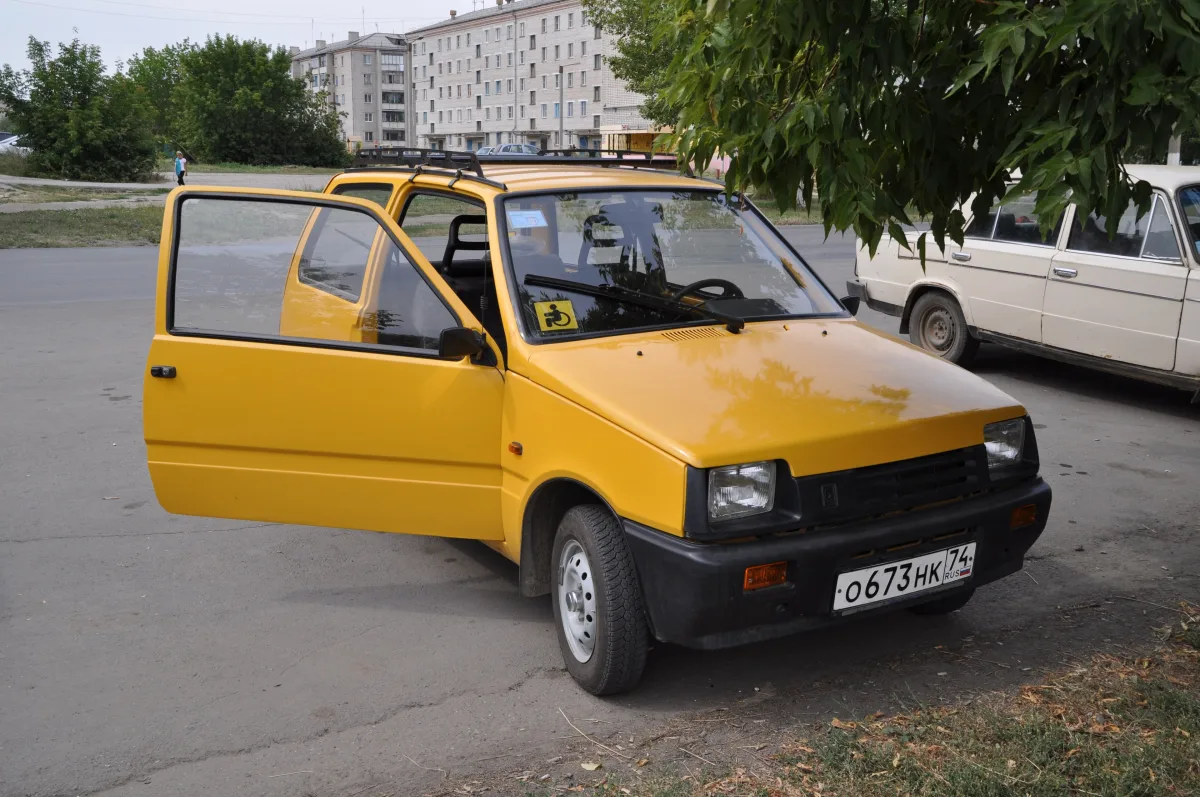
Lada Oka: the smallest car of the Soviet era and what to know when buying
Lada Oka (VAZ-1111) — an extremely small four-seater hatchback produced from 1988 to 2008. In this article, we review its features, engines, and things to consider when buying such an old car.






Oka in brief
The Oka was designed as an affordable and compact city car, with a length of just around 3.2 m. It's a three-door hatchback with four seats, front-wheel drive, and a transversely mounted two-cylinder engine.
Thanks to its small size and light weight, the car is very easy to drive, and its running costs are low. On the downside, it's an old-design model lacking the features modern car drivers are used to.
Which version to choose
The Oka was produced in one generation, so the choice mainly depends on the engine and the specific car's condition. The car was manufactured in several plants, so the quality of examples from different manufacturers and years may vary.
When evaluating a used Oka, the year matters less than how the car has been kept: whether it has been left to rust, garaged, and if it has at least a minimal service history.
Engines and gearboxes
Most commonly found are two-cylinder petrol engines — around 0.65 l (around 30 hp) and around 0.75 l (around 33–35 hp). This power is enough for city driving, but the car feels restricted on the motorway.
The gearbox is manual, usually with 4 or 5 speeds. Automatic gearboxes were not offered for this model.
What to check when buying a used Oka
The most important thing is the body condition. Carefully inspect the sills, wheel arches, floor, and boot floor, as corrosion is the main issue with cars of this age.
Check if the engine starts easily, doesn't leak oil, and if the clutch and gearbox operate without strange noises. Before buying, check the documents and ensure the car is registered and has passed its technical inspection.
The choice of parts depends on the market, so before buying, find out where you can get the necessary details.


Trim levels
Names and equipment vary by market and year; we list the versions most commonly found in Europe.
Oka 0,65 l
1988–2008An early and very basic version with the smallest engine.
- Approximately 0.65-litre two-cylinder petrol engine
- Very basic interior trim
- Low fuel consumption
Oka 0,75 l
1988–2008A slightly more powerful version with a larger engine.
- Approximately 0.75-litre two-cylinder petrol engine
- Simple manual gearbox
- Often — a bit of extra comfort, depending on the example
Engine comparison
| 0,65 l | 0,75 l | |
|---|---|---|
| Who's it for? | Short city drives | City and occasional suburban use |
| Approximate power | Around 30 hp | Around 33–35 hp |
| Price in the used market (relatively) | Budget | Budget |
Both engines are suited to city driving. More important than the engine is finding a car that's been well-maintained and not too heavily used.
Pros
- Very low fuel consumption and simple design
- Easy to park in tight spaces
- Low running costs
- Rare, characterful model
Cons
- Limited dynamics and comfort
- Risk of corrosion due to age
- Basic safety equipment
Frequently asked questions
What engines were available in the Lada Oka?
Most commonly, you'll find two-cylinder petrol engines with around 0.65L and 0.75L displacement. There were no diesel versions.
Is the Oka suitable for daily driving?
It's fine for city driving and short trips, but on the motorway, the car is slow and less safe than modern alternatives. Expect more frequent repairs due to its age.
How many seats does the Oka have?
Four — two up front and two in the back, although there's not much room in the rear.
Updated 2026-10-19 · Trim levels and equipment vary by market and model year — check the equipment of the specific car. · Translated automatically


