 English
 Lietuvių
 Latviešu
 Eesti
 Polski
 Русский
 Українська
 Deutsch
 Nederlands
 Čeština
 Slovenčina
 Svenska
 Norsk
 Dansk
 Suomi


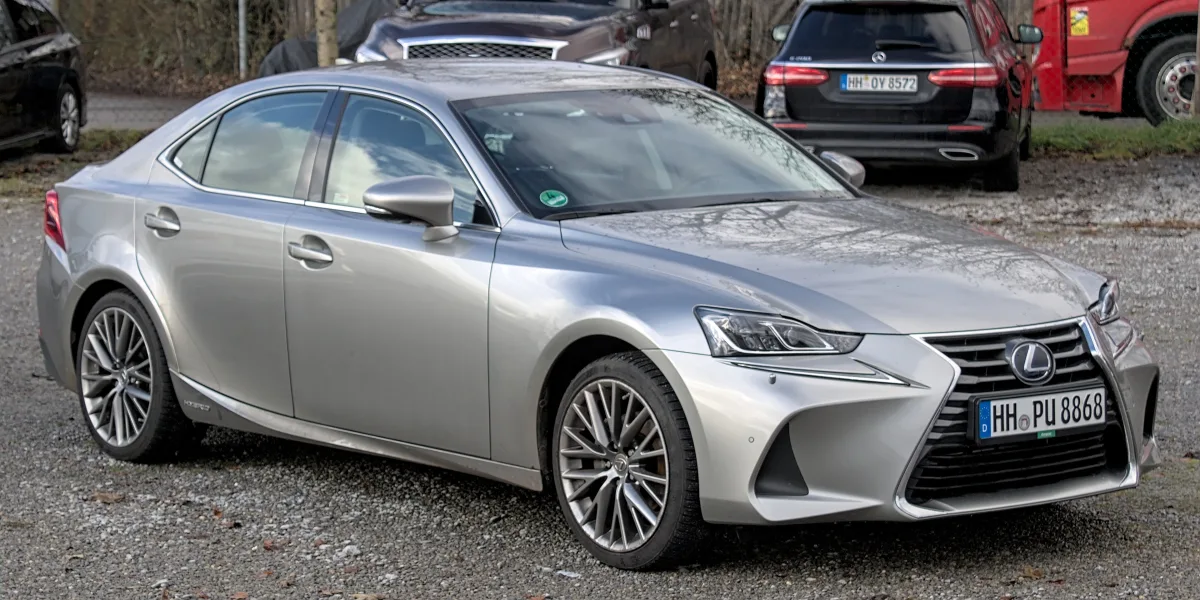
Lexus IS: XE20 and XE30 generations, engines and trims
The Lexus IS is a rear-wheel-drive executive saloon that competes with the BMW 3 Series and Mercedes-Benz C-Class, but is prized above all for its reliability. We look at how the XE20 and XE30 generations differ, which engines are most common, how the trims vary and what to check when buying used.






IS in brief
The IS has been in production since 1998 and has three generations: XE10, XE20 and XE30. All are rear-wheel drive, with saloons being the most popular body style in Europe. The XE20 and XE30 generations are the most commonly found on the used market.
The Lexus IS appeals to those who want a refined, high-quality car with few surprises. It's less spacious than some rivals, especially in the rear, but often outshines its German classmates in interior build quality and reliability.
XE20 and XE30 — how they differ
The XE20 generation (2005–2013) is an elegant saloon with a V6 petrol engine or a 2.2-litre diesel. It's the cheapest way to get into a Lexus IS, but these cars are getting on a bit now, and the diesels have well-known issues.
The XE30 generation (from 2013) is the most popular on the used market. In Europe, it was mostly sold as the IS 300h hybrid, so the majority of examples are economical, town-friendly cars. The generation was refreshed in 2016 (new grille, headlights and larger screen) and 2020 (new front and rear styling, more premium cabin, touchscreen infotainment).
The latest 2020 facelifted IS models are rarer in Europe and are the most expensive, so for many buyers the best balance of price and age is the 2016–2020 XE30 cars.
Engines and transmissions
In the XE20 generation, the most common IS models in Europe are the IS 250 (2.5 l V6, around 208 hp) petrol and IS 220d (2.2 l, around 177 hp) and IS 200d (around 150 hp) diesel engines. The sporty IS F had a 5.0 l V8 engine (around 420 hp).
In the XE30 generation, the main engine is the IS 300h hybrid: a 2.5 l petrol engine with an electric motor, total power around 223 hp. Until 2015, the IS 250 with V6 was also offered, and from 2015 onwards, the IS 200t with a 2.0 l turbocharged petrol engine, around 245 hp. Diesel engines were not available in the XE30 generation in Europe.
The hybrid has a smooth automatic transmission (e-CVT), which is simple and reliable. XE20 petrol engines are usually paired with a 6-speed automatic, diesels with a manual, and the IS 200t with an 8-speed automatic.
What to check when buying a used IS
The XE20 generation IS 220d and IS 200d diesel engines were known for head gasket failures and increased oil consumption. Before buying such a car, check if the engine is smoking, if the coolant is depleting, and if any repair work has been done. Over time, the IS 250 V6 engines accumulate carbon deposits on the intake valves, so the engine may run unevenly.
Check the IS 300h hybrid to ensure there are no issues with the hybrid system and that the cooling air vent and filter for the hybrid battery haven't become clogged. It's often worthwhile to have the hybrid system checked at an official service centre.
Every generation of the IS comes with rear-wheel drive, so inspect the tyres, suspension, and rear differential. Check the mileage against service records and the body for painted-over parts and uneven gaps.


Trim levels
Names and equipment vary by market and year; we list the most common XE30 generation trims found in Europe.
Comfort
XE30Base trim with essential comfort features.
- Light-alloy wheels
- Dual-zone climate control
- Often comes with a rear-view camera
Executive
XE30A popular choice offering more comfort for a sensible price.
- Often features leather or faux-leather upholstery
- Heated front seats
- Often includes navigation and parking sensors
F Sport
XE30Sporty-looking version with a different interior.
- F Sport bumpers, grille, and 18-inch wheels
- Sport seats and a digital instrument cluster
- Often — adaptive suspension
Luxury
XE30The top-tier trim with the most luxurious features
- Single-tone interior, often with ventilated seats
- Often — Mark Levinson sound system
- More driver-assistance systems
Comparison of XE30 generation trims
| Comfort | Executive | F Sport | Luxury | |
|---|---|---|---|---|
| Who it's for | For the tightest budgets | For the sensible buyer | For those after sporty looks | For comfort seekers |
| Alloy wheels (most often) | 16–17 inch | 17 inch | 18 col. | 18 col. |
| Interior | Cloth seats | Often leather | Sport seats | Leather, mostly equipment |
| Price in the used market (relatively) | Budget | Mid-range | Premium | Premium |
For most buyers, the best choice is the IS 300h Executive or F Sport. Luxury models are worth seeking out if top-tier equipment and sound system are important.
Pros
- Excellent reliability, especially the IS 300h hybrid
- High-quality, meticulously assembled interior
- Thrifty hybrid in city driving
- Comfortable rear-wheel drive handling
Cons
- A smaller rear seat and modest boot
- The infotainment in earlier XE30 models is awkward to use
- XE20 diesels have well-known engine issues
Frequently asked questions
Is the Lexus IS 300h reliable?
Yes, the IS 300h is considered one of the most reliable in its class: the hybrid system and e-CVT gearbox are straightforward, and faults are rare. The key is to keep the car regularly serviced and ensure there are no issues with the hybrid system.
Why does the IS 300h sometimes roar loudly on the motorway?
The hybrid with its continuously variable transmission maintains higher engine revs during aggressive acceleration, making the engine more audible. This is a normal characteristic of such a system, not a sign of a fault.
Is it worth buying a XE20 generation IS 220d?
Only with a checked history and, ideally, an engine overhaul. These diesels are known for their intermediate head gasket failures and oil consumption issues, so it's often safer to opt for the petrol IS 250 or a newer IS 300h.
Updated 2026-10-09 · Trim levels and equipment vary by market and model year — check the equipment of the specific car. · Translated automatically


