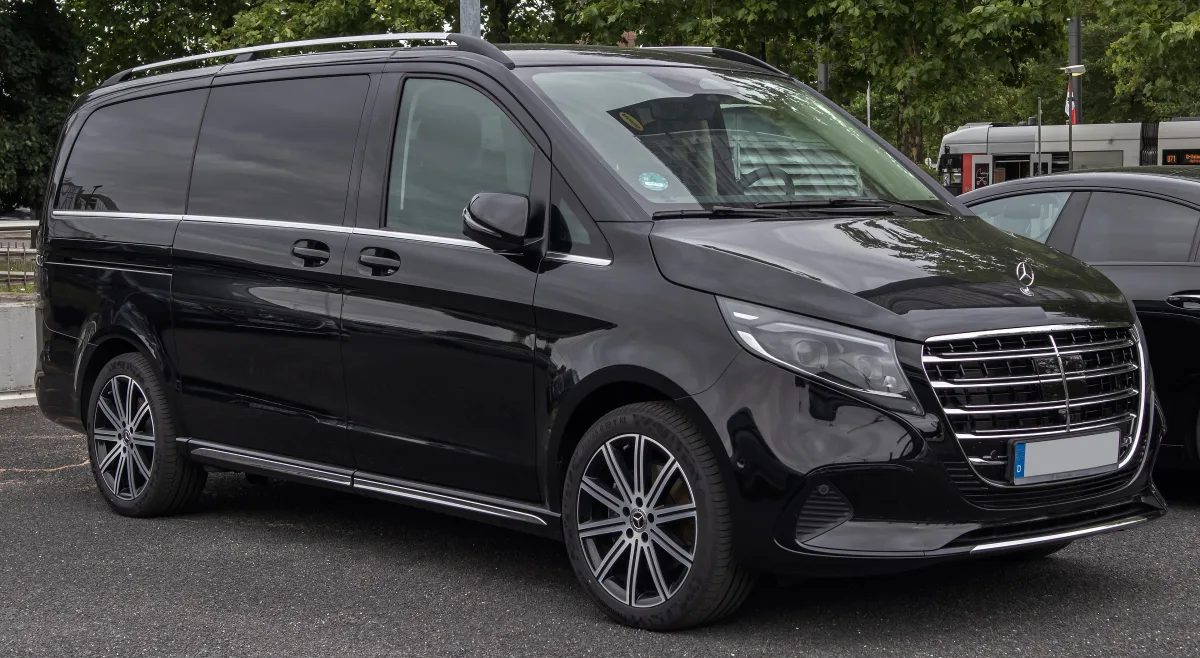
Mercedes-Benz V-Class: W447 generation, engines and trims
Mercedes-Benz V-Class — a luxurious people carrier that appeals to large families, hotels, and transport companies. We look at how the W447 generation variants differ, which engines are most common, and what you need to check before buying a used V-Class.
ADVERTISEMENT
V-Class in brief
The V-Class name first appeared in 1996 (W638 generation), later the people carrier model was known as the Viano (W639, 2003–2014). The current W447 generation has been in production since 2014 and is technically similar to the commercial Vito, but the V-Class is a more comfortable, better-equipped people carrier version.
The car is offered in three lengths — compact, long, and extra-long, so you can find both a city-friendly version and a very spacious one with a large boot. The interior usually has 6–8 seats, with rear seats mounted on rails and can be repositioned or removed. There are sliding doors on both sides, often with electric operation.
W447 generation and updates — what's different
Early W447 models (2014–2019) were already significantly more luxurious than the Viano: the interior resembles lighter Mercedes-Benz cars, and the trim quality and sound insulation are noticeably better. These cars most often feature a 2.1-litre diesel engine.
The 2019 update brought a new front end, a more modern 2.0-litre diesel engine, and a 9-speed automatic transmission. These are the most popular used V-Class models: modern, economical, and not as expensive as the latest cars.
2024 sees the second facelift — revised styling, interior, and infotainment system, plus more driver-assistance features. The electric EQV has been available since 2020.
Engines and transmissions
Between 2014 and 2019, the most common engines were the 2.1-litre diesels: V 200, V 220, and V 250 (around 136–190 hp). Post-2019 refresh, the line-up is dominated by 2.0-litre diesels: V 220 d, V 250 d, and V 300 d (around 163–239 hp). Some markets got petrol versions, but they're rare in Lithuania.
Most V-Class models come with an automatic gearbox: early ones had the 7G-Tronic, while post-facelift models get the 9G-Tronic. A manual box is only found in the most basic trims. Rear-wheel drive is standard, while 4MATIC versions offer four-wheel drive — handy in winter, but it does increase running costs.
The electric EQV has around a 90 kWh battery. Before buying, assess the real-world range in winter and charging possibilities.
What to check when buying a used V-Class
Many V-Class models have been used by courier and taxi firms, so mileage can be very high. Check this against service records, and assess the interior condition — seats, steering wheel, and door trim — alongside the dashboard mileage.
Always test the electric tailgate and boot lid: their mechanisms, hinges, and locks often need attention. Check the suspension (including the optional air rear suspension), brakes, and the automatic gearbox — shifts should be smooth, without judders.
For diesel cars, ask about the diesel particulate filter (DPF), EGR valve, and AdBlue system — repairs can be expensive. Check the body for rust on the door sills, wheel arches, and lower edges, especially on cars that have seen a lot of winter driving.
ADVERTISEMENT
Versions and trims
Names and equipment vary by market and year; we list the most common V-Class versions found in Europe.
Avantgarde
W447
The most popular trim offers a good balance of price and features.
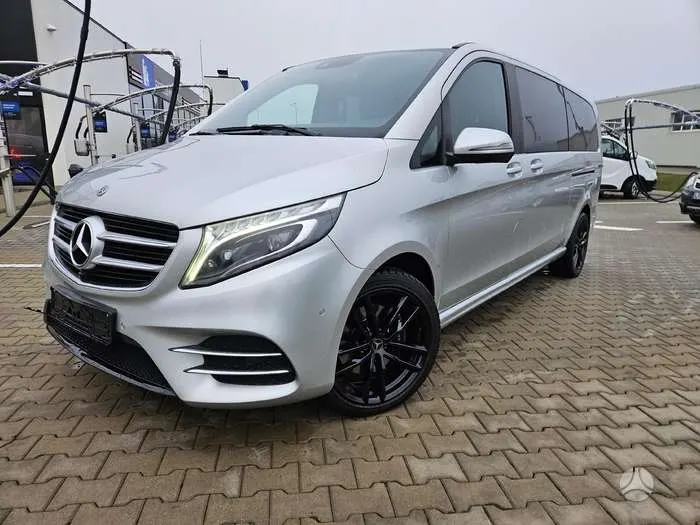
Light-alloy wheels and more luxurious interior trim
Often — LED headlights and electrically operated doors
Often — leather seats
Exclusive
W447
The top-of-the-range V-Class, often chosen for business transport.
Top-tier interior trim
Often — executive-class seats in the second row
Often — air suspension at the rear and more comfort features
AMG Line
W447
Sporty styling package, available with various trims.
Sport bumpers and larger wheels
Sportier steering and interior details
Available with Avantgarde or Exclusive trim
Marco Polo
W447
Camper with a pop-up roof and sleeping areas
Pop-up roof with sleeping space
Often includes a kitchenette, fridge, and cupboards
Second-row seat folds flat into a bed
EQV
W447, from 2020
The electric V-Class variant
Approximately 90 kWh battery
Quiet and smooth ride
Often features a well-appointed interior, similar to Avantgarde
Comparing the versions
Avantgarde
Exclusive
Marco Polo
EQV
Who it's for
For large families
For business transport and comfort
For trips with overnight stays
Silent running without fuel
Seating capacity (usually)
6–8
6–7
Usually 4
6–8
Interior
Well-equipped
Luxurious trim
Kemper equipment
Similar to Avantgarde
Engine
2.0–2.1-litre diesel
2.0-litre diesel, often V 250 d or V 300 d
2.0–2.1-litre diesel
Electric
Price in the used market (relatively)
€€
€€€
€€€
€€
Many buyers' top pick is the Avantgarde, produced after the 2019 refresh, with either the V 220 d or V 250 d engine. The Marco Polo is worth considering only if you genuinely plan to travel with overnight stays.
Pros
Luxurious, quiet, and very spacious interior
Three long, comfortable, and easily adjustable seats
Powerful and economical diesel engines
Comfortable for long journeys
Cons
Expensive maintenance and spare parts
Many cars with very high mileage
Large — harder to manoeuvre and park in the city
Frequently asked questions
What's the difference between the Mercedes-Benz V-Class and Vito?
Both models are built on the same base, but the Vito is primarily a commercial and passenger minibus, while the V-Class is the more luxurious version with a cabin typical of a passenger car, better sound insulation, and more comfort features.
Which V-Class length to choose?
The long version is the golden middle for most families: it offers space for both passengers and luggage. The compact version is more city-friendly, but the boot is small with all seats up, while the extra-long version is ideal when you often carry a full complement of passengers with luggage.
Is the 4MATIC version worth it?
If you often drive in winter, on rural roads, or tow a trailer, 4MATIC provides more confidence. For everyday driving, rear-wheel drive is usually sufficient, and such cars are typically a bit cheaper and more economical.
Is the V-Class suitable as a family car?
Yes, especially for a large family: there's plenty of space, the seats can be rearranged, and it drives similar to a regular car. However, maintenance is more expensive than a compact car, so it's worth considering the upkeep costs before buying.
Updated 2026-10-09 · Trim levels and equipment vary by market and model year — check the equipment of the specific car. · Translated automatically
Comments
No comments about the Mercedes-Benz V-Class yet. Share your experience.
We use necessary cookies to run the website. With your consent, we will also use analytics and advertising measurement cookies — to understand how the website is used and to measure our advertising results. Learn more
 English
 Lietuvių
 Latviešu
 Eesti
 Polski
 Русский
 Українська
 Deutsch
 Nederlands
 Čeština
 Slovenčina
 Svenska
 Norsk
 Dansk
 Suomi


 4