 English
 Lietuvių
 Latviešu
 Eesti
 Polski
 Русский
 Українська
 Deutsch
 Nederlands
 Čeština
 Slovenčina
 Svenska
 Norsk
 Dansk
 Suomi


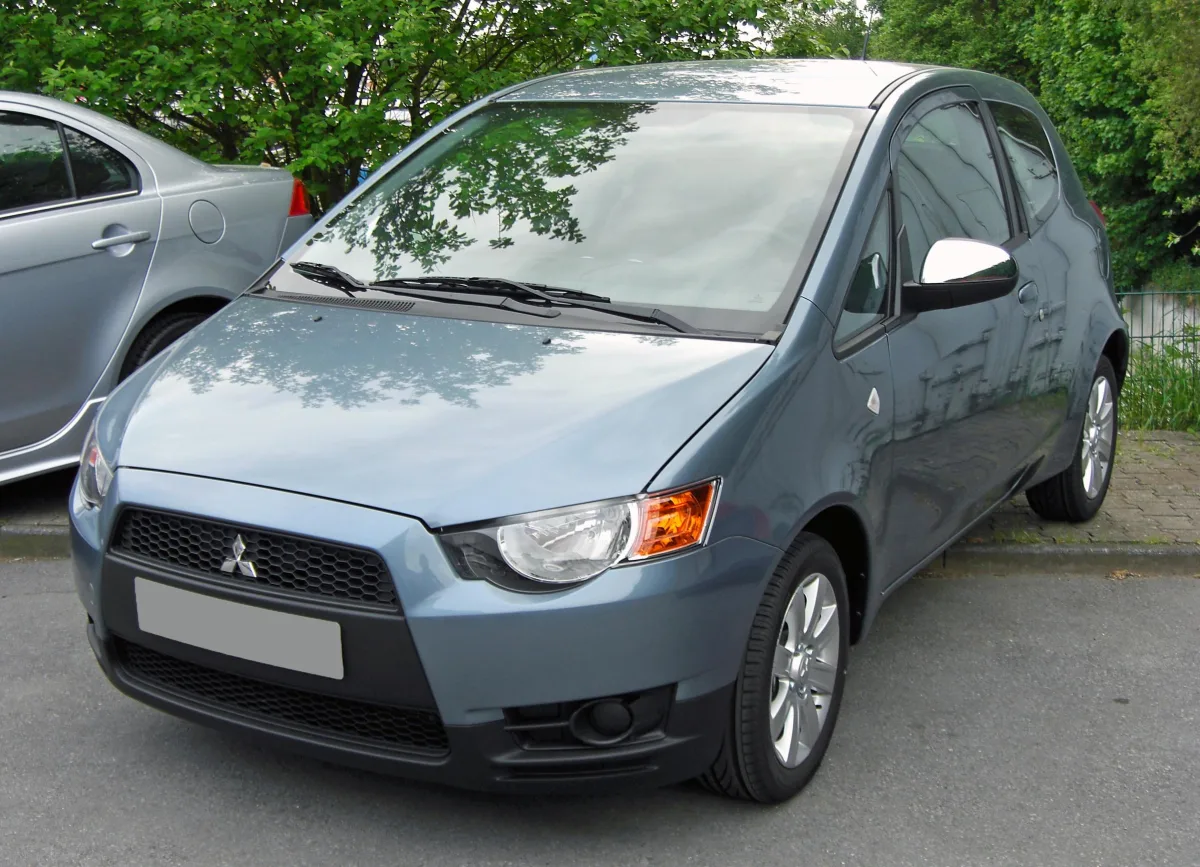
Mitsubishi Colt: CJ0 and Z30 generations, engines, and trims
The Mitsubishi Colt is a compact city hatchback, praised for its spacious interior, straightforward technology, and low running costs. We focus on the sixth generation (Z30), which is most commonly found in the used market: how the versions differ, which engines are typical, and what to check when buying.






Colt in brief
The sixth-gen Colt was sold in Europe from 2004 to 2012 and was manufactured in the Netherlands alongside its technical cousin, the Smart Forfour. There were 5-door and 3-door hatchbacks, and from 2006 to 2009, the Colt CZC coupe-cabriolet with a retractable hardtop.
The high roofline and vertical seating position offer more headroom than many rivals, and the 5-door version has a rear seat that slides forward. Main rivals include the Toyota Yaris, Honda Jazz, Opel Corsa, and Ford Fiesta.
In 2023, the Colt name returned, but the new Colt is technically a Renault Clio cousin and shares nothing with the sixth generation.
Which generation and trim to choose
The fifth generation (CJ0, roughly 1996–2003) is basic but very old. It's worth considering only for its extremely low price and if the car is well-maintained.
The sixth generation (Z30, 2004–2012) is more modern, safer, and roomier. Cars up to 2008 have a rounder front end, while the refreshed 2008–2012 models feature a more aggressive front end in the style of other Mitsubishi models from that era, an improved interior, and some engines come with ClearTec versions featuring a start-stop system.
For many buyers, the best choice is a refreshed 2008–2012 model with a 1.3-litre petrol engine and a manual gearbox.
Engines and gearboxes
Petrol engines: three-cylinder 1.1 (around 75 hp), four-cylinder 1.3 (around 95 hp) and 1.5 (around 109 hp). Sporty CZT and Ralliart models had a 1.5-litre turbo engine (around 150 hp).
The 1.5 DI-D diesel is a three-cylinder, around 68 or 95 hp; this engine was also used in the Smart Forfour. Diesel Colts are less common in the used market than petrol ones.
Gearboxes are either a five-speed manual or the robotised manual Allshift. Allshift shifts slowly and with pauses, so a longer test drive is essential before buying.
What to check when buying a used Colt
The robotised Allshift gearbox is a common cause of expensive repairs. If the car judders when moving off, gears engage with a jolt, or a warning light comes on in the instrument cluster, you might need to repair the clutch or its control mechanism. Easier and cheaper to maintain is the manual gearbox.
Check the sills, wheel arches and underbody for rust, and test the air conditioning and suspension components — there should be no rattles during the test drive.
Check the service history and make sure the engine starts easily, runs smoothly and doesn't smoke if you're considering a diesel car.


Trim levels
Names and equipment vary by market and year; we list the most commonly found updated Colt (2008–2012) trims and special editions in Europe.
Inform
Z30 generation (post-2008)Base trim with essential equipment.
- Often steel wheels
- Basic sound system
- Often — manual air conditioning
Invite
Z30 generation (post-2008)A popular choice — good balance of price and equipment.
- Air conditioning
- Electrically operated windows and mirrors
- Often — lightweight alloy wheels
Instyle
Z30 generation (post-2008)Most generously equipped standard trim.
- Lightweight alloy wheels
- Often — automatic climate control
- Often — fog lights and better interior trim
CZT / Ralliart
Z30 generation (CZT — up to 2008, Ralliart — post-update)Sporty version with turbo engine.
- 1.5 turbo, around 150 HP
- Sportier suspension and larger wheels
- Rarely encountered in the used market
CZC
Z30 generation (2006–2009)Coupe-cabriolet with a retractable hardtop.
- Electrically retractable hardtop
- Mostly the 1.5 petrol engine, but there was also a turbo version
- High rear seat and small boot with the top up
Comparison of trims for the refreshed Colt (2008–2012)
| Inform | Invite | Instyle | Ralliart | |
|---|---|---|---|---|
| Who it's for | For the most economical city driving | For daily commuting | For comfort and equipment | For sporty driving |
| Most common (engines) | Petrol | Petrol or light alloy | Light alloy | Larger, light alloy |
| Interior | Basic trim | More comfort features | Better trim | Sport seats |
| Engine | 1.1, 1.3 | 1.1, 1.3, 1.5 | 1.3, 1.5 | 1.5 turbo, around 150 HP |
| Price in the used market (relatively) | € | € | €€ | €€ |
For most buyers, the best choice is the Invite with a 1.3-litre engine and manual gearbox: plenty of kit and low running costs. The Ralliart is a rare car for enthusiasts.
Pros
- Spacious interior and high seating position
- Simple tech and low running costs
- Economical petrol engines
- The rear seat of the 5-door hatchback version is cramped
Cons
- The Allshift robotised gearbox can be jerky and expensive to fix
- The 1.1-litre engine struggles in town
- Basic interior trim with lots of hard plastic
Frequently asked questions
Which Colt engine to choose?
For most buyers, the 1.3-litre petrol engine is the best choice: it's adequate both in town and out, economical, and simple. The 1.1 is best for town driving, while the 1.5 is ideal if you often hit the motorway.
Is it worth buying a Colt with the Allshift gearbox?
Only if it works smoothly and has a service history. Allshift is not a conventional automatic but a robotised manual gearbox, so pauses when shifting are normal, but severe juddering or error messages are not.
Are the Colt and Smart Forfour the same car?
They share a common platform, some engines, and were manufactured in the same factory in the Netherlands. However, the bodies, interiors, and some of the technology differ. Some spare parts are compatible with both models.
Updated 2026-10-09 · Trim levels and equipment vary by market and model year — check the equipment of the specific car. · Translated automatically


