 English
 Lietuvių
 Latviešu
 Eesti
 Polski
 Русский
 Українська
 Deutsch
 Nederlands
 Čeština
 Slovenčina
 Svenska
 Norsk
 Dansk
 Suomi


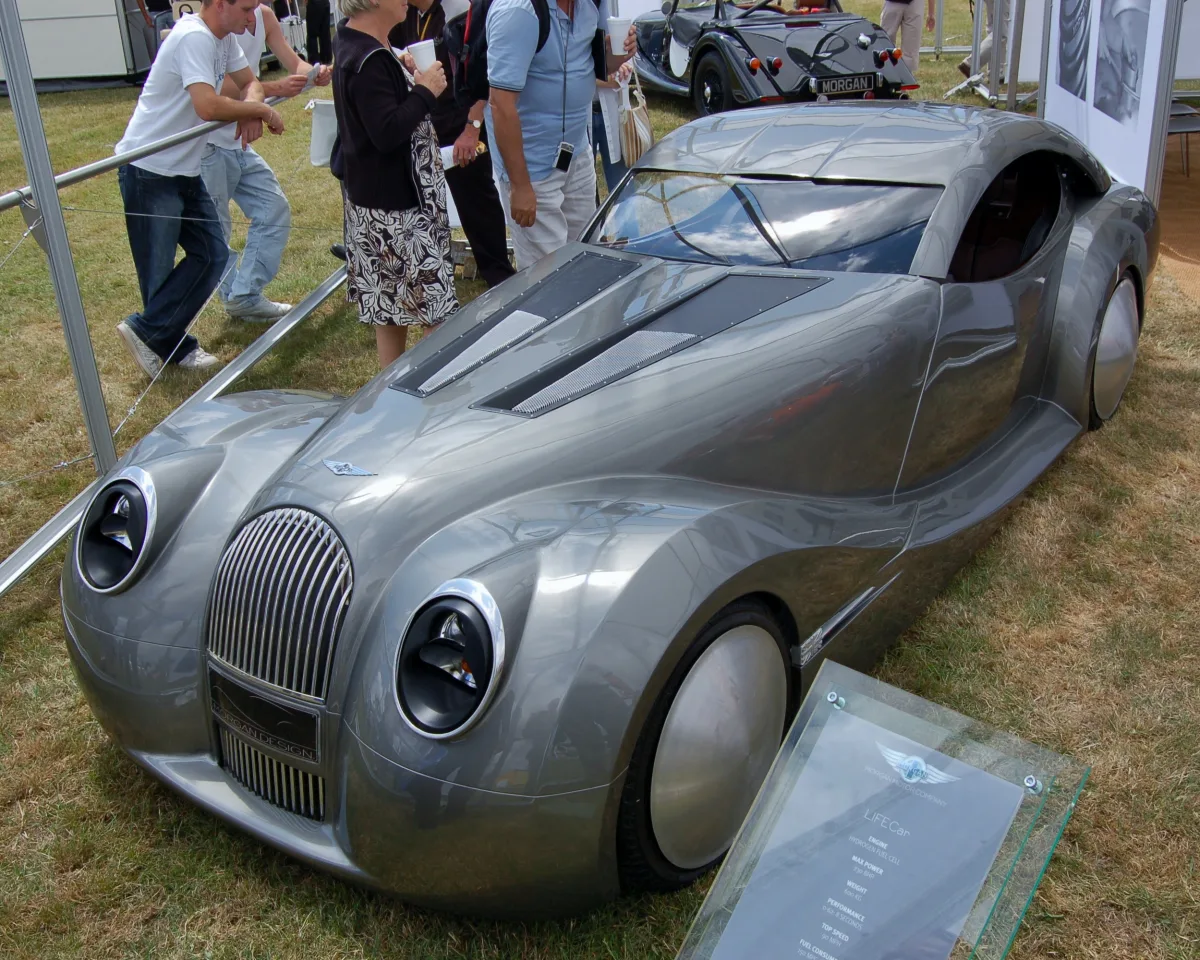
Morgan LIFEcar: the hydrogen sports car project
The Morgan LIFEcar is not a production model but a conceptual research project showing what an eco-friendly sports car with a classic Morgan look could be like. We look back at the project's history, technical concept, and significance.






LIFEcar in brief
The Morgan LIFEcar was created as a concept car to demonstrate that an environmentally friendly sports car can be both impressive and a pleasure to drive. The project was unveiled at the end of the first decade of the 21st century.
The exterior deliberately evokes the traditional Morgan style—round headlights, vertical grille shape, protruding wings—but the body is presented in much more modern, streamlined forms.
History and development
The project was carried out in collaboration with other partners: Morgan Motor Company worked with defence technology firm QinetiQ, Riversimple, and scientists from Cranfield and Oxford universities. This lineup shows that it was primarily a technology demonstration rather than a model intended for sale.
The Morgan team aimed for the car to be lightweight, aerodynamic, and as clean as possible. Here, the company's experience with aluminium structures, gained from creating sports models, was put to use.
Technology
According to initial descriptions, the LIFEcar was conceived as an electric powertrain vehicle powered by hydrogen fuel cells, with capacitors reserved for bursts of power. Later descriptions also mention a hybrid version with a modest electric range.
Exact figures for power, speed, and range vary depending on the source, so we don't list them here. The key idea is a relatively light weight and efficient powertrain instead of a powerful internal combustion engine.
Value and where to find it
The LIFEcar never made it to production, but it demonstrated that even a manufacturer known for tradition can experiment with alternative powertrain systems. The project's experience is valuable for today's discussions on the electrification of sports cars.
The car was showcased at automotive events, such as the Goodwood Festival of Speed, where attendees could see it up close. It was not for sale.


Project stages
This is a concept car, so there are no trims; we provide the project's direction.
Kuro elementų koncepcija
initial ideaHydrogen fuel cells and electric powertrain as the primary solution.
- Electric powertrain
- Capacitors to store power for bursts
- No emissions other than water vapour
Hibridinė kryptis
later versionDescriptions also mention a hybrid version with a short electric range.
- Electric motors for powertrain
- Energy storage with capacitors
- Exact parameters vary by source
LIFEcar and production Morgan models
| LIFEcar | Tradicinis Morgan | |
|---|---|---|
| Purpose | Technology demonstration | A sporty car built for sale |
| Transmission | Electric, fuel cell | Internal combustion engine |
| Body | More modern, streamlined shapes | Classic retro style |
| Available to buy | No | Yes, to order |
The LIFEcar should be considered an ideas project: it showcased Morgan's vision for the future, but it wasn't intended for customers.
Pros
- The original idea was retro styling with future technology
- Universities and tech companies were involved
- It demonstrated an alternative direction for sports cars
- It remains an intriguing chapter in Morgan's history
Cons
- It never entered series production
- There are no reliable public technical specs for all parameters
- Hydrogen infrastructure at the time was barely accessible
Frequently asked questions
Can you buy a Morgan LIFEcar?
No. It was a conceptual research project and wasn't sold to customers.
How does the LIFEcar differ from other Morgans?
All production Morgans have internal combustion engines, while the LIFEcar was designed to test electric drive with fuel cells and capacitors.
Did the LIFEcar drive?
It was a working demonstration car shown at public events, but no series model was developed from it.
Updated 2026-10-21 · Trim levels and equipment vary by market and model year — check the equipment of the specific car. · Translated automatically


