 English
 Lietuvių
 Latviešu
 Eesti
 Polski
 Русский
 Українська
 Deutsch
 Nederlands
 Čeština
 Slovenčina
 Svenska
 Norsk
 Dansk
 Suomi


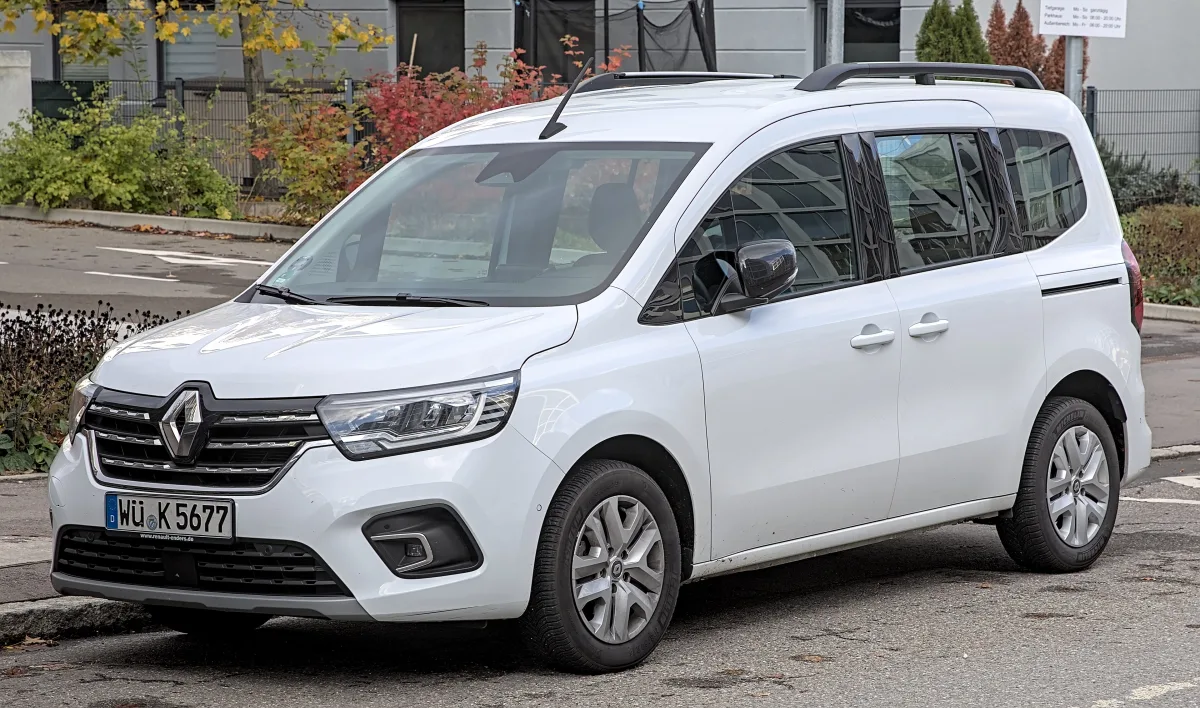
Renault Kangoo: II and III generations, engines and trims
The Renault Kangoo is a compact van and people carrier that has been produced since 1997. In Lithuania, it's popular both as a workhorse and as a practical family vehicle. We'll look at how the II and III generations differ, which engines are most common, how the trims vary, and what to check when buying a used Kangoo.






Kangoo in brief
The Kangoo has been produced in three generations: I (1997–2007), II (2008–2021) and III (from 2021). Each generation offers a passenger variant with rear windows and seats, and a cargo version — the II generation van was called Kangoo Express, and the III generation van is called Kangoo Van. Both of the newer generations also had electric versions: Kangoo Z.E. and Kangoo E-Tech Electric.
The Kangoo is praised for its boxy, spacious interior, sliding side doors, and straightforward, easy-to-maintain technology. The same technology is used in the Mercedes-Benz Citan and Nissan models (NV250, Townstar), so spare parts are plentiful.
II and III generation — what's the difference
The II generation (2008–2021) is significantly larger and more comfortable than the first. Passenger vehicles have sliding doors on both sides and a liftgate or twin rear doors at the back. There was also a longer seven-seat Grand Kangoo version. The car was refreshed in 2013 — the front end and some interior details were changed.
Third generation (from 2021) is wider, quieter and much more modern: the interior offers more comfort typical of a compact car, there are driver assistance systems and more modern infotainment. The cargo Kangoo Van can have a right-hand side door without a central pillar (Open Sesame), which makes loading long items easier. Later, the longer seven-seater Grand Kangoo returned.
The used market is dominated by second-generation models — they are cheap and straightforward, but often heavily used. The third generation is pricier, but offers comfort and safety closer to that of compact cars.
Engines and transmissions
The second generation's most popular engine is the 1.5 dCi diesel (around 70–110 hp). Petrol options include the 1.6 16V (around 105 hp), and after the facelift, the 1.2 TCe (around 115 hp). Most cars come with a 5- or 6-speed manual gearbox; automatic transmissions are rare.
The third generation offers 1.5 Blue dCi diesel (around 75–115 hp) and 1.3 TCe petrol engines; more powerful versions may have an EDC automatic gearbox. Blue dCi engines require AdBlue fluid.
The electric Kangoo Z.E. (second generation) usually has a 22 or 33 kWh battery, so its real-world range is modest. The third-generation E-Tech Electric with roughly a 45 kWh battery travels significantly further.
What to check when buying a used Kangoo
Many Kangoos have been used as workhorses, so inspect the bodywork carefully and check against service records and MOTs. Look at the sliding door runners and hinges, the boot or cargo area floor, the sill and suspension — these often show signs of wear from heavy use.
The 1.5 dCi engine is sensitive to oil maintenance: long intervals between changes can damage the piston rings, so it's crucial that the oil is changed regularly, and the engine runs smoothly without unusual noises. Check the injectors, twin-mass flywheel (if fitted) and diesel particulate filter (DPF) and EGR valve.
When buying an electric Kangoo Z.E., it's essential to find out if the battery belongs to the car or was leased, and check its condition. Inspect the body for rust, especially around the wheel arches and sills, particularly on older models.


Trim levels
Names and equipment vary by market and year; we list the most common passenger Kangoo trims found in Europe.
Authentique
Second generationThe base, most basic trim level.
- Steel wheels
- Simple interior with fabric upholstery
- Often — no air conditioning or manual climate control
Expression
Second generationThe most popular passenger Kangoo trim level.
- Air conditioning
- Often — electric front windows and mirrors
- Often — roof rails and additional storage compartments
Privilège
Second generationThe best-equipped second-gen version.
- Often — light-alloy wheels
- Often — cruise control and fog lights
- Often — body colour bumpers
Intens
Third generation, 2021–2022Higher-spec early third-gen model.
- Light-alloy wheels
- Often — multimedia with Apple CarPlay and Android Auto
- Often — driver assistance systems
Techno
Third generation, from 2022Best-equipped late third-gen Kangoo.
- Light-alloy wheels
- Larger multimedia screen
- Often — reverse camera and parking sensors
Trim comparison
| Authentique (II) | Expression (II) | Privilège (II) | Techno (III) | |
|---|---|---|---|---|
| Who’s it for? | For work and the least cost | For families and daily use | More comfort | For a modern family car |
| Alloys (most often) | Steel | Steel | Often light alloy | Light alloy |
| Interior | Basic, cloth trim | Air conditioning, more storage | More comfort features | Modern, with multimedia screen |
| Engine | Most often 1.5 dCi | Most often 1.5 dCi | Most often 1.5 dCi | 1.3 TCe, 1.5 Blue dCi |
| Price in the used market (relatively) | Budget-friendly | Budget-friendly | Mid-range | Premium |
For most buyers, the best choice is a well-maintained second-gen Expression with a 1.5 dCi engine. The third-gen is worth considering if comfort, safety systems, and modern infotainment are important to you.
Pros
- Very spacious and practical interior
- Sliding side doors are handy in tight parking spots
- Affordable maintenance and plenty of spare parts
- Economical 1.5 dCi diesel engines
Cons
- Many of these cars have had a hard life as workhorses
- The second-gen interior is basic, and it's noisier on the move than a typical hatchback
- The electric Kangoo Z.E. has a limited range
Frequently asked questions
What's the difference between the passenger Kangoo and the Kangoo Express?
The passenger Kangoo has rear side windows and second-row seats, while the Express (third-gen Kangoo Van) is a cargo van without rear seats. Before buying, check what category the vehicle is registered as and how many seats it has.
Which Kangoo engine is the best?
Most buyers — 1.5 dCi diesel: economical and simple, provided the oil was changed regularly. Those who mostly drive in the city should consider the petrol TCe engine, as the diesel particulate filter needs longer journeys.
Are you considering buying the electric Kangoo Z.E.?
It's suitable if you drive short distances daily and can charge at home or work. Make sure to find out if the battery belongs to the car or was leased, and check its condition.
Is there a seven-seater Kangoo?
Yes — the longer Grand Kangoo was offered in the second generation, and later returned in the third.
Updated 2026-10-09 · Trim levels and equipment vary by market and model year — check the equipment of the specific car. · Translated automatically


