 English
 Lietuvių
 Latviešu
 Eesti
 Polski
 Русский
 Українська
 Deutsch
 Nederlands
 Čeština
 Slovenčina
 Svenska
 Norsk
 Dansk
 Suomi


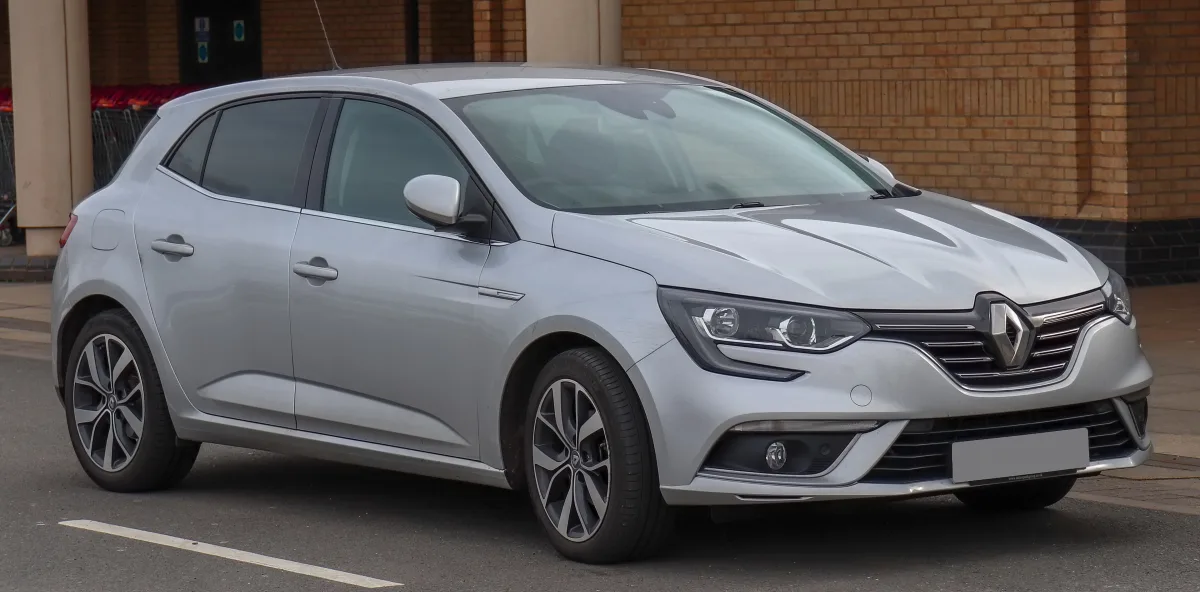
Renault Megane: III and IV generations, engines and trims
The Renault Megane is a French compact car that's popular in Lithuania for its economical diesel engines and affordable price in the used market. We'll look at how the III and IV generations differ, which engines are most common, how the trims vary, and what to check before buying.






Megane in brief
The Megane (manufacturer's spelling — Mégane) has been in production since 1995 and competes with the Volkswagen Golf, Ford Focus, and Peugeot 308. The III and IV generations offered hatchback and estate — Megane Grandtour — body styles. The III generation was also available as a three-door coupe and convertible, while the IV generation came as a sedan too.
The Megane is praised for its comfortable, smooth ride, low diesel engine running costs, and the fact that it's usually cheaper than its German rivals of the same age in the used market. For those who enjoy sporty driving, there are R.S. versions that have their own loyal following.
III and IV generation — what's the difference
The III generation (2008–2016) is simpler and more affordable, so there's a larger supply of used examples. During its production run, it was updated several times: later models received more modern engines, such as the 1.2 TCe, and a slightly refreshed appearance. It's a practical and budget-friendly daily driver, but most examples now have high mileage.
Fourth generation (from 2016) — longer, wider and significantly more modern: striking C-shaped LED daytime running lights, and in higher trims — a large vertical touchscreen and more driver-assistance systems. The 2020 facelift brought updated LED lights, a newer infotainment system, and the range was bolstered by the plug-in hybrid E-Tech.
From 2022, the Megane E-Tech Electric is a completely different car — an electric crossover model, so it shouldn't be confused with the conventional Megane.
Engines and gearboxes
In the third generation, the most popular was the 1.5 dCi diesel (around 85–110 hp), with more powerful 1.9 dCi and 1.6 dCi (around 130 hp) also available. Petrol options included the 1.6 16V without a turbo (around 110 hp), followed by the 1.4 TCe and 1.2 TCe with turbochargers.
In the fourth generation, the lineup is anchored by the 1.2 TCe, and from 2018 — 1.3 TCe petrol engines (around 115–160 hp) and 1.5 dCi / Blue dCi diesels (around 90–115 hp). More powerful diesels include the 1.6 dCi, followed by the 1.7 Blue dCi (around 130–165 hp). The GT version featured the 1.6 TCe (around 205 hp), while the Megane R.S. came with the 1.8 TCe (around 280–300 hp).
Gearboxes come as manual or automatic EDC (dual-clutch). The 1.5 dCi and smaller petrol engines often pair with the dry-clutch EDC: it's economical, but doesn't like constant driving in the lower gears and rough acceleration.
What to check when buying a used Megane
The 1.5 dCi engine is long-lasting if the oil is changed on time, but with poor maintenance, it can suffer from injector deposit issues. Ask about the service history and listen for any knocking. For diesel cars that have done a lot of city driving, check the diesel particulate filter (DPF) and EGR valve.
Early 1.2 TCe engines (roughly 2012–2016) have high oil consumption, which can damage the timing chain and the engine itself. Ask if the oil level was regularly checked and if the engine was repaired.
The EDC gearbox should shift smoothly—hesitation when moving off or clunks when shifting indicate issues with the clutch or control unit. In the fourth generation, check if the multimedia system and touchscreen respond quickly. For all cars, verify the mileage against service records and MOTs, and check the body for repainted parts.


Trim levels
Names and equipment vary by market and year; we list the most common trims found in Europe.
Expression
Third generationThe base third-gen trim is the most affordable option.
- Often — steel wheels
- Air conditioning
- Basic sound system
Dynamique
Third generationThe most popular third-gen trim with more comfort features.
- Often — alloy wheels
- Often — automatic climate control and cruise control
- Often — Carminat TomTom navigation
Zen
Fourth generationThe main fourth-generation trim, which is enough for most buyers.
- Often — alloy wheels
- Often includes automatic climate control and parking sensors.
- Card key instead of a traditional key.
Intens
Fourth generationA more generously equipped version with additional technologies.
- Often includes a large vertical multimedia screen.
- Often includes a digital instrument cluster.
- Often includes drive mode selection and ambient interior lighting.
GT Line / R.S. Line
Fourth generationSporty-looking version with standard engines; renamed R.S. Line after the 2020 refresh.
- Sporty bumpers and larger alloy wheels.
- Sport seats and trim.
- Often includes LED headlights.
GT ir R.S.
Fourth generationThe most powerful versions for driving comfort.
- GT around 205 HP, R.S. around 280–300 HP.
- Often includes the four-wheel drive system 4Control.
- A more premium ride and sporty interior.
Fourth-generation trim comparison
| Zen | Intens | GT Line / R.S. Line | R.S. | |
|---|---|---|---|---|
| Who it's for | For daily driving | For comfort and tech | Sporty looks | For driving pleasure |
| Wheels (most common) | 16-inch | 16–17-inch | 17–18-inch | 18–19-inch |
| Interior | Standard | More convenience features, larger screen | Sport seats | Sport seats, R.S. trim |
| Engine (most common) | 1.2–1.3 TCe, 1.5 dCi | 1.2–1.3 TCe, 1.5–1.7 dCi | 1.3 TCe, 1.5–1.7 dCi | 1.8 TCe, 280–300 HP |
| Price in the used market (relatively) | Budget-friendly | Mid-range | Mid-range | Premium |
For most buyers, the best choice is the Zen or Intens with a 1.3 TCe or 1.5 dCi engine. The GT Line or R.S. Line is worth considering for style, and the R.S. if you're after a truly sporty car.
Pros
- Comfortable, smooth ride
- Economical diesel engines
- Usually cheaper than German rivals in the used market
- Wide range, spare parts are easy to find
Cons
- It depreciates faster than its German rivals
- Dry clutches in the EDC gearbox make for smooth driving in traffic
- Early 1.2 TCe engines have high oil consumption
Frequently asked questions
Which Megane generation is best to buy used?
If your budget is tight, go for later third-gen models with the 1.5 dCi or 1.6 dCi diesel and a clear service history. If you want a more modern interior and more safety systems, opt for the fourth-gen, ideally from 2018 onwards, when the 1.3 TCe engine was introduced.
Is the 1.5 dCi engine reliable?
This is one of the most common and economical Renault diesels, but it is sensitive to oil change intervals. Choose a car with a clear service history and avoid those where the oil has been changed infrequently.
What’s the difference between the Megane and Megane Grandtour?
The Grandtour is an estate with a significantly larger boot, making it ideal for families and frequent travellers. The engines and trims are essentially the same as the hatchback.
Is it worth choosing a Megane with an EDC gearbox?
It is, if the gearbox operates smoothly and you do most of your driving in the city. During a test drive, check the initial acceleration and slow driving in traffic – any juddering indicates that a clutch repair might be needed.
Updated 2026-10-09 · Trim levels and equipment vary by market and model year — check the equipment of the specific car. · Translated automatically


