 English
 Lietuvių
 Latviešu
 Eesti
 Polski
 Русский
 Українська
 Deutsch
 Nederlands
 Čeština
 Slovenčina
 Svenska
 Norsk
 Dansk
 Suomi


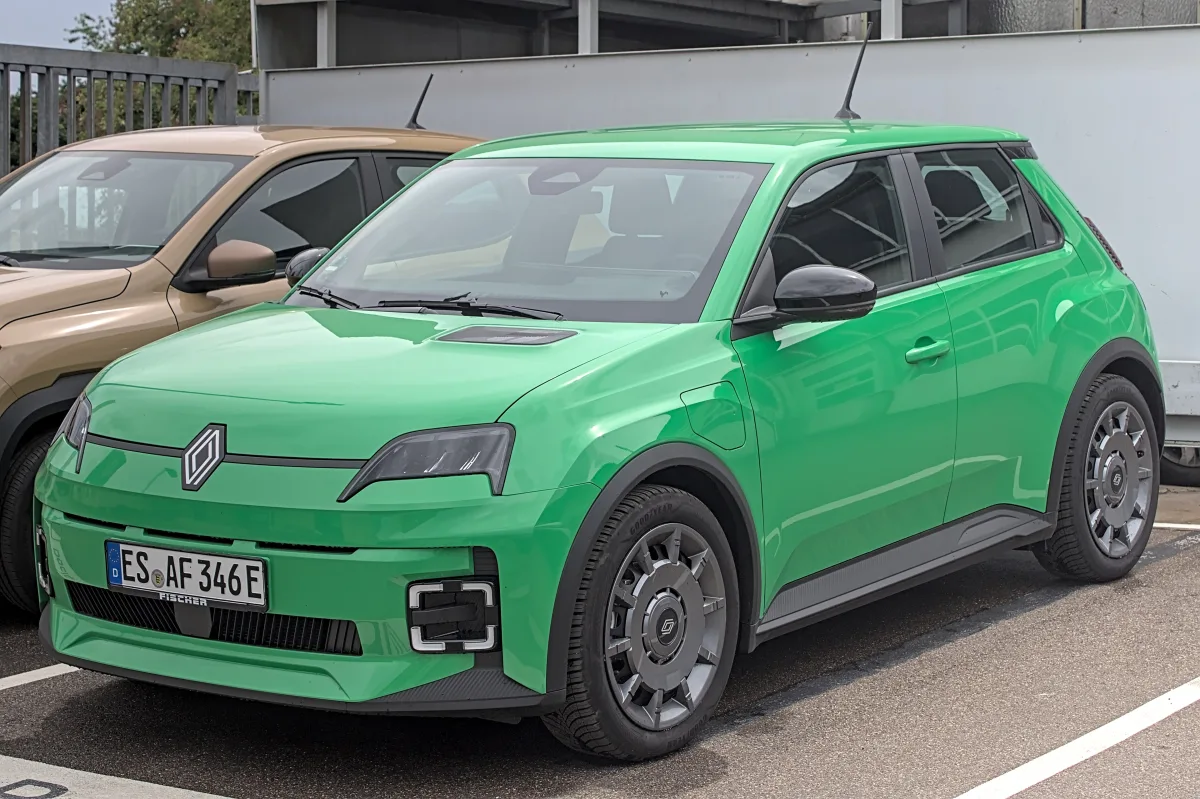
Renault 5 E-Tech: batteries, versions, charging and trims
The Renault 5 E-Tech is a compact electric hatchback that harks back to the legendary 1972 Renault 5. It's a new model, so the used market is still thin; we look at how the battery and power versions differ, how far you can realistically drive in winter, how it charges, and what to check when buying.






Renault 5 E-Tech in brief
The Renault 5 E-Tech was unveiled in early 2024 and reached buyers by the end of the same year. It's manufactured in France and built on a new platform for small electric cars, which is also used by the Renault 4 E-Tech and the sporty Alpine A290.
The car is around 3.9 m long, making it city-friendly and easy to park. There's less space in the rear seats and boot compared to larger electric cars, but it's usually enough for two adults and daily shopping.
Battery and power versions — what's the difference
There are two battery options: a smaller one, around 40 kWh (Renault calls it the urban range), and a larger one, around 52 kWh (comfort range). The smaller battery comes with either around 95 hp or around 120 hp versions, while the larger battery offers around 150 hp. All versions have front-wheel drive.
According to the manufacturer's (WLTP) data, the 40 kWh version covers around 300 km, while the 52 kWh version manages around 400 km. If you often drive between cities, the larger battery is more practical, but for those who mostly drive in the city, the smaller battery often suffices.
As the model is new, most used examples on the market are 1-2 years old, often demonstrators or ex-leased. Check the version and battery size against the documents, as they don't differ externally.
Winter mileage and charging
In winter, you often see around 20-30% less range than in summer, and even more with short trips in the cold. For smaller battery versions, this means real-world range can drop to around 200 km or less on cold days, so for longer journeys in winter, the 52 kWh version is better suited.
The Renault 5 charges via a CCS2 connector. With alternating current, it typically charges at up to 11 kW, while at fast-charging stations, the larger battery version charges quicker than the smaller one. A cold battery charges more slowly, so it's worth pre-conditioning it before a fast charge in winter.
The Renault 5 can not only charge but also supply power: with the right adapter, you can run household appliances from it. Check if such an adapter is included when buying.
What to check when buying a used Renault 5 E-Tech
The most important thing is the battery's condition. Ask a Renault service centre or diagnostic specialist for a battery health (SoH) report and compare the stated range when the battery is at 100% with the new car's figures. Check how much manufacturer's warranty is left on the battery.
Check that the software is up to date, and test the multimedia system, cameras, and driver assistance features. Test charging with alternating current and at a fast-charging station, ensure the charging cable is included, and check if the car has a heat pump.
Inspect the tyres and alloy wheels — they're easy to scuff on city kerbs. Check the history using the VIN number, and after an incident, have the battery protection and high-voltage system checked at a service centre.


Versions and trims
Trim names and equipment vary by market and year; we list the Renault 5 E-Tech versions most commonly found in Europe.
urban range
From 2024Versions with a smaller, around 40 kWh battery.
- Around 95 hp or around 120 hp
- Around 300 km according to WLTP
- Best suited to city drivers
comfort range
From 2024Version with a larger, around 52 kWh battery.
- Around 150 hp
- Around 400 km according to WLTP
- Faster fast charging
evolution
From 2024The more basic trim is most commonly found.
- Digital instrument cluster
- The more basic multimedia system
- Often — a smaller battery
techno
From 2024A popular choice with more modern kit
- OpenR Link multimedia with Google services
- Often — a heat pump
- Often — a larger battery
iconic cinq
From 2024The top-spec trim with distinctive styling
- Distinctive exterior and interior styling
- More comfort and driver assistance systems
- Often — a larger battery
A comparison of Renault 5 E-Tech versions
| 40 kWh, 95 AG | 40 kWh, 120 AG | 52 kWh, 150 AG | |
|---|---|---|---|
| Who it's for | For city driving | For city driving and short trips | And for longer journeys |
| Battery | Around 40 kWh | Around 40 kWh | Around 52 kWh |
| Range (relatively) | Lower | Lower | Highest |
| Driven wheels | Front-wheel drive | Front-wheel drive | Front-wheel drive |
| Price in the used market (relatively) | Budget-friendly | Mid-range | Premium |
For most buyers, the 52 kWh version is the most practical, as it offers a longer range and faster charging. The 40 kWh version is suitable for those who primarily drive in the city and can charge at home.
Pros
- Easy to manoeuvre in the city thanks to its compact size
- Distinctive, retro-inspired design
- Modern interior and infotainment
- Can power accessories
Cons
- The used market is still small
- Limited space in the back row and boot
- Shorter range in winter for smaller battery versions
Frequently asked questions
How far does the Renault 5 E-Tech go in winter?
In cold weather, you often need to count on 20–30% less range than in summer. The 52 kWh version typically manages around 250–300 km in winter, while the 40 kWh manages around 200 km or less; speed, temperature, and the heater all play a significant role.
Which battery to choose — 40 or 52 kWh?
If you mostly drive in the city and can charge at home, the 40 kWh often suffices. If you sometimes drive between cities, it's worth choosing the 52 kWh — it goes further and charges faster at rapid charging stations.
How does the Renault 5 E-Tech differ from the Alpine A290?
The Alpine A290 is built on the same platform but is the sporty version: more powerful, with a differently tuned suspension and a distinct look. For everyday driving and lower running costs, the Renault 5 is the more practical choice.
Updated 2026-10-10 · Trim levels and equipment vary by market and model year — check the equipment of the specific car. · Translated automatically


