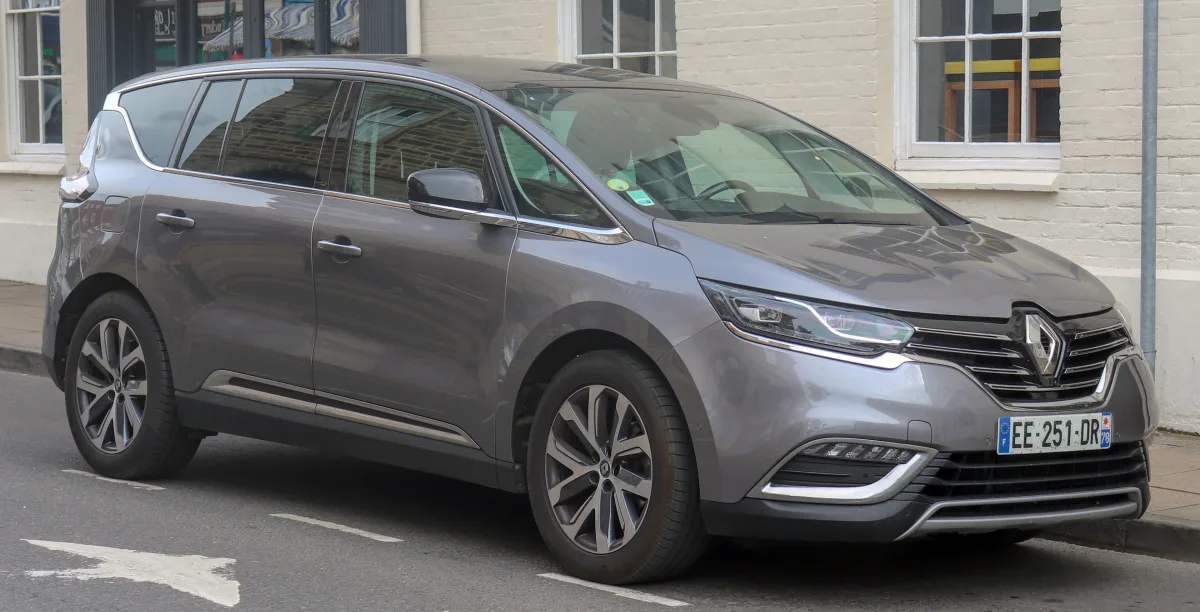
Renault Espace: Generations IV, V and VI, engines and trims
Renault Espace is one of Europe's original MPVs, in production since 1984. We review how the classic generation IV differs from the crossover-inspired generation V and the hybrid generation VI, which engines are the most popular, how trims vary, and what to check before buying a used Espace.
ADVERTISEMENT
Espace at a glance
Introduced in 1984, the Espace spent a long time as the benchmark for large family MPVs in Europe. Up to and including generation IV, it was a classic MPV with individual rear seats, while generations III and IV also offered a longer Grand Espace version.
Generation V (2015) evolved into a lower, crossover-styled vehicle with five or seven seats, while generation VI (from 2023) became an SUV available exclusively with a hybrid powertrain. The Espace is praised for its spacious, airy cabin and long-distance comfort. On the used market, it typically depreciates faster than its German rivals, making it an attractive buy if the technical condition is sound.
Generations IV, V, and VI — what's the difference
Generation IV (2002–2014) is a classic large MPV featuring a flat floor, removable rear seats, and a vast glass area. Having enjoyed a long production run with multiple facelifts, supply remains healthy, but these are now older cars that are frequently prone to electrical issues.
Generation V (2015–2023) shares its platform with the Talisman. The car is lower and more crossover-like, featuring a large vertical touchscreen and Multi-Sense drive modes in the cabin, alongside the 4Control four-wheel steering system on certain models. Seven seats were optional, with the third row best suited for children. Facelifted models around 2020 received matrix LED headlights and a redesigned centre console.
Generation VI (from 2023) relies on Austral underpinnings: it is a shorter SUV with five or seven seats and solely E-Tech hybrid power. The interior is significantly more modern, featuring two large screens and Google-powered infotainment, though space—particularly in the third row—is tighter than in generation V.
Engines and gearboxes
Generation IV models are most commonly found with 1.9, 2.0, and 2.2 dCi diesel engines, alongside the 3.0 V6 dCi diesel. Petrol versions (2.0, 2.0 Turbo, and 3.5 V6) are scarce on the market.
Generation V offered 1.6 dCi diesels (130 and 160 hp) and a 1.6 TCe petrol (200 hp) up to around 2017–2018, later replaced by 2.0 Blue dCi diesels (approx. 160–200 hp) and the 1.8 TCe (225 hp). The entry-level 130 hp diesel was paired with a manual gearbox, while others relied predominantly on the EDC dual-clutch automatic transmission.
The generation VI E-Tech hybrid pairs a 1.2-litre turbocharged three-cylinder petrol engine with two electric motors, delivering a combined output of around 200 hp driving the front wheels. It does not require plugging in—the battery charges on the move and via regenerative braking.
What to check when buying a used Espace
The Espace is packed with electronics, so test everything: the infotainment screen (generation V's R-Link 2 is frequently criticized for being sluggish and glitchy), the electronic parking brake, power seats, parking sensors, and cameras. A diagnostic scan will reveal stored fault codes that aren't visible to the naked eye.
The EDC gearbox should shift smoothly, without shudders or jerking when pulling away. On cars equipped with 4Control, check for any rear-wheel steering warnings on the instrument cluster. The 2.0 Blue dCi engines use AdBlue—verify that the system operates error-free, and check the diesel particulate filter (DPF) and EGR valve on diesels with a heavy urban driving history.
For generation IV cars, overall condition is paramount: electrical gremlins (windows, door locks, card reader), suspension, and bodywork. The 3.0 V6 dCi engine earned a reputation for reliability issues, so it should only be considered with a documented service history. For all cars, verify the mileage against MOT and service records.
ADVERTISEMENT
Trim levels
Names and equipment vary by market and model year; the trims listed are the most common in Europe.
Zen
Generation V
The core and frequently seen trim level for generation V.
Alloy wheels
Automatic climate control
Frequently includes R-Link 2 infotainment with navigation
Intens
Generation V
The most popular choice, offering extra comfort and equipment.
Larger alloy wheels
Often features a panoramic roof and LED headlights
Frequently equipped with 4Control rear-wheel steering
Initiale Paris
Generation V
The most luxurious generation V model with exclusive finishes.
Leather upholstery, massaging front seats
Frequently includes a Bose sound system
Typically features 4Control and adaptive suspension
Techno
Generation VI
The entry-level generation VI trim, which is already generously equipped.
OpenR Link infotainment with Google services
LED headlights and digital instrument cluster
Frequently includes a power tailgate
esprit Alpine
Generation VI
A sportier-looking version without a more powerful engine.
Alpine-style exterior and interior accents
Sportier seats
Often features larger alloy wheels
Comparison of Generation V and VI trims
Zen (V)
Intens (V)
Initiale Paris (V)
Techno (VI)
Who it's for
A family car on a budget
Most buyers
Maximum comfort
Latest technology
Interior
Cloth upholstery
Often features partial leather upholstery
Leather upholstery, massaging seats
Dual large screens, contemporary cabin
Engine
Predominantly the dCi diesel
dCi or TCe
Top-tier dCi and TCe units
E-Tech hybrid, around 200 hp
Used market pricing (relative)
€
€€
€€
€€€
For most families, the sweet spot is a 5th-generation Intens with a diesel engine and a verified service history. The Initiale Paris is worth springing for if comfort is your priority, while the 6th-gen makes sense if you care about up-to-date tech and better fuel economy.
Pros
Spacious, airy cabin and supportive seats
Plush, quiet ride on long journeys
Five- or seven-seat layouts
Generally more affordable on the used market than German rivals of a similar vintage
Cons
Complex electronics mean more potential gremlins
Gen 5 infotainment can be sluggish and prone to freezing
The third-row seats in generations 5 and 6 are a tight squeeze for adults
Frequently asked questions
Which Espace generation is the best buy on the used market?
For most buyers, the 5th generation hits the best compromise—especially the facelifted 2020 and later models, which feel modern, spacious, and undercut the 6th-gen significantly. The 4th generation is only worth considering if budget is tight and the mechanical condition is rock-solid.
Do all Espace V models come with seven seats?
No—seven seats were optional. The third-row seats fold flat into the boot floor and are best left to kids or short trips. Always check the registration documents to confirm the seating capacity before buying.
Is the sixth-generation Espace a plug-in hybrid?
No. The Espace VI relies on an E-Tech full hybrid setup that doesn't need to be plugged in—it charges on the move via regenerative braking and the engine. Around town, it can run on pure electricity for surprisingly stretches.
Is an Espace with the EDC gearbox worth buying?
Yes, provided it shifts smoothly and has a documented service history. On your test drive, pay close attention to pull-aways and low-speed crawling in traffic—any shuddering or jerking is a red flag that points to a costly repair.
Updated 2026-10-09 · Trim levels and equipment vary by market and model year — check the equipment of the specific car. · Translated automatically
Comments
No comments about the Renault Espace yet. Share your experience.
We use necessary cookies to run the website. With your consent, we will also use analytics and advertising measurement cookies — to understand how the website is used and to measure our advertising results. Learn more
 English
 Lietuvių
 Latviešu
 Eesti
 Polski
 Русский
 Українська
 Deutsch
 Nederlands
 Čeština
 Slovenčina
 Svenska
 Norsk
 Dansk
 Suomi


 4