 English
 Lietuvių
 Latviešu
 Eesti
 Polski
 Русский
 Українська
 Deutsch
 Nederlands
 Čeština
 Slovenčina
 Svenska
 Norsk
 Dansk
 Suomi


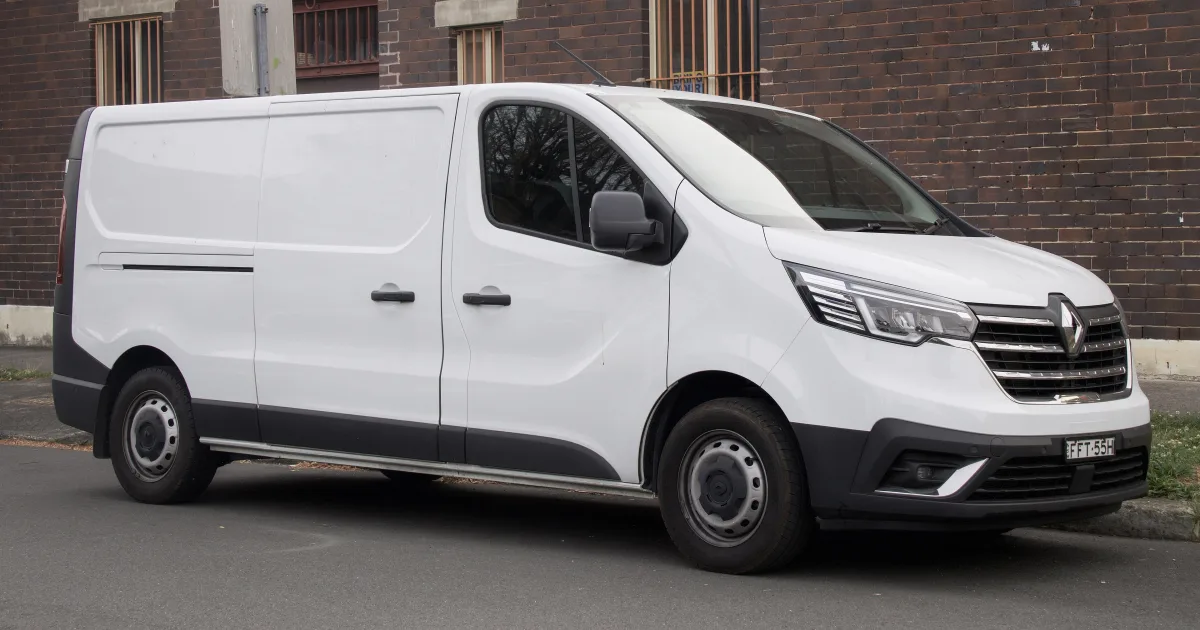
Renault Trafic: II and III generations, engines and body styles
Renault Trafic is one of the most popular medium-sized vans in Europe and a common choice in Lithuania's used commercial vehicle market. We look at how the II and III generations differ, which engines are most commonly found, what body styles are available, and what to check before buying a used Trafic.






Trafic in brief
Trafic has been in production since 1980. The second and third generations were also sold under other brands: the II generation as Opel (Vauxhall) Vivaro and Nissan Primastar, and the III generation as Opel Vivaro, Nissan NV300, and Fiat Talento. Therefore, spare parts are plentiful, and mechanics are well-acquainted with this model.
Trafic comes as a cargo van, double-cab van, passenger (Passenger or Combi), the more upscale passenger SpaceClass, and the rarer cab-chassis, often converted into camper vans. Most buyers choose from two lengths (L1, L2) and two roof heights (H1, H2).
II and III generation — what's the difference
The II generation (2001–2014, facelifted in 2006) is today the most affordable Trafic. It's straightforward and familiar to mechanics, but most vehicles have clocked up high mileage, so the key consideration when buying is the technical condition.
The III generation (from 2014) is more modern, quieter, and more economical, with more space for cargo and a more comfortable cabin. The low-roof H1 version fits easily into most garages and parking spaces, while the L2 version allows for longer cargo to be carried.
2019 facelift: revised front end and headlights, new 2.0 dCi engines and automatic gearbox. The interior was later updated with a new instrument panel. These are the priciest on the used market, but also the least worn.
Engines and gearboxes
In the second generation, you'll most commonly find 1.9 dCi, 2.0 dCi and 2.5 dCi diesel engines (around 80–150 hp). Gearboxes are usually manual, with the occasional automated manual.
In the third generation, up until 2019, the 1.6 dCi diesel (around 90–145 hp) was used; more powerful versions have two turbochargers. From 2019, it was replaced by the 2.0 dCi engine (around 110–170 hp), with which you can also opt for the dual-clutch automatic EDC gearbox.
All Trafic models are front-wheel drive. Newer Euro 6 diesels often have an AdBlue system, so it's worth checking its condition before buying.
What to check when buying a used Trafic
Commercial vans often have high mileage, so check the service history and records. Pay special attention to the gearbox and dual-mass flywheel: vibrations when moving off, difficulty changing gears or grinding in neutral often indicate an expensive repair.
In diesel engines, check the turbocharger (whistling, loss of power, oil leaks), injectors, EGR valve and particulate filter. In the dual-turbo 1.6 dCi version, ask if the oil has been changed on time.
Check the sliding door runners, tailgate hinges, and cargo area floor — they tell a lot about how the car has been used. Also, inspect the underbody and sills for rust, especially on older cars.


Body styles
Trim names vary greatly by market and year, so we list the most commonly encountered body styles.
Furgonas
Second and third generationsThe most popular cargo version with two or three seats in the cab.
- L1 or L2 length, H1 or H2 roof height
- Often — one or two sliding side doors
- Often — a folding middle seat that turns into a table
Dvigubos kabinos furgonas
Second and third generationsVan with a second row of seats — perfect for work with a crew.
- Second row of seats behind the cab
- Smaller cargo area behind the partition
- Often — side windows by the second row
Passenger / Combi
Second and third generationsPassenger version, often used for transporting people and large families.
- Mostly 8–9 seats
- Simple, easy-to-clean interior
- Often — rear seats removed
SpaceClass
Third generationThe most luxurious passenger version, designed for comfort.
- Upscale interior trim
- Often — separate, folding rear seats
- Often — automatic transmission and lightweight alloy wheels
Važiuoklė su kabina
Third generationA rarer version, often fitted with camper shells or special bodies.
- Cab without a cargo area
- Rear prepared for a camper shell
- In the used market, often found with a camper shell
Comparison of third-generation versions
| Furgonas | Dvigubos kabinos furgonas | Passenger / Combi | SpaceClass | |
|---|---|---|---|---|
| Who it's for | For cargo and services | For crews with tools | For passenger transport | For comfort and business trips |
| Mostly vans | Panel vans | Panel vans | Panel vans or light commercial | Light commercial |
| Saloon | Cab chassis | Cab and chassis with second row | Up to 9 seats, basic trim | Luxury trim |
| Price in the used market (relatively) | € | €€ | €€ | €€€ |
For work, the best choice is usually the L1H1 or L2H1 van with a 1.6 or 2.0 dCi engine. For transporting passengers, the Passenger or Combi version is the most sensible, while the SpaceClass is only worth considering if comfort is key.
Pros
- A wide range of affordable spare parts (shared with Opel, Nissan, and Fiat)
- Economical diesel engines
- Spacious and well-thought-out cabin with plenty of room for your stuff
- Low-roof version is perfect for garages and city driving
Cons
- Commercial vehicles often have high mileage
- Repairing a two-mass flywheel and clutch can be expensive
- Interiors of older second-generation models are basic and noisy
Frequently asked questions
How does the Renault Trafic differ from the Opel Vivaro?
The second and third (up to 2019) generations of Trafic and Vivaro are essentially the same vehicle with different fronts and badges. The technology, engines, and spare parts often match, so it's worth choosing based on the specific condition of the vehicle, not the badge.
Which Trafic engine should you choose?
In the third generation, you'll commonly find the 1.6 dCi, and after 2019, the 2.0 dCi, which is more powerful and better suited to heavy loads and automatic transmissions. The most important thing is that the engine has a clear service history.
Will a Trafic H1 fit in my garage?
The low-roof H1 version is designed to fit into most garages and underground parking lots, but it's worth checking the height limit of the specific space and the height listed in the vehicle's documents before buying.
Updated 2026-10-09 · Trim levels and equipment vary by market and model year — check the equipment of the specific car. · Translated automatically


