 English
 Lietuvių
 Latviešu
 Eesti
 Polski
 Русский
 Українська
 Deutsch
 Nederlands
 Čeština
 Slovenčina
 Svenska
 Norsk
 Dansk
 Suomi


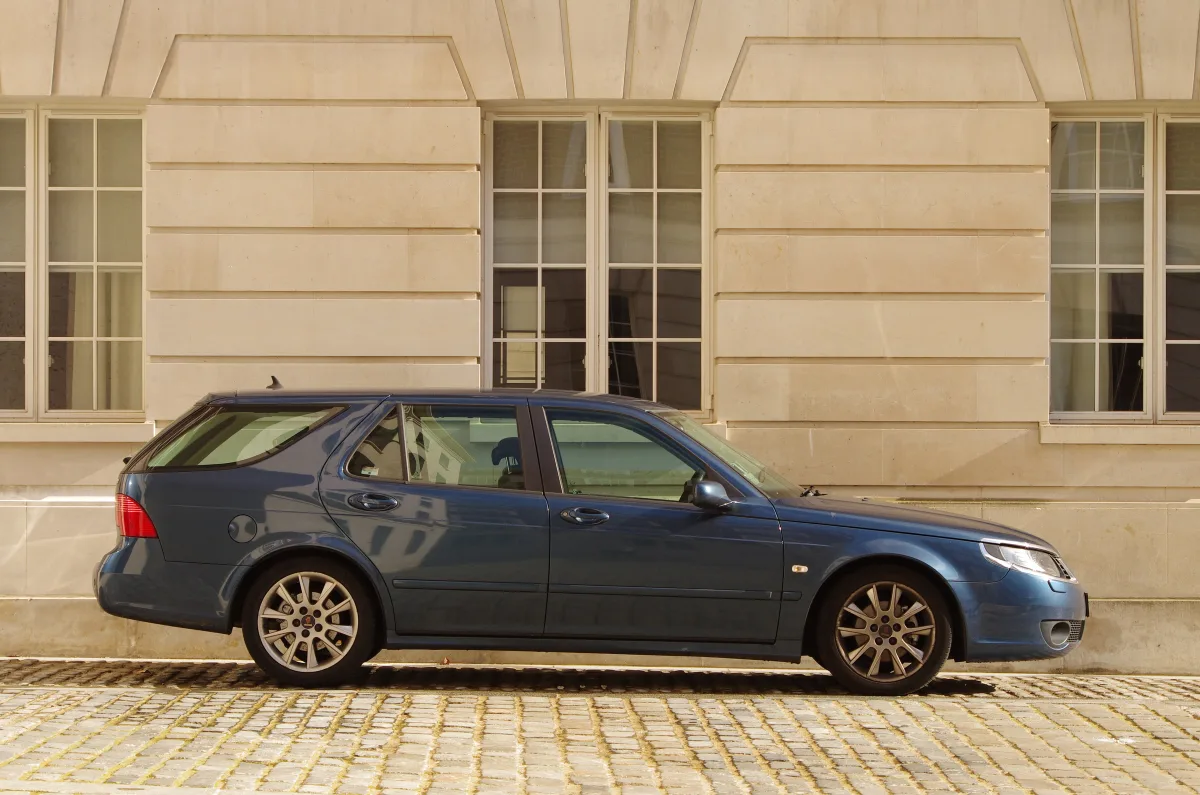
Saab 9-5: Generations, Engines, and Trims
The Saab 9-5 is the largest model from Saab, produced between 1997 and 2011. In the used market, almost all cars are first-generation sedans and estates, while the second generation, produced for just a few years, is a rarity. We look at how the generations differ, which engines are most popular, how the trims vary, and what to check before buying.






Saab 9-5 at a glance
The first generation (1997 to around 2010) was available as a sedan and estate; after the 2005 facelift, the estate was renamed SportCombi. The second generation (2010–2011) was built on the General Motors Epsilon II platform, shared with the Opel Insignia, and was produced almost exclusively as a sedan. Few were made, as Saab ceased production in 2011.
The 9-5 is praised for its spacious interior, large boot, comfortable seats, and smooth highway driving. Safety was enhanced with active head restraints, and higher-spec models offered heated front seats.
Spare parts for the first generation are still available: some are supplied by the former Saab parts company, while others are mechanical components shared with other GM models. Finding specific body parts and lights for the second generation is much harder.
First and second generations — what's the difference
The first generation was updated twice: in 2001 (for the 2002 model year) and 2005 (for the 2006 model year). After the second update, the car received a different front end with chrome headlight surrounds, new bumpers, and an improved interior. This is the most popular choice in the used market.
The second generation is a significantly more modern and larger car, featuring a heads-up display on the windscreen, adaptive headlights, and all-wheel drive XWD. However, due to its short production run, it's rare, so it's important to assess whether you'll be able to source the necessary parts when buying.
For many buyers, the most practical choice is the first generation post-2005 refresh, especially the SportCombi estate. The second generation is worth considering for Saab enthusiasts who value exclusivity.
Engines and gearboxes
The first generation most commonly features turbocharged petrol engines: 2.0t (around 150 hp), 2.3t (around 170–185 hp), more powerful Aero 2.3T (around 230–260 hp), and the 3.0 V6 turbo (around 200 hp). BioPower versions can run on E85 bioethanol fuel. Diesels include the 2.2 TiD (around 120–125 hp), 3.0 TiD V6 (around 175 hp), and from 2006, the 1.9 TiD (around 150 hp).
The second generation offers turbocharged petrol engines like the 1.6T (around 180 hp), 2.0T (around 220 hp), and the 2.8 V6 turbo with all-wheel drive (around 300 hp), as well as diesels including the 2.0 TiD (around 160 hp) and 2.0 TTiD (around 190 hp).
First-generation cars come with a 5-speed manual or 4–5-speed automatic gearbox, while the second generation features a 6-speed manual or 6-speed automatic. Most cars are front-wheel drive.
What to check when buying a used Saab 9-5
Early first-generation 2.0t and 2.3t engines were notorious for oil thickening and deposits due to the crankcase ventilation system — this was later improved. Ask if the system has been updated, how often the oil is changed, and check if the engine isn't consuming too much oil. Difficult starting or misfiring often indicates a faulty ignition coil.
The 3.0 TiD V6 diesel is considered more complex and expensive to repair, so it's often worth opting for the 1.9 TiD or a petrol engine. In the case of the 1.9 TiD, check the turbochargers, EGR valve, and diesel particulate filter (DPF). The automatic gearbox should shift smoothly, without any jolts.
Inspect the wheel arches, sills, and door bottoms for rust, check the suspension and all electronics, including the infotainment screen. Verify the service history, and for second-generation models, also check the body for repaired parts.


Trim levels
Names and equipment vary by market and year; we list the most commonly found trims in Europe.
Linear
First generationThe base trim — simpler, but already well-equipped.
- Cloth seats
- Often — automatic climate control
- Often — smaller alloy wheels
Arc
First generationA comfort-focused version with more luxurious trim.
- Often — leather seats
- Often — wood trim
- Often — cruise control
Vector
First and second generationThe most popular choice — a sportier look and more kit.
- Larger alloy wheels
- Sportier seats
- Often — xenon headlights
Aero
First and second generationThe sportiest version with the most powerful engines.
- More powerful turbo engine
- A more upmarket car, with sporty seats
- Often — leather interior and the largest wheels
Comparing trims
| Linear | Vector | Aero | II karta | |
|---|---|---|---|---|
| Who it's for | For the budget-conscious and spacious car buyer | For comfort and long journeys | For dynamic driving | For Saab enthusiasts |
| Wheels (most often) | 2015–16 facelift | 2016–17 facelift | 2017 facelift | 2017–19 facelift |
| Interior | Seating | Sportier seats | Sport seats, often in leather | Modern, more features |
| Engine (most common) | 2.0t, 2.3t, 2.2 TiD | 2.0t, 2.3t, 1.9 TiD | 2.3T, around 230–260 hp | 1.6T, 2.0T, 2.0 TiD / TTiD |
| Price in the used market (relatively) | € | € | €€ | €€€ |
For most buyers, the best choice is a first-gen 9-5 post-2005 facelift, in Vector trim with a 2.0t, 2.3t or 1.9 TiD engine. Second-gen models are worth considering only if you've assessed parts availability and are looking for a rarer car.
Pros
- Spacious interior and large boot
- Comfortable seats and smooth ride
- Responsive turbo engines
- First-gen cars are affordable in the used market
Cons
- Early petrol engines suffer from oil starvation issues
- Finding specific parts for second-gen models can take time
- Older models may experience electronic faults
Frequently asked questions
Which Saab 9-5 generation should you choose?
For most buyers, the best option is the first-gen post-2005 facelift: parts are easier to find, and the technology is well-proven. The second-gen is more modern, but rarer, so finding parts for repairs can take longer.
Which Saab 9-5 engine is the most reliable?
Many owners opt for the 2.0t or 2.3t petrol turbo engines, provided their oil starvation issues have been addressed and oil is changed regularly. The 1.9 TiD diesel is economical, while the 3.0 TiD V6 is considered the most complex and expensive to maintain.
Can you still get parts for the Saab 9-5?
For the first generation, most parts are still available, with some mechanical components shared with other GM models. For the second generation, it's trickiest to find body parts and headlights, so it's worth checking their availability before buying.
Updated 2026-10-09 · Trim levels and equipment vary by market and model year — check the equipment of the specific car. · Translated automatically


