 English
 Lietuvių
 Latviešu
 Eesti
 Polski
 Русский
 Українська
 Deutsch
 Nederlands
 Čeština
 Slovenčina
 Svenska
 Norsk
 Dansk
 Suomi


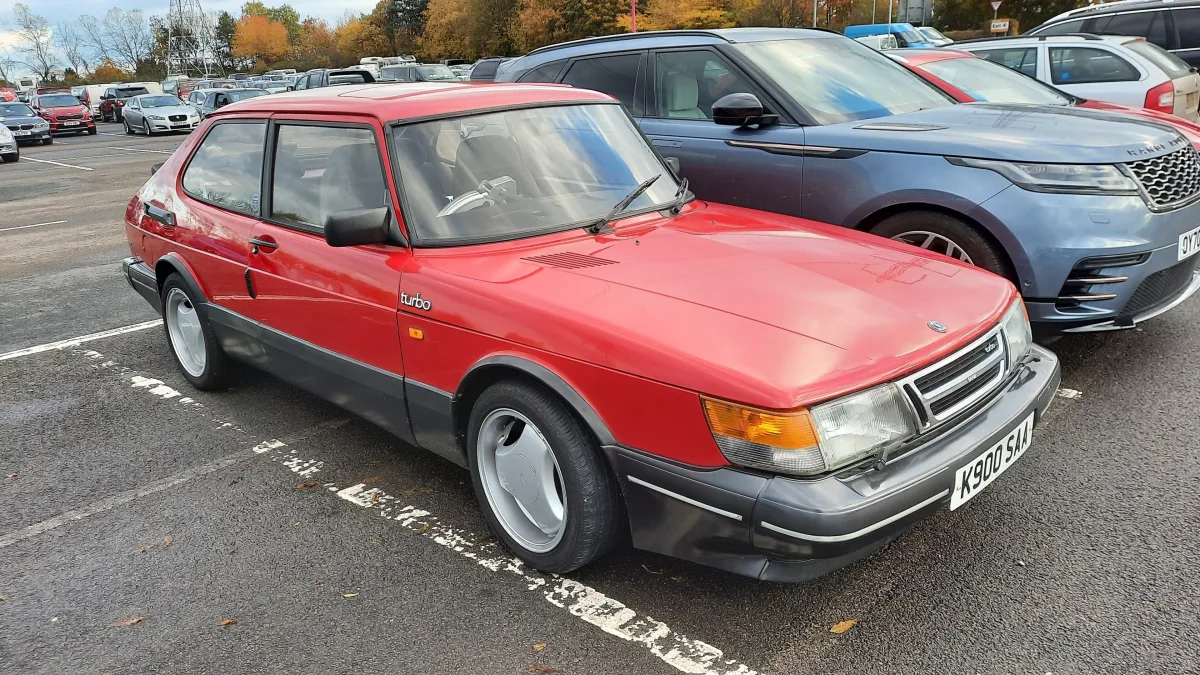
Saab 900: classic 900 and NG900, engines and trims
Saab 900 — a Swedish car produced from 1978 to 1998 in two generations: the classic 900 and the second generation, often referred to as the NG900. Today, it's a vintage car that's increasingly being snapped up by Saab enthusiasts and collectors. We take a look at how the generations differ, which engines are most common, and what to check when buying a car of this age.






Saab 900 in brief
The classic 900 (1978–1993, convertible until 1994) was built on the Saab 99 platform. It was produced in 3 and 5-door hatchback, 2 and 4-door saloon bodies, and from 1986 onwards, also as a convertible. The second generation (1994–1998) was developed during the General Motors era, using the Opel Vectra platform, and offered in 3 and 5-door hatchback and convertible bodies.
The Saab 900 stands out with its aeroplane-inspired interior, driver-focused dashboard, and ignition switch between the front seats. Saab was one of the first manufacturers to widely adopt turbochargers in production cars, so turbo versions are still highly prized today.
Saab production ceased in 2011, but spare parts are still available: some are supplied by the former Saab parts company, many NG900 components are shared with Opel models, and Saab clubs help track down rarer parts. Finding certain body and interior parts can take time.
Classic 900 and NG900 — what's the difference
The classic 900 features a long bonnet, a sloping front windscreen, and an unusual layout: the engine is mounted longitudinally, 'backwards', with the gearbox underneath. It's a sturdy and safe car for its time, but today it's mostly bought not for daily driving, but as a collector's item. The most valuable are well-preserved Turbo, Turbo 16 models, and convertibles.
The NG900 is more modern and comfortable for daily use, although much of the technology is borrowed from Opel. Early models were criticised for their build quality. The 1998 model was significantly improved and renamed the Saab 9-3.
For daily driving, the NG900 is more practical, but for those seeking the true Saab character and a car whose value depends on its originality, the classic 900 is the way to go.
Engines and gearboxes
The classic 900 came with four-cylinder petrol engines: 2.0-litre, and later models had a 2.1-litre option. Naturally aspirated versions produced around 100–130hp, while turbo versions offered around 145–175hp. The most powerful were the 16-valve Turbo 16 models. There were no diesel engines in this model.
The NG900 is most commonly found with 2.0-litre (around 130hp) and 2.3-litre (around 150hp) petrol engines, 2.0-litre turbo (around 150–185hp), and 2.5-litre V6 (around 170hp).
The classic 900 had a five-speed manual or three-speed automatic gearbox. The NG900 came with a five-speed manual, four-speed automatic, and some turbo models featured the rare Sensonic gearbox without a clutch pedal.
What to check when buying a used Saab 900
The condition of an older car is largely determined by rust. Check the sills, wheel arches, underbody, door sills, and boot floor, and ask if the body hasn't been welded. The convertible roof should be solid, and its mechanism should work.
In the case of turbo engines, check if the engine isn't smoking, if the turbo doesn't have gaps, and if there are no oil leaks. The classic 900 gearbox and clutch are more difficult to repair than usual, so the gears should engage smoothly and easily. For NG900 cars, check the ignition cassette, information display, and other electronics.
Request registration and technical inspection documents, and compare VIN numbers. It's worth choosing a car that's as complete and original as possible, as finding missing interior and body parts is the hardest. Cars older than 30 years that meet the requirements can be registered as historic vehicles.


Versions
The trim levels of the Saab 900 varied by market and year, so we list the most commonly encountered versions.
900i
Classic 900A more basic version with a naturally aspirated engine.
- Naturally aspirated 2.0 or 2.1 engine
- More sedate, simpler character
- Often cheaper than turbo versions
Turbo / Turbo 16
Classic 900The most sought-after versions of the classic 900.
- Turbocharged engine, Turbo 16 — with 16 valves
- Often — sportier bumpers and wheels
- Often — better interior trim
Cabriolet
Classic 900 and NG900Convertible with electric fabric roof.
- Four seats
- Often — turbo engine
- Often — leather seats
S
NG900The most common NG900 version for daily use.
- 2.0 or 2.3 petrol engine
- Often — air conditioning
- Simpler interior
SE
NG900Better-equipped NG900 version, often with turbo or V6 engine.
- Often — 2.0 turbo or 2.5 V6 engine
- Often — leather seats and climate control
- Light-alloy wheels
Comparison of the most common versions
| Klasikinis 900i | Klasikinis Turbo | Cabriolet | NG900 | |
|---|---|---|---|---|
| Who it's for | For classic car enthusiasts | For the collection and pleasure | For summer and leisure | Affordable everyday Saab |
| Body style | Hatchback or sedan | Hatchback or sedan | Convertible | Hatchback or convertible |
| Engine (most common) | 2.0–2.1 | 2.0 turbo | 2.0 turbo | 2.0, 2.3, 2.0 turbo, 2.5 V6 |
| Price in the used market (relatively) | Mid-range | Top-end | Top-end | Budget |
The cheapest and most practical choice for daily use is the NG900 with a 2.0 or 2.3 engine. The classic 900, especially the Turbo or convertible, is worth choosing for comfort and collectability, but its body condition is more important than any features.
Pros
- Distinctive design and a driver-focused interior
- A sturdy and safe body for its time
- Spacious hatchback boot
- The classic 900 is increasingly valued by collectors
Cons
- Age means rust and aging rubber parts
- Finding certain body and interior parts can take time
- The build quality of the NG900 is inferior to that of the classic 900
Frequently asked questions
What's the difference between the classic Saab 900 and the NG900?
The classic 900 (1978–1993) is an original Saab construction car, today most often bought as a collector's item. The NG900 (1994–1998) was built on the Opel Vectra platform, is more modern and cheaper, but less valued by collectors.
Can you still get parts for the Saab 900?
Yes, most mechanical parts are still available, and some NG900 parts are shared with Opel models. It's harder to find original body and interior parts, so it's worth choosing a more complete car and seeking help from Saab clubs.
Can the Saab 900 be registered as a historic vehicle?
A car older than 30 years that meets the originality and condition requirements can be registered as a historic vehicle. This applies to many classic 900 cars.
Updated 2026-10-09 · Trim levels and equipment vary by market and model year — check the equipment of the specific car. · Translated automatically


