 English
 Lietuvių
 Latviešu
 Eesti
 Polski
 Русский
 Українська
 Deutsch
 Nederlands
 Čeština
 Slovenčina
 Svenska
 Norsk
 Dansk
 Suomi


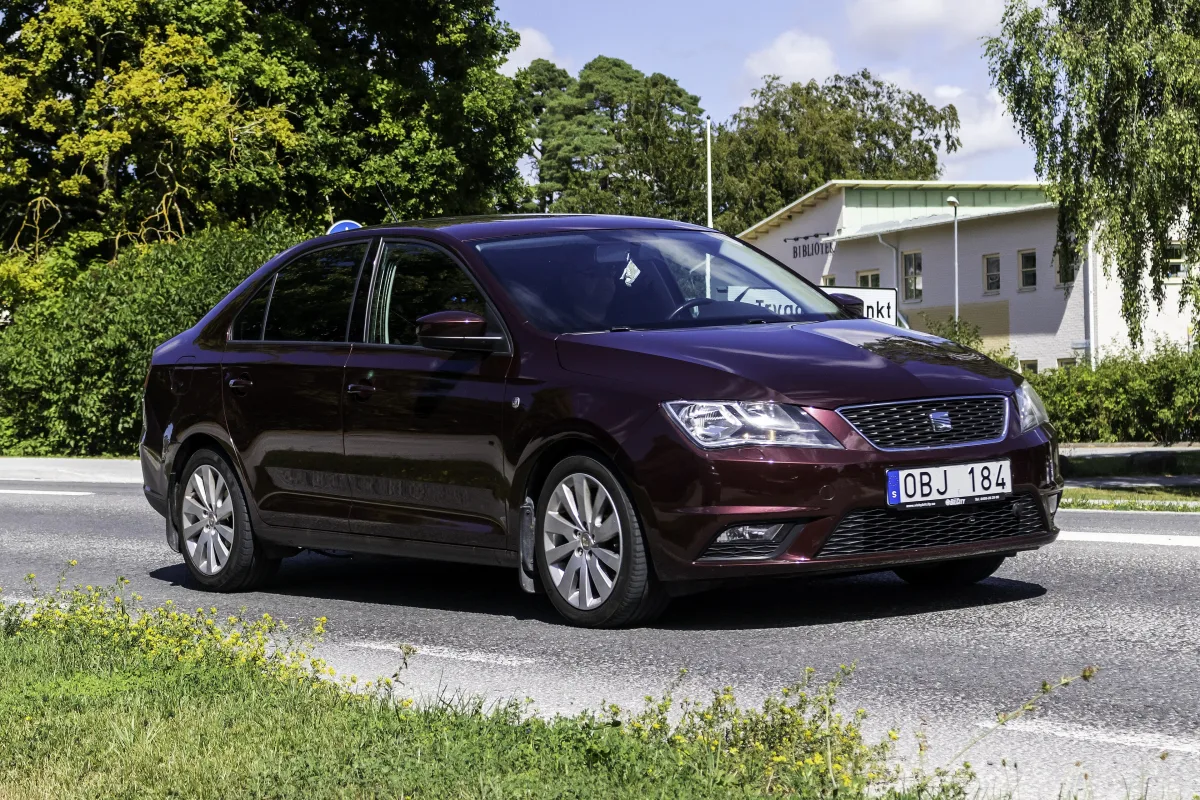
SEAT Toledo: Generations I–IV, Engines and Trims
SEAT Toledo — a practical compact car with a spacious boot, produced in four generations since 1991. We look at how the third and fourth generations differ, which engines are most popular, how the trims vary, and what to check before buying a used one.






The Toledo in brief
All Toledo generations were built using Volkswagen Group technology, so the engines, gearboxes, and many parts are shared with Volkswagen, Škoda, and other SEAT models. This means a wide choice of parts and mechanics who are well-versed in this technology.
The Toledo is often chosen by those who need a spacious and affordable-to-run car. In the used market, it's usually cheaper than similarly aged Volkswagen or Škoda models with the same technology.
Third and Fourth Generations — What's the Difference
The first generation (1991–1999) was a hatchback, while the second generation (1998–2004) was a saloon, similar in technology to the Golf IV and SEAT Leon. These are now old cars, worth considering only based on their technical condition.
The third generation (2004–2009) was based on the SEAT Altea: a higher body, spacious interior, and large boot. The design is unusual, so the range is limited, but the technology is the same TDI and FSI engines as the Golf V.
Fourth generation (2012–2019) — liftback, technology almost identical to the Škoda Rapid and built in the Czech Republic. This is the most practical and commonly found Toledo in the used market: the boot space is around 550 litres, and the straightforward tech is cheap to maintain. 2015 facelifts gained newer 1.0 TSI and 1.4 TDI engines.
Engines and gearboxes
The third generation most commonly features 1.9 and 2.0 TDI diesels and 1.6 and 2.0 FSI petrol engines. The more powerful diesels were paired with a 6-speed manual or DSG gearbox.
The fourth generation is primarily based around 1.2 and 1.4 TSI petrols (from 2015 — and 1.0 TSI), a base 1.2-litre naturally aspirated engine and a 1.6 TDI diesel, later supplemented by a 1.4 TDI. Most versions produce around 75–125hp.
Gearboxes are manual (5 or 6-speed) or DSG. In the fourth generation, DSG is most often a 7-speed dry clutch (DQ200), paired with the 1.4 TSI and some other engines.
What to check when buying a used Toledo
Early fourth-gen 1.2 TSI engines have a tendency to have a stretched timing chain — a cold engine shouldn't rattle after starting. Later TSI engines have a timing belt, whose change interval is worth checking in the service history.
The DSG gearbox should shift smoothly: juddering when moving off or clunks when shifting often indicate a clutch or mechatronics repair. For diesels that have done a lot of city driving, check the diesel particulate filter (DPF), EGR valve and twin-mass flywheel.
The Toledo was often used as a company car or taxi, so the mileage can be high. Check it against service records and technical inspections, and assess the interior wear and tear — the steering wheel, seats, and gear stick.


Trims
Names and equipment vary by market and year; we list the trims most commonly found in Europe.
Reference
Third and Fourth GenerationsThe base trim is simple and the most affordable.
- Steel wheels are usually fitted
- A manual air conditioner is common
- A basic audio system
Stylance
Third GenerationA more comfortable version of the Third Generation.
- Light-alloy wheels
- Automatic climate control is often included
- More comfort features
Style
Fourth GenerationThe most popular choice in the Fourth Generation offers a good balance of price and features.
- Light-alloy wheels
- Often — automatic climate control and cruise control
- Often — touchscreen multimedia
FR-Line
Fourth generation (post-2015)Sportier-looking version without a sporty engine.
- Larger wheels and sportier interior
- Sportier seats and steering wheel
- Often — tinted rear windows
Comparison of fourth-gen trims
| Reference | Style | FR-Line | |
|---|---|---|---|
| Who it's for | At the very least, the price | For daily driving | Sporty looks |
| Wheels (most often) | 15 col., steel | 15–16 col., alloy | 16–17 series, light alloy |
| Interior | Basic | More comfort features | Sportier trim |
| Engine | 1.2 naturally aspirated, 1.2 TSI, 1.6 TDI | 1.0–1.4 TSI, 1.4–1.6 TDI | 1.0–1.4 TSI, 1.6 TDI |
| Price in the used market (relatively) | Budget-friendly | Mid-range | Mid-range |
For most buyers, the best choice is the fourth-gen Style with a TSI or 1.6 TDI engine. The FR-Line is worth considering for its looks, while the Reference is only if the lowest price is key.
Pros
- Very spacious boot
- Proven Volkswagen Group technology
- Moderate spare parts and maintenance costs
- Usually cheaper than a Škoda Rapid or Volkswagen with the same tech
Cons
- Sturdier interior plastics and simpler trim
- Limited selection, especially for the third generation
- Early 1.2 TSI chain and dry-clutch DSG
Frequently asked questions
How does the SEAT Toledo differ from the Škoda Rapid?
The fourth-gen Toledo and Rapid liftbacks share almost identical tech: the same engines, gearboxes, and body shell. The differences lie in design, interior details, and trim names, so when choosing, it's worth comparing the specific car's condition and features.
Which Toledo engine is the most reliable?
For many buyers, the 1.6 TDI diesel or the later 1.0 and 1.2 TSI with a manual gearbox are a good fit. If you mostly drive in the city, it's often more practical to choose a petrol engine, as the diesel particulate filter needs longer journeys.
Is the Toledo IV a sedan?
No — although it looks like a sedan from the side, the fourth-gen Toledo is a liftback: the boot lid rises with the rear window. This makes the boot easier to load and suitable for larger items.
Updated 2026-10-09 · Trim levels and equipment vary by market and model year — check the equipment of the specific car. · Translated automatically


