 English
 Lietuvių
 Latviešu
 Eesti
 Polski
 Русский
 Українська
 Deutsch
 Nederlands
 Čeština
 Slovenčina
 Svenska
 Norsk
 Dansk
 Suomi


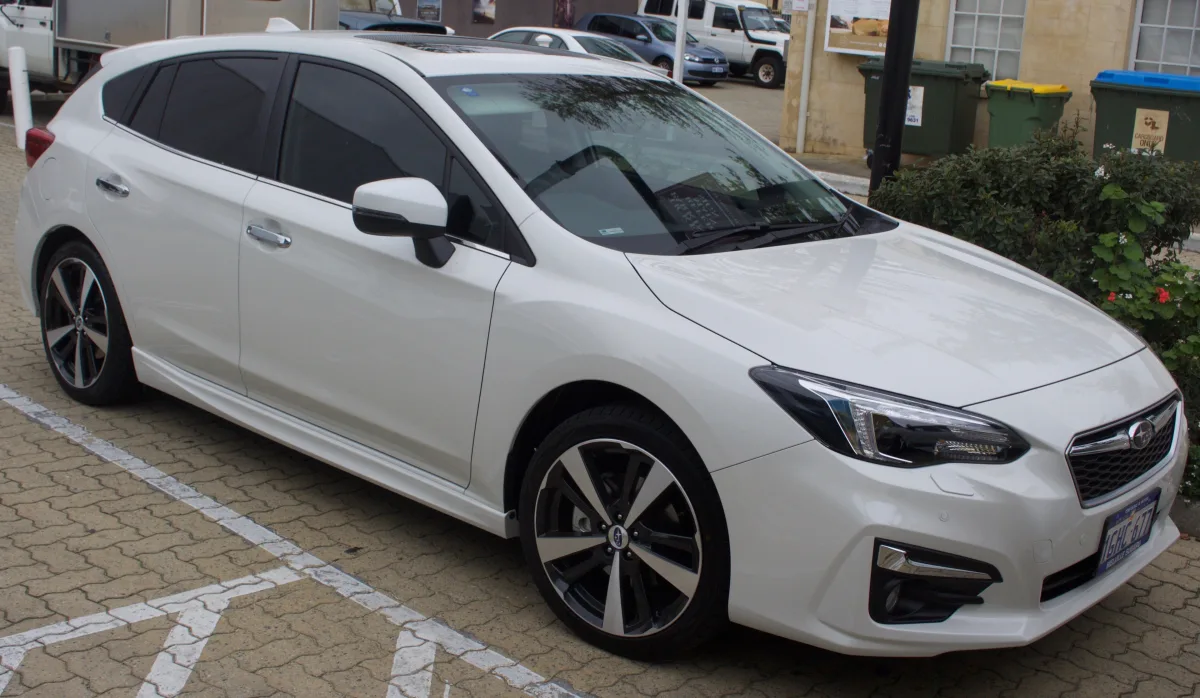
Subaru Impreza: generations, engines and trim comparisons
The Subaru Impreza is a compact class car with permanent all-wheel drive and a boxer engine, valued in Lithuania for its winter stability. We look at how the newer generations differ, which engines are most popular, how the trims vary and what to check when buying used.






Impreza in brief
The Impreza has been in production since 1992 and made a name for itself on rally stages, with Subaru winning the World Rally Championship for Manufacturers three years in a row from 1995 to 1997. The sporty WRX and WRX STI versions were long part of the Impreza line-up, but since 2014 have been separate models.
Almost all Imprezas sold in Europe come with permanent all-wheel drive and a boxer engine, which lowers the centre of gravity. This makes the car stable on slippery roads, but fuel consumption is often slightly higher than front-wheel drive competitors. Newer generations in Europe are mostly sold as 5-door hatchbacks.
Which generation to choose
The third generation (2007–2011) is most commonly found in Europe as a 5-door hatchback, with petrol 1.5 and 2.0 engines, and from 2009, a 2.0 diesel engine. This is the most affordable option, but due to their age, these cars require a thorough technical inspection.
The fourth generation (2011–2016) became lighter and more efficient, gaining new FB series petrol engines and is most often paired with the Lineartronic CVT. The Subaru XV, with a higher ride height, is also based on this generation.
Fifth generation (roughly 2017–2023 in Europe) built on the new Subaru Global Platform: a stiffer body, quieter ride, and the EyeSight driver assistance package is usually standard in Europe. From around 2020, the e-Boxer mild hybrid was offered. The newest, sixth generation was introduced in 2023, so there aren't many used examples on the market yet.
Engines and transmissions
In the third generation, the most common engines are the 1.5 (around 107 hp) and 2.0 (around 150 hp) petrol units, along with the 2.0D diesel (around 150 hp). The sporty versions are the WRX with the 2.5 turbo engine (around 230 hp) and the WRX STI (around 300 hp).
In the fourth and fifth generations in Europe, the 1.6i (around 114 hp) and 2.0i (around 150–156 hp) petrol engines were offered, and from around 2020, the 2.0 e-Boxer mild hybrid (around 150 hp and a small electric motor). The fifth generation in Europe was sold only with the Lineartronic CVT.
The Lineartronic is a continuously variable transmission (CVT). It operates smoothly, but it's sensitive to maintenance, so ask if its fluid has been changed. Older generation petrol engines are usually paired with a manual or conventional automatic transmission, while the 2.0D diesel is paired with a manual.
What to check when buying a used Impreza
Boxer engines often start to leak oil through the valve cover gaskets and other seals — check the engine from underneath. Some early FB series engines used more oil, so ask how much needs to be topped up between changes.
In 2.0D diesel cars, check the particulate filter and dual-mass flywheel; early engines were notorious for timing belt issues, so the engine's history is crucial.
All-wheel drive is important, so all four tyres should be the same and equally worn — mismatched tyres strain the transmission. On older cars, inspect the rear wheel arches and sills for rust, and test the CVT by moving off — juddering or hesitation is a bad sign.


Trim levels
Subaru trim names vary greatly by country in Europe, so we list the most commonly encountered versions by engine.
1.5R / 2.0R
Third generation (2007–2011)Standard petrol versions with basic tech and permanent all-wheel drive.
- Manual or automatic gearbox
- Often — climate control and lightweight alloy wheels
- The 2.0R is noticeably more dynamic than the 1.5R
2.0D
Third generation (from 2009)Diesel version for those who do a lot of city driving.
- Around 150 hp and a hefty torque figure
- Six-speed manual gearbox
- Lower running costs, but more finicky to maintain
WRX STI
Third generationLegendary sports version with turbo engine.
- 2.5 turbo, around 300 HP
- Adjustable central differential
- Brembo brakes and sport suspension
1.6i
Fourth and fifth generationsThe most sensible choice for daily driving.
- Around 114 HP
- Often comes with a Lineartronic CVT
- In the fifth generation — frequently EyeSight driver-assist systems
2.0i
Fourth and fifth generationsMore powerful version that accelerates and corners more easily.
- Around 150–156 HP
- Often comes with a Lineartronic CVT
- Often — larger wheels and more features
e-Boxer
Fifth generation (from roughly 2020).Light hybrid with a small electric motor.
- 2.0 petrol engine and electric motor
- Smooth city driving
- Often — plenty of kit and EyeSight
Comparing fifth-generation versions
| 1.6i | 2.0i | e-Boxer | |
|---|---|---|---|
| Who it suits | For relaxed daily driving | For frequent out-of-town trips | For city and out-of-town driving |
| Engine | 1.6 petrol, around 114 hp | 2.0 petrol, around 156 hp | 2.0 petrol and electric motor, around 150 hp |
| Gearbox | Lineartronic | Lineartronic | Lineartronic |
| Dynamics (relatively) | Calm | Best | Good, especially in the city |
| Price in the used market (relatively) | € | €€ | €€€ |
The 1.6i is fine for relaxed driving, but the 2.0i or e-Boxer accelerates noticeably more smoothly. The e-Boxer is worth considering if you do a lot of city driving.
Pros
- Permanent all-wheel drive and stability on slippery roads
- Low centre of gravity and excellent handling
- Newer generations come with EyeSight driver assistance systems
- Robust body and practical hatchback interior
Cons
- Higher fuel consumption than front-wheel-drive competitors
- Fewer specialist mechanics and parts options than more popular brands
- Oil leaks from the opposing cylinder engines
Frequently asked questions
Is the Subaru Impreza suitable for Lithuanian winters?
Yes, that's one of its strongest features: the permanent all-wheel drive helps to get moving and maintain stability in snow or on ice. However, it doesn't improve braking, so good winter tyres are still essential.
Why does Subaru need matching tyres?
In an all-wheel-drive car, tyres of different sizes or wear rates spin at different speeds and constantly strain the transmission. Therefore, it's recommended to change all four tyres at the same time.
Which Impreza generation is best to buy used?
For many buyers, the fifth generation is the best bet: it's the most modern, safe, and quiet. If your budget is tighter, the fourth generation with the 1.6i or 2.0i engine is simpler, but check the oil consumption and condition of the CVT.
Is the Impreza and Subaru XV the same car?
The Subaru XV is based on the Impreza but has a higher ground clearance and a more rugged, crossover-style design. The engines and gearboxes are essentially the same.
Updated 2026-10-09 · Trim levels and equipment vary by market and model year — check the equipment of the specific car. · Translated automatically


