 English
 Lietuvių
 Latviešu
 Eesti
 Polski
 Русский
 Українська
 Deutsch
 Nederlands
 Čeština
 Slovenčina
 Svenska
 Norsk
 Dansk
 Suomi


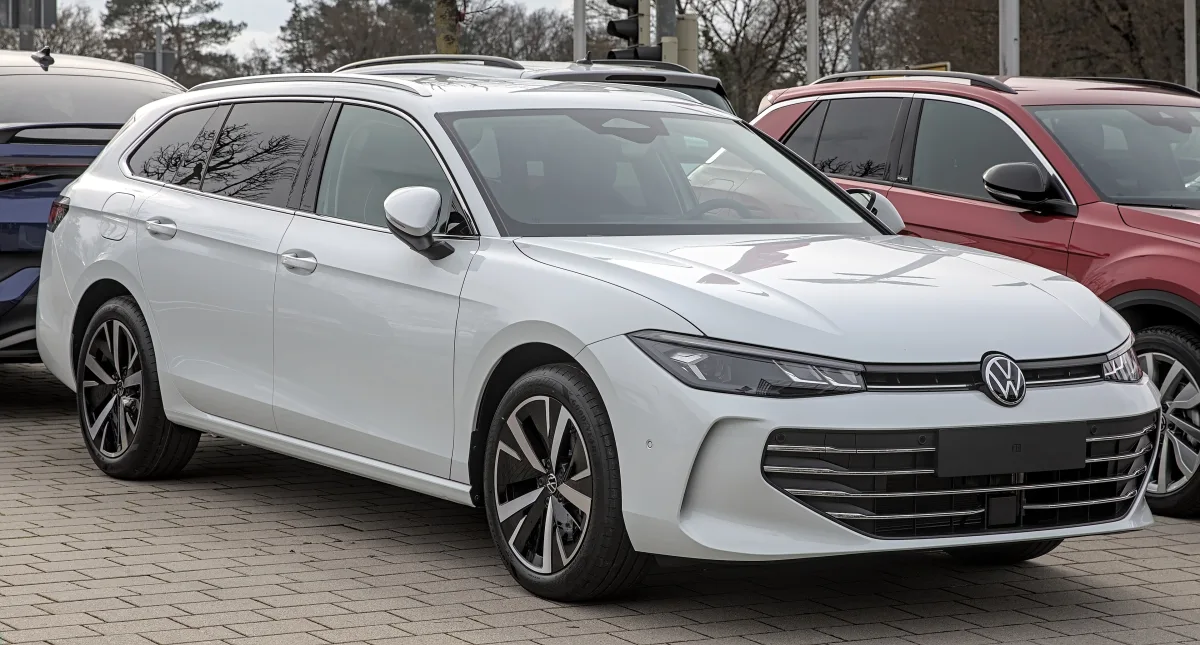
Volkswagen Passat: B8 and B9 generations, engines and trims
Volkswagen Passat is a large and practical D-segment car, particularly popular for its spacious estate (Variant) and frugal diesels. We focus primarily on the B8 (2014–2023) and the newer B9 (from 2023) generations: how they differ, which engines are most reliable, and which trim to choose.






Passat in brief
The Passat has been produced since 1973, with generations designated by the letters B1–B9. On the used market, B6, B7, and B8 generation cars are most commonly encountered, especially estates.
The Passat is valued for its roomy cabin and boot, calm highway cruising, and economical 2.0 TDI engines. Because of this, many cars have been used as company vehicles and have covered high mileages — something important to know when buying.
B8 and B9 — what's the difference
The B8 generation (2014–2023) was built on the MQB platform and produced in sedan and estate body styles; there was also a raised Alltrack version and a GTE plug-in hybrid. The 2019 facelift brought a digital instrument cluster, newer driver assistance systems (e.g. Travel Assist), and matrix headlights.
The B9 generation (from 2023) is produced exclusively as an estate and is larger than the B8 — particularly with more room in the rear and boot. Developed alongside the Škoda Superb, it features a new-generation infotainment system, mild-hybrid, and plug-in hybrid versions.
Engines and gearboxes
In the B8 generation, the most popular are the 2.0 TDI diesels (usually 150 and 190 hp), the lower-powered 1.6 TDI, and the 1.4 and 1.5 TSI petrols. There were also more powerful 2.0 TSI and 2.0 BiTDI models with 4Motion all-wheel drive, as well as the GTE hybrid.
The B9 generation offers the 1.5 eTSI mild hybrid, 2.0 TDI diesels, 2.0 TSI with 4Motion, and eHybrid plug-in hybrids. All B9 versions feature an automatic DSG gearbox.
What to check when buying a used Passat
Many B8 cars have been in corporate or taxi fleets — verify the mileage through service history and MOT records, and inspect the wear on the steering wheel, gear shifter, and seats.
The DSG gearbox should shift smoothly; ask about oil changes. For diesels with heavy city mileage, check the particulate filter and AdBlue system (on newer models).
1.4 TSI engines are prone to cooling system leaks (around the thermostat housing)—check for any traces of coolant.


Trim levels
Names and equipment vary by market and model year; we outline the most common European specs.
Trendline
B8 up to 2019Entry-level B8 trim, common in fleet cars.
- Simpler infotainment system
- Usually halogen headlights
- Occasionally features automatic climate control
Comfortline
B8 up to 2019Most popular—a great balance of equipment and price.
- Alloy wheels
- Automatic climate control
- Often includes parking sensors and adaptive cruise control
Highline
B8 up to 2019Top standard spec.
- Frequently equipped with LED headlights and a digital instrument cluster
- Leather or Alcantara seat trim
- Larger wheels, more chrome trim
Business
B8 post-2019, B9Tailored for high-mileage drivers—practical features.
- Navigation and smartphone integration
- Driver assistance systems
- Comfortable seats for long journeys
Elegance
B8 post-2019, B9Comfort and elegance trim.
- More luxurious interior trim
- Often — matrix headlights
- More comfort features
R-Line
B8, B9Sporty styling trim.
- Sporty bumpers and alloy wheels
- Sports seats
- Darker interior trim
Trim comparison (facelifted B8 and B9)
| Business | Elegance | R-Line | |
|---|---|---|---|
| Who it's for | High-mileage drivers, company cars | For comfort seekers | For sporty styling enthusiasts |
| Alloy wheels (typically) | 16–17 in. | 17–18 in. | 18–19 in. |
| Headlights | LED | LED, often matrix | LED, often matrix |
| Interior | Practical | Upmarket trim | Sports seats, dark interior trim |
| Used market pricing (relative) | € | €€ | €€ |
For high-mileage drivers, the most sensible choice is the Business or Comfortline with the 2.0 TDI 150 hp. Elegance and Highline offer more comfort, while the R-Line is worth considering for its looks.
Pros
- Very spacious cabin and boot (especially the Variant)
- Economical 2.0 TDI diesels
- Composed and quiet motorway cruising
- Abundant choice on the used market
Cons
- Many high-mileage examples from company fleets or taxi operators
- The B9 is only available as an estate
- DSG and diesel system repairs can be expensive
Frequently asked questions
Is the Passat B8 reliable?
Yes, especially with the 2.0 TDI 150 hp engine and a regularly serviced DSG gearbox. The key is to choose a car with a verifiable service history, as many B8s have covered very high mileages.
How does the Passat differ from the Škoda Superb?
Both models share the same underpinnings. The Superb is typically more spacious and affordable, while the Passat boasts a slightly more upscale finish and stronger residual values. The B9-generation Passat is developed alongside the new Superb.
Which Passat engine should you choose?
For high-mileage drivers — the 2.0 TDI (150 hp). For lower-mileage or predominantly urban driving — the 1.5 TSI or B9-generation 1.5 eTSI. For those with home-charging capabilities, the GTE or eHybrid are well worth considering.
Updated 2026-10-09 · Trim levels and equipment vary by market and model year — check the equipment of the specific car. · Translated automatically


