 English
 Lietuvių
 Latviešu
 Eesti
 Polski
 Русский
 Українська
 Deutsch
 Nederlands
 Čeština
 Slovenčina
 Svenska
 Norsk
 Dansk
 Suomi


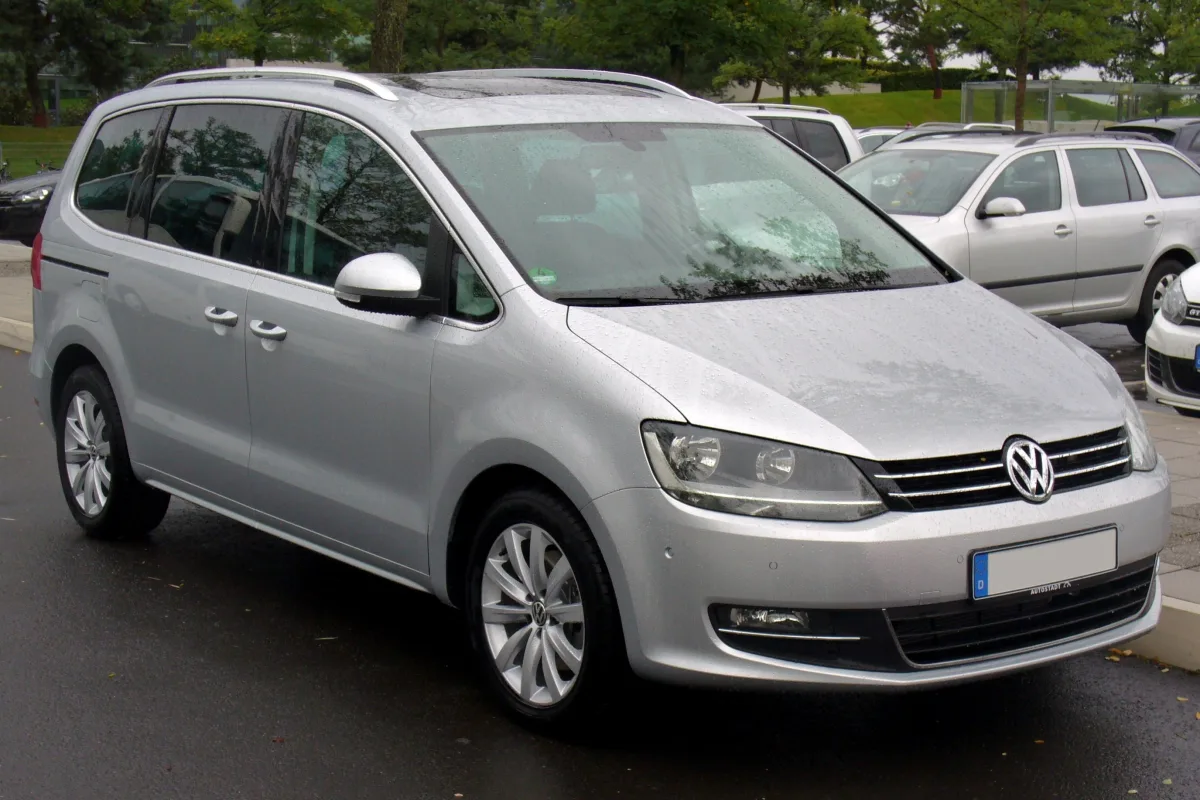
Volkswagen Sharan: I and II generations, engines and trims
Volkswagen Sharan — a large MPV with 5 or 7 seats, highly regarded by families and frequent travellers in Lithuania. We look at the used market offerings of the I (1995–2010) and II (2010–2022) generations, their engines, trims, and what to check when buying.






Sharan in brief
Sharan was produced in Portugal alongside related models: the I generation was almost identical to the SEAT Alhambra and first-generation Ford Galaxy, while the II generation shared its platform with the SEAT Alhambra. Production ended in 2022, and Sharan has no direct successor.
Sharan is valued for its spacious interior, comfortable ride, and versatile seating arrangement. In the II generation, the rear seats fold flat into the floor, transforming the car into a practical load-lugger with a flat load floor, while in the I generation, the seats can be removed.
I and II generation — what's the difference
I generation (1995–2010) — simple construction and robust, but now quite dated: most cars have high mileage, so when buying, focus on the body and mechanical condition rather than the trim level. It features conventional sliding rear doors; a 2000 facelift brought updated styling and interior.
II generation (2010–2022) — significantly more modern, larger, and with rear-hinged tailgates that are very convenient in tight parking spaces and when loading children. This is the most popular Sharan generation in the used market.
2015 facelift: engines updated to meet Euro 6 standards, refreshed multimedia and driver assistance systems. If your budget allows, consider a 2015–2022 model.
Engines and transmissions
In the first generation, you'll commonly find 1.9 TDI (around 90–150 hp) and later 2.0 TDI (140 hp) diesel engines. Petrol options like the 2.0, 1.8 T and 2.8 VR6 are less common.
The second generation is primarily powered by the 2.0 TDI: up to 2015, these came in 140 and 170 hp variants, and after the facelift, in 115, 150 and 184 hp. Petrol options include the 1.4 TSI (150 hp) and 2.0 TSI (around 200–220 hp). Some diesel models feature 4MOTION all-wheel drive.
Transmissions come as a 6-speed manual or DSG. For a heavy, fully loaded vehicle, the 150 hp and more powerful 2.0 TDI are best: they're more dynamic and economical around town.
What to check when buying a used Sharan
Check the sliding doors: they should open and close smoothly, without rattling or strange noises. Door seals and electric door mechanisms can wear out over time, and repairs can be expensive.
For diesel engines, check the diesel particulate filter (DPF), EGR valve and dual-mass flywheel: vibrations or rattling when moving often indicate a need for flywheel or clutch replacement. The DSG should shift smoothly, without jolts.
The Sharan is often used as a family or workhorse, so thoroughly inspect the interior, seat mechanisms and third-row seats. In first-generation models, pay special attention to body corrosion and suspension condition.


Trim levels
Names and equipment vary by market and year; we list the most common trims found in Europe.
Trendline
First, Second generationBase trim — simple, yet spacious.
- Often, steel wheels
- Simpler infotainment system
- Simpler air conditioning
Comfortline
First, Second generationMost popular choice — more comfort for a sensible price.
- Light-alloy wheels
- Often — automatic climate control
- Often — parking sensors and more cubby holes
Highline
First, Second generationTop trim with the most comfort features.
- Larger wheels and more luxurious interior trim
- Often — electrically operated sliding doors (Second generation)
- Often — xenon headlights and navigation
4MOTION
First, Second generationNot a separate trim, but the four-wheel-drive version, often with the more powerful 2.0 TDI.
- Four-wheel drive
- Better grip in winter and with a trailer
- Often paired with Comfortline or Highline
Comparison of second-generation trims
| Trendline | Comfortline | Highline | |
|---|---|---|---|
| Who it's for | The most affordable spacious car | Best value for families | For comfort lovers |
| Alloy wheels (most common) | 16 in., steel | 16 in. | 17 in. |
| Interior | Basic trim | More storage, more comfortable seats | Luxury trim |
| Price in the used market (relatively) | € | €€ | €€€ |
Best value for money is the Comfortline with the 150 AG or more powerful 2.0 TDI. Highline is worth choosing for its comfort features, while Trendline is only if price is the top priority.
Pros
- Very spacious interior, 5 or 7 seats
- Sliding rear doors (2nd generation)
- Easily configurable interior and large boot
- Comfortable, quiet on the road
Cons
- Many cars with high mileage
- Expensive repair of sliding door mechanisms
- Large and heavy — not so convenient in the city
Frequently asked questions
How does the Sharan differ from the SEAT Alhambra?
The 2nd generation Sharan and Alhambra are essentially the same car with the same engines and body; they differ in styling details, equipment, and features. When looking for a used car, it's worth checking out both models — often the Alhambra costs a bit less.
What's the difference between the Sharan and Touran?
The Touran is a smaller, compact MPV, while the Sharan is larger: its third-row seats are more suitable for teenagers and adults, and the boot space with all seven seats in use is bigger. Plus, the Sharan II features sliding rear doors.
Which Sharan engine should you choose?
For most buyers, the 2.0 TDI (140–150 hp or more powerful) is the best bet: it's plenty for a loaded car and offers sensible running costs. The 1.4 TSI is fine if you mostly drive around town and cover short distances.
Do all Sharans have 7 seats?
No — the Sharan was offered with either 5 or 7 seats. When buying, check that the third-row seats are indeed present and can be easily folded and stowed.
Updated 2026-10-09 · Trim levels and equipment vary by market and model year — check the equipment of the specific car. · Translated automatically


