 English
 Lietuvių
 Latviešu
 Eesti
 Polski
 Русский
 Українська
 Deutsch
 Nederlands
 Čeština
 Slovenčina
 Svenska
 Norsk
 Dansk
 Suomi


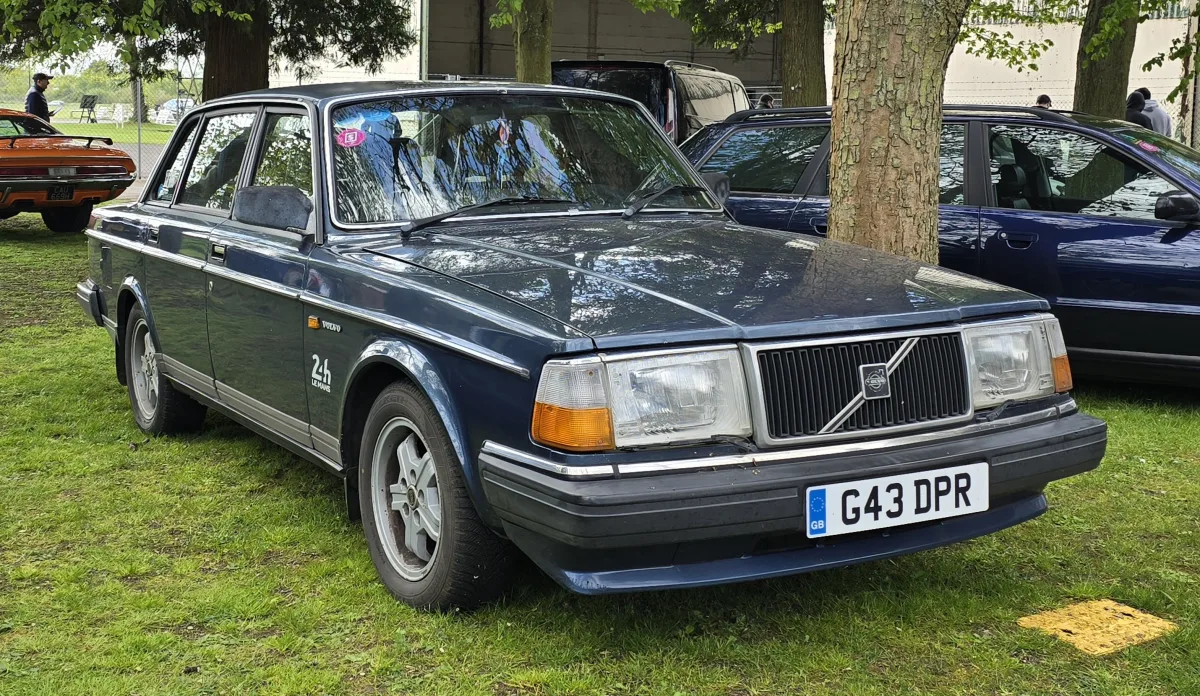
Volvo 240: the legendary sedan and estate, versions and inspection
Volvo 240 — one of Volvo's most famous models, produced from 1974–1993 as a sedan, coupe and particularly popular estate. We look at the versions, engines and what to check before buying such a car.






240 in brief
The Volvo 240 gained fame for its robust construction, safety and longevity. Many of them were driven for entire decades, with the estate (245) becoming a symbol for families and businesspeople.
Today, the 240 is a classic car. Well-maintained, it can still be a daily driver, but it requires more attention than modern technology.
Which version to choose
The model was produced for a long time, so there are many variants: sedan (244), estate (245) and coupe (242). The estate is often more expensive due to its practicality and demand.
When buying, pay attention to the year: later cars have better equipment and improved technology, but earlier ones are simpler and sometimes cheaper. The most important thing is the body condition.
Engines and gearboxes
Petrol engines — 2.0 and 2.3 litres, including turbo versions. Diesels — 2.4-litre six-cylinder, which were paired with a turbocharger. Engine power varies by year and market.
Gearboxes — 4 or 5-speed manual (some with overdrive) or 3–4-speed automatic. Rear-wheel drive makes the car balanced and reliable.
What to check when buying a 240
The biggest risk is corrosion. Inspect the sills, wheel arches, rear wings, boot and suspension mounts.
Check the engine and gearbox, electrical installation, fuel system, and suspension. Old tech can fail unexpectedly.
Ask for documents, check the VIN, and ensure it's genuine. This is crucial for classic cars.


Trim levels
Names and equipment vary by market and year; we list the most commonly found versions.
DL
all yearsBase trim with basic equipment.
- Basic interior trim
- Often — steel wheels
- Often — manual gearbox
GL
all yearsPopular trim with added comfort.
- Often — better interior trim
- Often — electrically adjustable mirrors
- Often — alloy wheels
GLE
all yearsHigher trim with more features.
- Often — leather or Alcantara interior
- Often — electric windows
- Often — climate control
Turbo
From 1981A more powerful version with a turbocharger.
- Turbo engine
- Often — sportier suspension
- Often — extra equipment
Classic
1993The final production series with full equipment.
- Often — full equipment
- Distinctive trim
- Often — better equipment
Comparison of versions
| DL | GL | Turbo | |
|---|---|---|---|
| Who it's for | Ideal for everyday use | Comfort | Daily driving |
| Wheels (most common) | 14–15 inch | 14–15 inch | 15 inch |
| Interior | Basic | Better trim | Sportier |
| Engine | 2.0–2.3 petrol | 2.0–2.3 petrol | Turbo |
| Price in the used market (relatively) | Budget | Mid-range | Premium |
The most suitable choice for many buyers is a well-maintained GL or estate with a clear history. The turbo version is livelier but requires more maintenance.
Pros
- Robust and long-lasting construction
- Classic design and estate practicality
- Simple technology, well-known to mechanics
- Parts availability (especially from other Volvo models)
Cons
- Risk of corrosion
- Drawbacks of older technology
- Safety and comfort levels are in line with the era
Frequently asked questions
Is the Volvo 240 suitable for daily use?
Yes, if it's in good condition, but an older car requires more maintenance. For most, it's a second or weekend car.
How does the 240 differ from the 740?
The 740 is a later, more modern model with a different construction. The 240 is older, simpler, and of classic style.
Is the estate better than the sedan?
The estate is more practical and versatile, hence often more expensive. The sedan is cheaper and has a good boot.
Updated 2026-10-17 · Trim levels and equipment vary by market and model year — check the equipment of the specific car. · Translated automatically


