 English
 Lietuvių
 Latviešu
 Eesti
 Polski
 Русский
 Українська
 Deutsch
 Nederlands
 Čeština
 Slovenčina
 Svenska
 Norsk
 Dansk
 Suomi


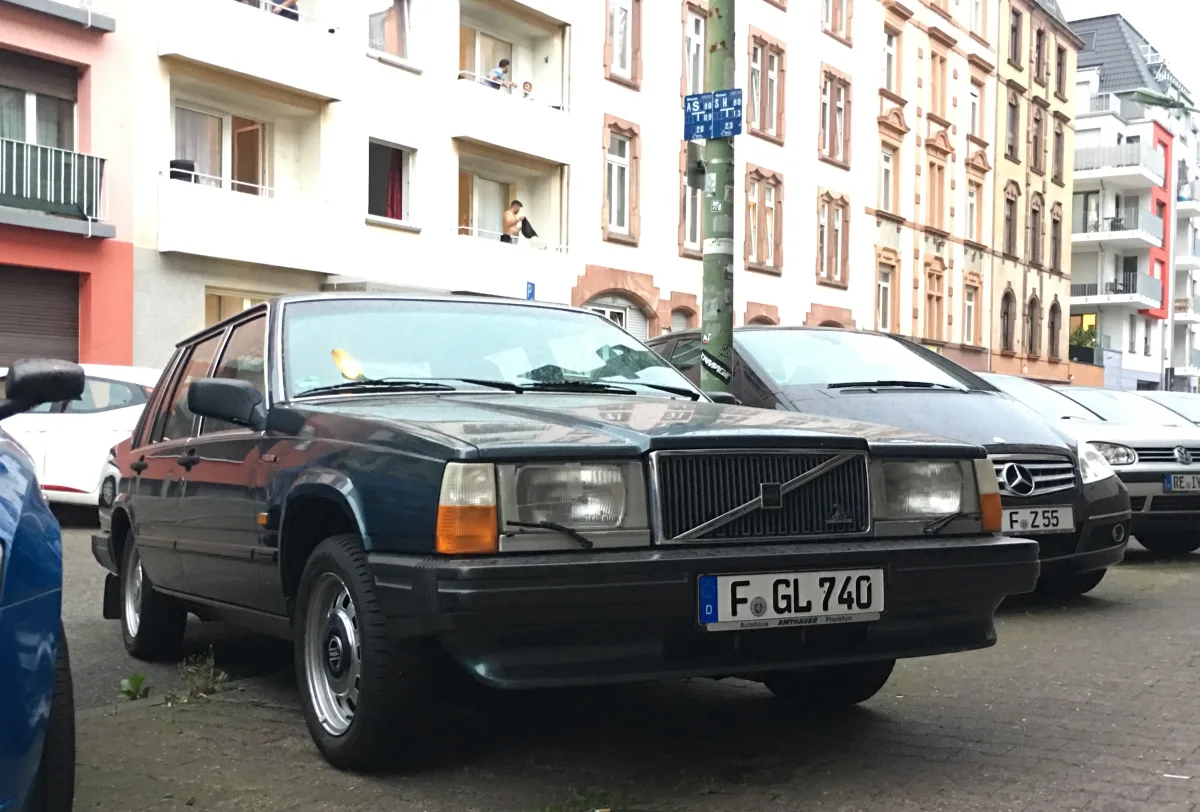
Volvo 740: 1984–1992 rear-wheel-drive classic Volvo
Volvo 740 – a rear-wheel-drive mid-size Volvo produced from 1984–1992 as a saloon and estate. In this article, we look at its history, engines, trims, and what to check before buying this classic car.






Volvo 740 in brief
Volvo 740 – a boxy, practical and robust Volvo that was available as a saloon (740) and estate (745). It was built on a rear-wheel-drive platform and is known for its strength and space.
Today, the 740 is popular among classic car enthusiasts who appreciate its simplicity and unique style. Most cars have long since passed the thirty-year mark.
Which version to choose
The model changed during production: the front end, interior, equipment and engine range all evolved. Later cars are usually better equipped.
When choosing, the condition of the body, originality and service history are more important than the year of manufacture. Estates often command a premium due to their practicality.
Engines and gearboxes
The 740 was offered with 4-cylinder petrol (around 2.0–2.3 litres, including turbo versions) and diesel options. Exact power outputs vary by year and market.
Gearboxes are manual (often with overdrive) or automatic. 4-cylinder petrol engines are often praised for their robustness.
What to check when buying a used Volvo 740
Firstly – corrosion: sills, arches, door bottoms, boot floor and rear end. For a car of this age, this is the primary risk.
Check the condition of the engine, gearbox, and rear axle, and listen for any unusual noises. Ask for the service history.
Check if there are spare parts available and if the car can be registered in Lithuania.


Trim levels
Names and equipment vary by market and year; we list the most common trims found in Europe.
GL
All versionsBase trim.
- Often — a basic interior
- Less equipment
- Common in early cars
GLE
All versionsMid-range trim with more comfort.
- Often — more comfortable seats
- Often — electric windows
- More interior trim
GLT
All versionsSportier version.
- Often — a more powerful engine
- Sportier interior
- Less common
Turbo
All versionsMost powerful version with turbocharger.
- Turbocharger
- Often — larger alloy wheels
- Rarely seen
Trim comparison
| GL | GLE | GLT | Turbo | |
|---|---|---|---|---|
| Who it's for | Everyday use | Daily driving | For enthusiasts | Dynamic driving |
| Engine | Smaller | Mid-range | Larger | Turbo |
| Interior | Basic | More Comfortable | Sportier | Sportier |
| Price in the used market (relatively) | € | € | €€ | €€ |
The Volvo 740 is a solid choice as a classic car. The most important thing is the condition of the body and its originality.
Pros
- Robust, simple construction
- Spacious interior and large boot
- Rear-wheel drive
- Distinctive classic appearance
Cons
- Risk of corrosion due to age
- Finding parts might take time
- High fuel consumption compared to modern cars
Frequently asked questions
What's the difference between the Volvo 740 and 760?
The 740 is the more basic, less luxurious version; the 760 came with more upscale features and larger engines.
Which body style is best?
The sedan is more elegant, while the estate (745) is more practical and often pricier.
What should you be most wary of when buying?
Rust and a murky history. Inspect the underbody thoroughly and ask for documentation.
Updated 2026-10-17 · Trim levels and equipment vary by market and model year — check the equipment of the specific car. · Translated automatically


