 English
 Lietuvių
 Latviešu
 Eesti
 Polski
 Русский
 Українська
 Deutsch
 Nederlands
 Čeština
 Slovenčina
 Svenska
 Norsk
 Dansk
 Suomi


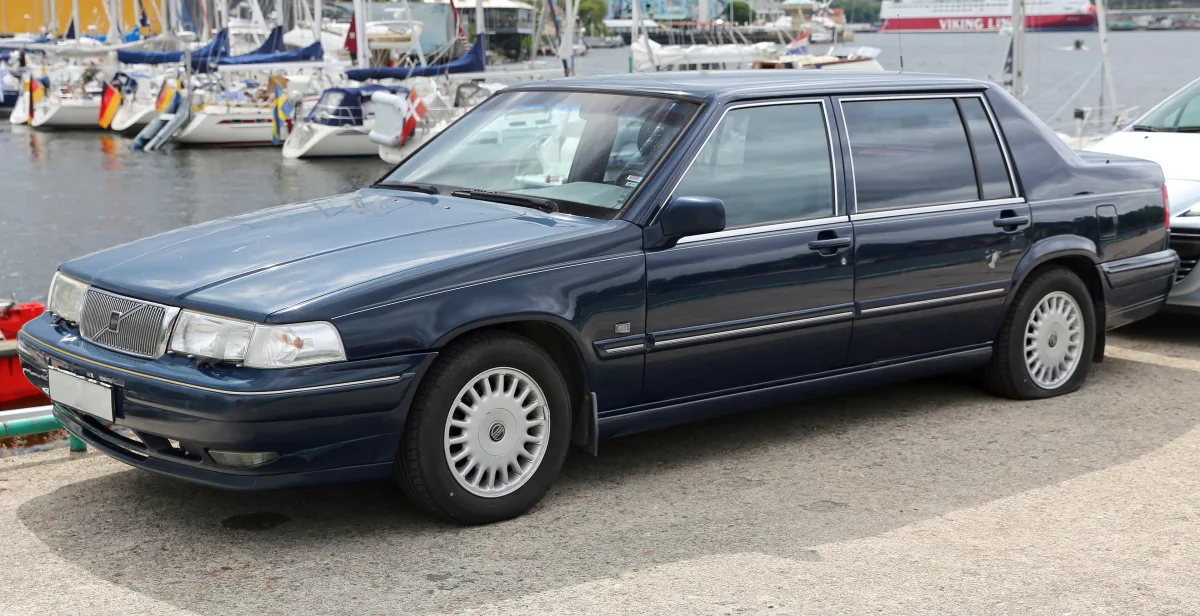
Volvo 960: six-cylinder classic, engines and trims
The Volvo 960 is a high-end rear-wheel-drive sedan and estate produced from 1990 to 1998. In this article, we look at how it differs from the 940, which engines and trims you'll find, and what to check when buying one.






The Volvo 960 in brief
The 960 was Volvo's flagship classic, based on the 940 platform but with six-cylinder engines, a more comfortable ride, and a more luxurious interior. It was available as a sedan and estate.
Today, it's a distinctive but aging car. It's often chosen by those who appreciate rear-wheel drive, a sturdy body, and straightforward, easy-to-understand technology.
Which version to choose
Early 960s (around 1990–1994) have the classic 'boxy' front. Later models, known as the 960 II (from 1994), got a smoother front and improved safety features.
From 1996, the model was renamed to S90 and V90, so this is the final generation. If you're after a later and more comfortable variant, it's worth considering these versions.
Engines and gearboxes
Typical inline six-cylinder petrol engines with around 2.5 and 2.9–3.0-litre capacities. They run smoothly but consume quite a bit of fuel.
The most common gearbox is a 4-speed automatic, which is robust if the oil is changed on time. Manual gearboxes are also found.
What to check when buying a used Volvo 960
The most important thing is the body condition: check for dents, wheel arches, the boot floor, and the rear suspension mounts. Repairing a six-cylinder engine is more expensive than a four-cylinder, so also assess whether the engine runs smoothly and without leaks.
Check the transmission service history, cooling system, automatic gear shifts, and brakes. The electrics are older, so test all the cabin functions.


Trim levels
Names and equipment vary by market and year; we list the trim levels commonly found across Europe.
Bazinė 960
1990–1998The base version with a six-cylinder engine.
- Often comes with basic hubcaps
- Hydraulic power steering
- Comfortable but basic interior trim
Executive
1990–1998Better-equipped version with more luxurious trim.
- Often features leather upholstery
- Often features electric windows and seats
- Often features alloy wheels
Universalas (Estate)
1990–1998Body style popular for its large boot.
- Spacious boot
- Often — the same trim as the sedan
- Comfort is similar to the sedan
Comparing versions
| Bazinė 960 | Executive | |
|---|---|---|
| Who it's for | For a basic, more affordable car | For comfort and a more luxurious interior |
| Interior | More basic | More luxurious, often with leather |
| Engine | Six-cylinder petrol | Six-cylinder petrol |
| Price in the used market (relatively) | Budget | Mid-range |
When choosing a 960, the condition of the body and engine matter more than the trim. If possible, opt for a better-equipped but not yet worn-out car.
Pros
- Six-cylinder powerhouse
- Robust and straightforward body
- Rear-wheel drive
- Spacious boot (estate)
Cons
- High fuel consumption
- Cars are old, may have rusted
- More expensive maintenance than four-cylinder engines
Frequently asked questions
What sets the Volvo 960 apart from the 940?
The 960 is the higher-end model: with a six-cylinder engine, better equipment, and a smoother ride. The 940 is more basic, usually with four-cylinder petrol engines.
Is the Volvo 960 economical?
No, the six-cylinder petrol engine guzzles fuel. This is a car for those who prioritise comfort and robustness over low running costs.
What is the Volvo S90 and V90?
From 1996, the 960 was rebranded as the S90 (saloon) and V90 (estate), so these are essentially the next generation of the same model.
Updated 2026-10-17 · Trim levels and equipment vary by market and model year — check the equipment of the specific car. · Translated automatically


