 English
 Lietuvių
 Latviešu
 Eesti
 Polski
 Русский
 Українська
 Deutsch
 Nederlands
 Čeština
 Slovenčina
 Svenska
 Norsk
 Dansk
 Suomi


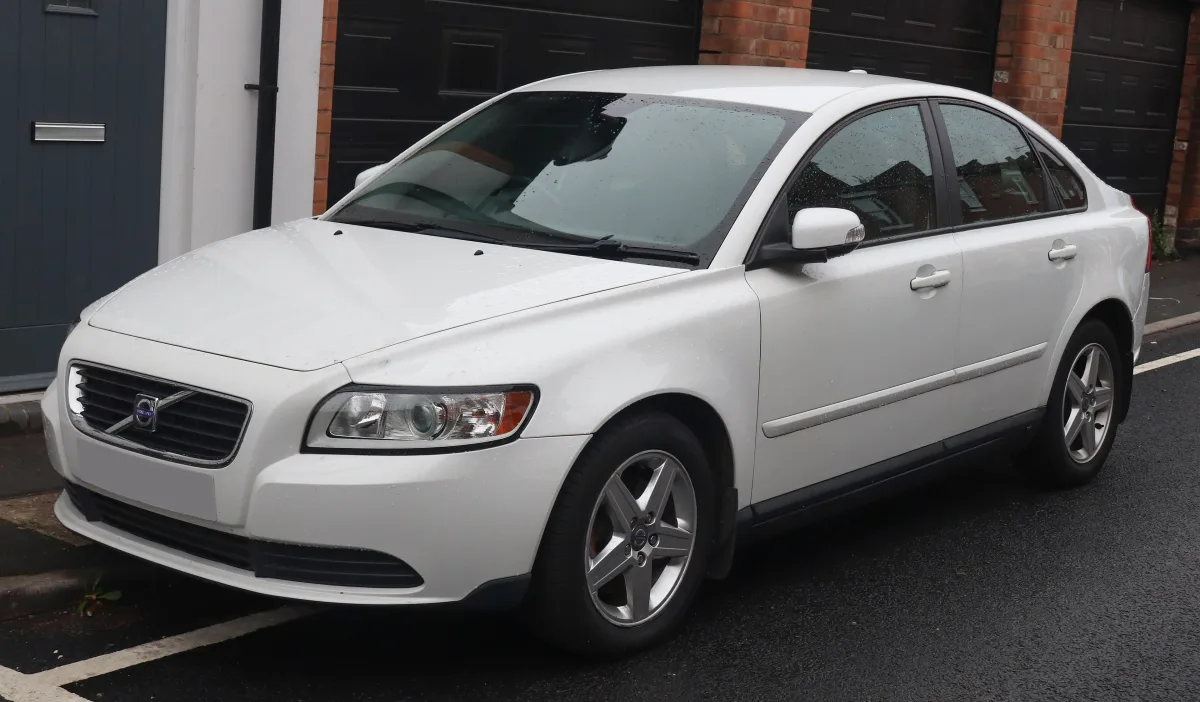
Volvo S40: First and Second Generations, Engines, and Trims
The Volvo S40 is a compact Volvo sedan produced from 1995 to 2012. In Lithuania, it's valued for its safety, comfortable seats, and sturdy body. For those seeking an estate, the related V40 and V50 models are the way to go. We'll look at both generations, engines, trims, and what to check when buying used.






The S40 in brief
The S40 was produced in two generations: the first (1995–2004) in the Netherlands alongside the Mitsubishi Carisma, and the second (2004–2012) in Ghent, Belgium, on a shared platform with the Ford Focus II and Mazda3. Each generation's estate had its own name — the V40 and V50, respectively.
It's a comfortable, sturdy, and safe car, but the rear seats and boot are smaller than those of the larger Volvo S60 or rivals like the Volkswagen Passat. Today, the used market is mostly second-generation models.
Which generation to choose
The first generation is now quite old and affordable. Its technology is partly shared with Mitsubishi, and the 1.9-litre diesel engine is of Renault origin. These cars are simple, but many have rust and high mileage.
The second generation (2004–2012) is much more modern: a sturdier body, better safety, and a distinctive 'floating' centre console. The model was refreshed at the end of 2007 — with new headlights, bumpers, and interior details.
For most buyers, the best choice is the refreshed second generation from 2008–2012. If you need more boot space, consider the V50 estate: the technology and trims are the same.
Engines and gearboxes
Second-generation petrol engines include four-cylinder 1.6, 1.8 and 2.0 (around 100–145 hp), five-cylinder 2.4 (around 140 or 170 hp) and the sporty T5 with turbocharger (around 220–230 hp). Diesels are the 1.6D (around 110 hp), 2.0D (around 136 hp) and five-cylinder D5 (around 180 hp); in later models, diesels are labelled with new names (e.g., D2).
First-generation models most commonly feature 1.6, 1.8 and 2.0 petrol engines, turbocharged T4 and 2.0T, plus the 1.9 diesel.
Manual transmissions come with 5 or 6 speeds. The Geartronic automatic is often paired with five-cylinder engines, while the 2.0D from 2008 onwards could have the Powershift dual-clutch transmission. All-wheel drive (AWD) is offered in the second generation with the T5 engine.
What to check when buying a used S40
In diesel cars, check the diesel particulate filter (DPF) and dual-mass flywheel — cars that have done a lot of city driving are particularly prone to DPF issues. The Powershift transmission should shift smoothly: juddering or clunking often indicates an expensive repair.
In five-cylinder engines, check the crankcase ventilation system — if it’s blocked, it can force oil past the seals. On the suspension, you might need to replace the control arms and stabiliser links, so pay attention to any clunks over rough roads.
Test all the electric functions: climate control, heated seats, window lifts and central locking. On first-generation models, check for rust on the sills, wheel arches and underbody.


Trim levels
Names and equipment vary by market and year; we list the second-generation trims most commonly found in Europe.
Kinetic
Second generationThe base trim — simple, but with all the essential safety features.
- Often, steel wheels
- Air conditioning and a basic audio system
- Cloth interior
Momentum
Second generationThe most popular choice — a good balance of price and comfort.
- Light-alloy wheels
- Often — automatic climate control and parking sensors
- Trip computer and more convenience features
Summum
Second generationThe top standard trim for comfort enthusiasts.
- Often — leather interior and electrically adjustable seats
- Often — xenon headlights
- Higher-class interior trim
R-Design
Second generationSporty-looking version with different interior trim.
- Sporty bumpers and larger wheels
- Sport seats and steering wheel
- Interior details with aluminium trim
DRIVe
Second generation (from 2008)The most economical version with lower CO2 emissions.
- 1.6D diesel (later — D2)
- Aerodynamic details and lower suspension
- Lower fuel consumption
T5
Second generationSport version with the most powerful petrol engine.
- Five-cylinder 2.5 turbo, around 220–230 hp
- Often — all-wheel drive AWD
- Higher fuel consumption
Comparison of second-generation trims
| Kinetic | Momentum | Summum | R-Design | |
|---|---|---|---|---|
| Who it's for | Ideal for everyday driving | Most buyers | Comfort-oriented | Sporty looks |
| Common wheel sizes | 15–16 inch | 16 inch | 16–17 inch | 17–18 inch |
| Interior | Upholstery | Upholstery | Often leather | Sport seats |
| Price in the used market (relatively) | € | € | €€ | €€ |
Many buyers' best bet is the refreshed Momentum or Summum with the 2.0 petrol or five-cylinder diesel. The R-Design is worth considering for its looks, while the T5 is only if you're after a fast car.
Pros
- A safe, sturdy body
- Comfortable seats and a quiet cabin
- Robust five-cylinder engines
- Lots of shared tech with the Ford Focus II — parts are easier to find
Cons
- Cramped rear seats and a small boot
- DPF repairs on diesels and dual-mass flywheel replacements
- The first generation is already old and often rusty
Frequently asked questions
What's the difference between the Volvo S40 and V50?
The V50 is the estate version of the second-gen S40: longer rear end and bigger boot. Engines, tech, and trims are essentially the same.
Is the Volvo S40 the same as the Ford Focus?
The second-gen S40 is built on the same platform as the Ford Focus II and Mazda3, so some chassis and engine parts are shared. However, the body, interior, safety features, and some engines are unique to Volvo.
Which S40 engine is the best?
Most often praised are the five-cylinder 2.4 petrol and D5 diesel — they're robust and suit an automatic gearbox well. For those who don't drive much, a simpler choice is the 1.8 or 2.0 petrol, as it doesn't have a particulate filter.
Updated 2026-10-09 · Trim levels and equipment vary by market and model year — check the equipment of the specific car. · Translated automatically


