 English
 Lietuvių
 Latviešu
 Eesti
 Polski
 Русский
 Українська
 Deutsch
 Nederlands
 Čeština
 Slovenčina
 Svenska
 Norsk
 Dansk
 Suomi


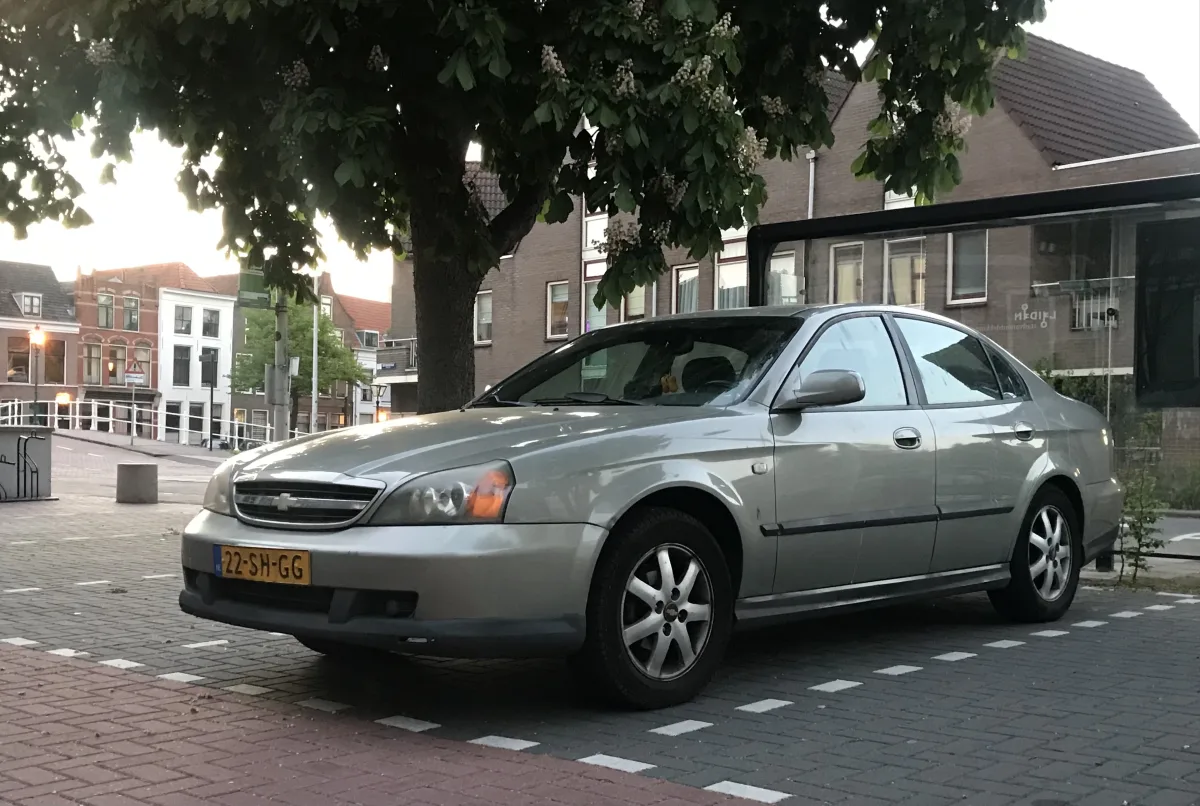
Chevrolet Evanda: engine, trim levels and what to check when buying
Chevrolet Evanda — a mid-size sedan sold in Europe from 2004 to 2006. In reality, this is the previous Daewoo Evanda (Magnus), rebranded as a Chevrolet. We look at the engine, trim levels, and what to check when buying such a car.






Evanda in brief
Evanda – a mid-size sedan created in Korea, initially sold in Europe under the Daewoo badge, and from 2004 as a Chevrolet. After a couple of years, it was replaced by the Chevrolet Epica.
This is a spacious, smooth-riding, and straightforward family sedan with a six-cylinder engine. Due to its short production run, it's not common in Lithuania.
Which version to choose
The Evanda comes in one generation, so the choice depends on the engine, gearbox, and trim level. It's worth choosing cars with a full service history, as finding parts can be tricky.
If you're after comfort – opt for a better-equipped version with leather and electrically adjustable seats. If price is key – a more basic model will suffice.
Engines and gearboxes
The most common engine in Europe was the 2.0-litre inline-six petrol unit (around 130 hp). In some markets, there was also a 2.5-litre engine (around 155 hp).
The gearbox is a 5-speed manual or a 4-speed automatic. The engine is smooth, but fuel consumption is higher than four-cylinder rivals.
What to check when buying a used Evanda
The most important thing is the condition of the engine and drivetrain. Check the timing belt change history, oil leaks, and the cooling system.
Try the automatic gearbox: shifts should be smooth. Check the suspension parts and brakes, as the car is heavy.
Look for rust in the sills, wheel arches, and underneath. Check that all electrical functions, air conditioning, and lighting work.


Trim levels
Trim names vary across markets, so we describe the equipment levels rather than specific manufacturer names.
Bazinė
2004–2006The most basic trim level.
- Often comes with steel or basic alloy wheels
- Basic sound system
- Often features a manual air conditioning
Vidutinė
2004–2006The most popular choice – a good balance of price and comfort.
- Often comes with lightweight alloy wheels
- Often features climate control
- Often comes with electrically operated windows and mirrors
Aukščiausia
2004–2006The fully equipped version.
- Often features a leather or combined interior
- Often — electrically adjustable seats
- Often — heated seats
Evanda equipment level comparison
| Bazinė | Vidutinė | Aukščiausia | |
|---|---|---|---|
| Who it's for | For the budget-conscious | For daily driving | For comfort |
| Wheels (most often) | 15-inch | 15–16-inch | 16-inch |
| Interior | Upholstery | Upholstery | Cloth or part-leather |
| Engine | 2.0 R6 | 2.0 R6 | 2.0 or 2.5 R6 |
| Price in the used market (relatively) | € | € | € |
For most buyers, mid-range trim will suffice if the car's condition is good. Only opt for the top trim if you're after extra comfort.
Pros
- Spacious interior
- Smooth six-cylinder engine
- Good standard equipment for a modest price
- Comfortable ride
Cons
- High fuel consumption
- Finding parts might be tricky
- Rare model – few available
Frequently asked questions
Is the Evanda and Daewoo Magnus the same car?
Technically, yes. The Daewoo Evanda and Chevrolet Evanda are the same model, differing mainly in badges. In Korea, it was called the Magnus.
How does the Evanda differ from the Epica?
The Epica is the newer, 2006-launched generation that replaced the Evanda. It boasts a more modern design and slightly different technology.
Is the Evanda economical?
Not particularly – the six-cylinder engine consumes more fuel than four-cylinder cars. It's better suited to those who prioritise smoothness and space.
Updated 2026-10-14 · Trim levels and equipment vary by market and model year — check the equipment of the specific car. · Translated automatically


