 English
 Lietuvių
 Latviešu
 Eesti
 Polski
 Русский
 Українська
 Deutsch
 Nederlands
 Čeština
 Slovenčina
 Svenska
 Norsk
 Dansk
 Suomi


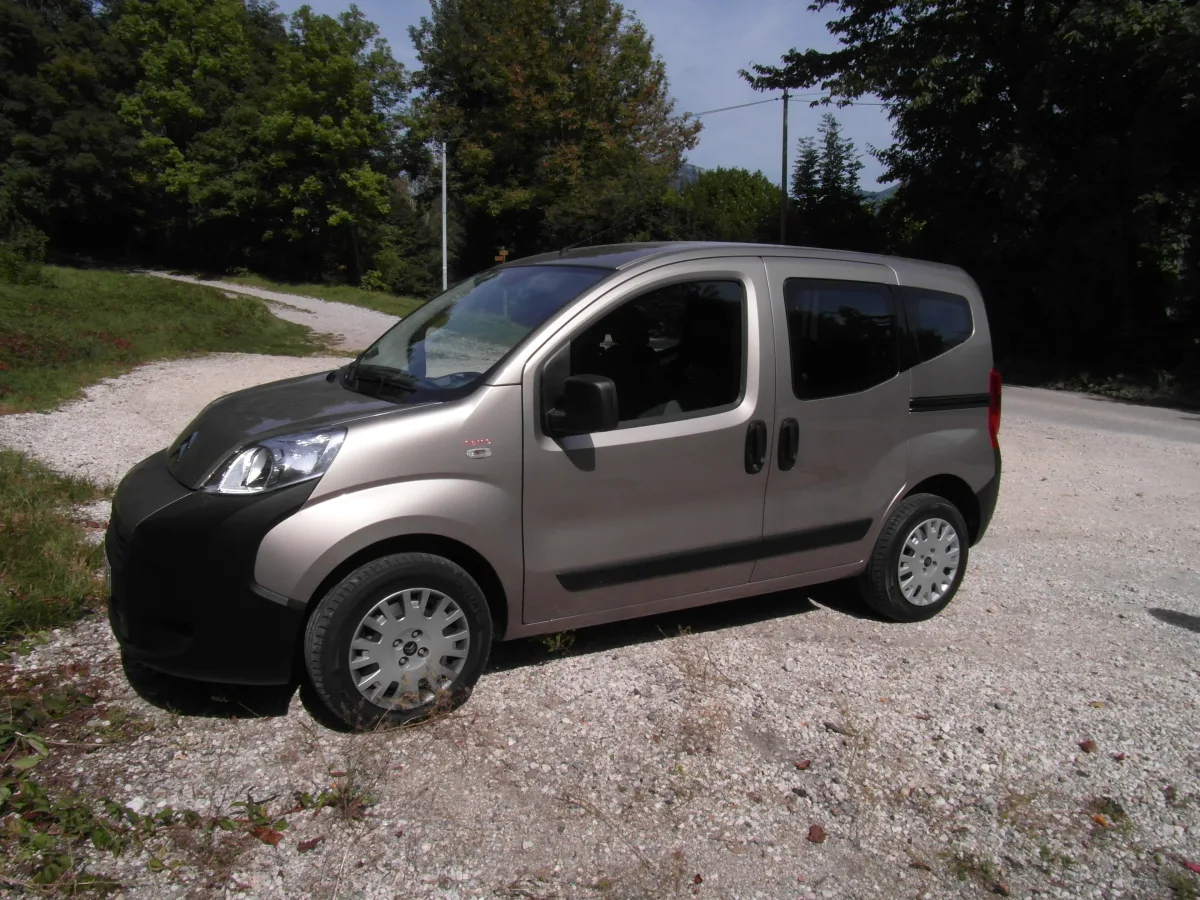
Citroën Nemo: compact van, engines and trims
Citroën Nemo — a compact city van, produced from 2008 to 2017 alongside the Fiat Fiorino and Peugeot Bipper. We look at the trims, engines, cargo area, passenger version Nemo Multispace, and what to check when buying a used Nemo.






Nemo in brief
Nemo is a small commercial vehicle designed for city deliveries and tradespeople. It is produced alongside the Fiat Fiorino and Peugeot Bipper, so the mechanics are the same, but the badging and some interior details differ.
Thanks to its compact size, it's ideal for narrow streets and parking, while the cargo area is suitable for light loads and tools. The passenger version is called the Nemo Multispace.
Trims and bodies
The base trim is a van with a single row of seats and a bulkhead. Versions with fold-flat seats are also available, which can expand the cargo area or provide more space for passengers.
Nemo features sliding doors on the right (often also on the left) and rear doors with two wings. A bulkhead net is often fitted.
Engines and gearboxes
The most common diesel engines are the 1.4 HDi (around 68–70 hp) and 1.3 HDi (Multijet, around 75 hp). There is also a 1.4 petrol engine (around 73 hp).
The gearbox is almost always manual. Due to its modest power, the Nemo feels best in the city and isn't too heavy to drive.
What to check when buying a used Nemo
Body: sliding door sills, rear doors, wheel arches, and cargo area floor. Commercial vehicles are often heavily used.
Check the diesel engine for injectors, turbo, DPF (if applicable) and EGR condition, and timing. The engine should start without a long crank and shouldn't smoke.
In the cabin, check the seats, air conditioning, electrical functions and storage compartments. Check the ride based on service records.


Trim levels and versions
Trim names vary by market and year; below are the most common versions by purpose.
Furgonas
2008–2017The base version for deliveries and work.
- Single row of seats
- Partition between the cabin and cargo area
- Often — a pair of sliding doors
Furgonas su antra sėdynių eile
2008–2017Can carry more people or cargo.
- Second row of seats
- Accessible cargo area
- Often — side windows
Furgonas su dviem stumdomomis durimis
2008–2017Easier access from both sides.
- Two sliding doors
- More practical loading
- Often the pricier version
Nemo Multispace
2008–2017Family-friendly people carrier
- Five seats
- Side windows
- Higher spec than the van
Comparing the trims
| Furgonas | Su antra eile | Multispace | |
|---|---|---|---|
| Who it's for | For deliveries and work | For work and people | For the family |
| Body | Single row of seats | Two rows of seats | People carrier version |
| Engine | 1.3 HDi, 1.4 HDi | 1.3 HDi, 1.4 HDi | 1.4 HDi, 1.4 petrol |
| Price in the used market (relatively) | € | € | €€ |
For most buyers, the best bet is a diesel van. If you need more space for people, consider the Nemo Multispace or the version with a second row of seats.
Pros
- Compact and city-friendly
- Economical and straightforward
- Plenty of spare parts and service options
- Not expensive in the used market
Cons
- Small cargo area
- Maintenance of diesel DPF and EGR in city driving
- Modest power with a full load
Frequently asked questions
How does the Nemo differ from the Fiat Fiorino and Peugeot Bipper?
Technically, they are very similar: the Nemo, Fiorino, and Bipper are built together, differing only in badging, some trim details, and equipment levels.
How does the Nemo differ from the Nemo Multispace?
The Nemo Multispace is the passenger version with windows, a second row of seats and better trim, while the Nemo is a van with a partition.
Which engine to choose?
For high-mileage drivers, go for the diesel (1.3 or 1.4 HDi). If you mostly drive short distances in the city, consider a petrol engine.
Updated 2026-10-21 · Trim levels and equipment vary by market and model year — check the equipment of the specific car. · Translated automatically


