 English
 Lietuvių
 Latviešu
 Eesti
 Polski
 Русский
 Українська
 Deutsch
 Nederlands
 Čeština
 Slovenčina
 Svenska
 Norsk
 Dansk
 Suomi


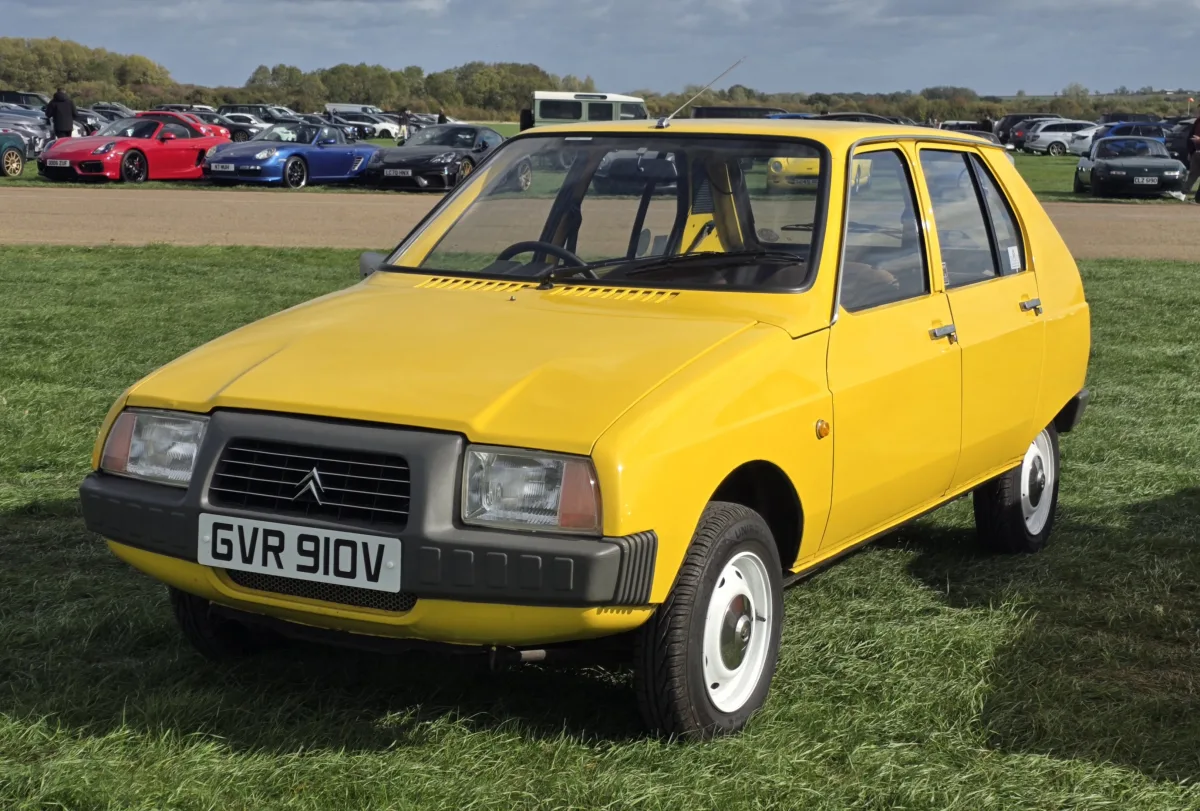
Citroën Visa: generations, engines and what to know before buying
Citroën Visa — a small front-wheel-drive hatchback introduced in 1978 and produced until 1988. In this article, we look at its generations, engines and what you need to know when buying a used Visa.






Visa in brief
The Citroën Visa was a small Citroën hatchback built on the Peugeot 104 platform. It stood out with its modern construction, and its distinctive exterior and interior design remained clearly recognisable as a Citroën.
The Visa was usually offered with a three or five-door body, and in 1981 the refreshed Visa II appeared with a new dashboard. Later, sportier versions and an open cabriolet were added.
Which version to choose
Base versions like Spécial and Club are ideal for those after a simple classic hatchback. They boast low running costs and straightforward mechanics.
Enthusiasts will find the Chrono, GT and GTi versions more appealing, with more powerful engines and sportier looks. These are rarer and more prized by collectors. There was also a cabriolet, built by Heuliez, and a rally version, the 1000 Pistes.
Engines and gearboxes
Visa engines varied by version — early models had a two-cylinder air-cooled engine, while others had a four-cylinder unit, roughly 1.1–1.4 litres in capacity. The GTi had around a 1.6-litre engine with around 115 hp, while the Chrono had around 1.4 litres and around 93 hp.
The gearbox is a manual, with four or five speeds. The design is simple, and finding parts, especially for more common versions, isn't too difficult.
What to check when buying a used Visa
The main issue is rust. Check the sills, wheel arches, front and rear bumpers, floor, and door sills. Ensure the body hasn't been repainted or resprayed.
Check the engine condition, oil leaks, gearbox operation, and suspension. Many Visa parts, especially interior plastics, are hard to find. Inspect the electrical equipment and instrument cluster.


Trim levels
Names and equipment vary by market and year; we list the most common trims found in Europe.
Visa Spécial
from 1978The base model with a modest engine.
- Basic trim
- Low running costs
- Often — a two-cylinder engine
Visa Club
from 1978Mid-range version with better equipment.
- Better interior trim
- Often — a more powerful engine
- More comfortable seats
Visa Chrono
Visa IIA sportier version with around a 1.4-litre engine.
- Around 93 hp
- Sport trim
- Additional extras
Visa GT
Visa IIFaster version with sport trim.
- More powerful engine
- Sportier look
- Often — additional extras
Visa GTi
Visa IIThe sportiest series version.
- Around a 1.6-litre engine, around 115 hp
- Sport trim and alloy wheels
- The most highly rated version
Comparison of all versions
| Spécial | Club | Chrono | GTi | |
|---|---|---|---|---|
| Who it's for | For the everyday classic | For daily driving | For sporty driving | For enthusiasts and collectors |
| Engine | Compact | Compact or mid-sized | Around 1.4 litres | Around 1.6 litres |
| Power (approx.) | Low | Low | 93 HP | 115 HP |
| Ease of maintenance | Average | Average | Difficult | Difficult |
| Price in the used market (relatively) | € | € | €€ | €€€ |
For most buyers, the best choice is a well-maintained Club or similar Visa variant. The GTi is ideal for enthusiasts who value sportiness and rarity.
Pros
- Original French design
- Simple and easy-to-maintain technology
- A practical hatchback for the city
- Sporty versions are a treat for enthusiasts
Cons
- Sprightly performance
- Some parts can be tricky to find
- Modest power in base models
Frequently asked questions
What makes the Citroën Visa special?
It's a small Citroën hatchback with a unique look, built on the Peugeot 104 platform.
Which Visa version is the best?
Many will prefer the simpler versions for their ease of maintenance. Enthusiasts opt for the GTi or Chrono for their sportiness, while collectors go for the rarer cabriolets.
Is the Visa suitable for everyday use?
A well-maintained example can be fine for short trips, but it lags behind modern cars in terms of comfort and safety. It is often purchased as a hobby car.
Updated 2026-10-19 · Trim levels and equipment vary by market and model year — check the equipment of the specific car. · Translated automatically


