 English
 Lietuvių
 Latviešu
 Eesti
 Polski
 Русский
 Українська
 Deutsch
 Nederlands
 Čeština
 Slovenčina
 Svenska
 Norsk
 Dansk
 Suomi


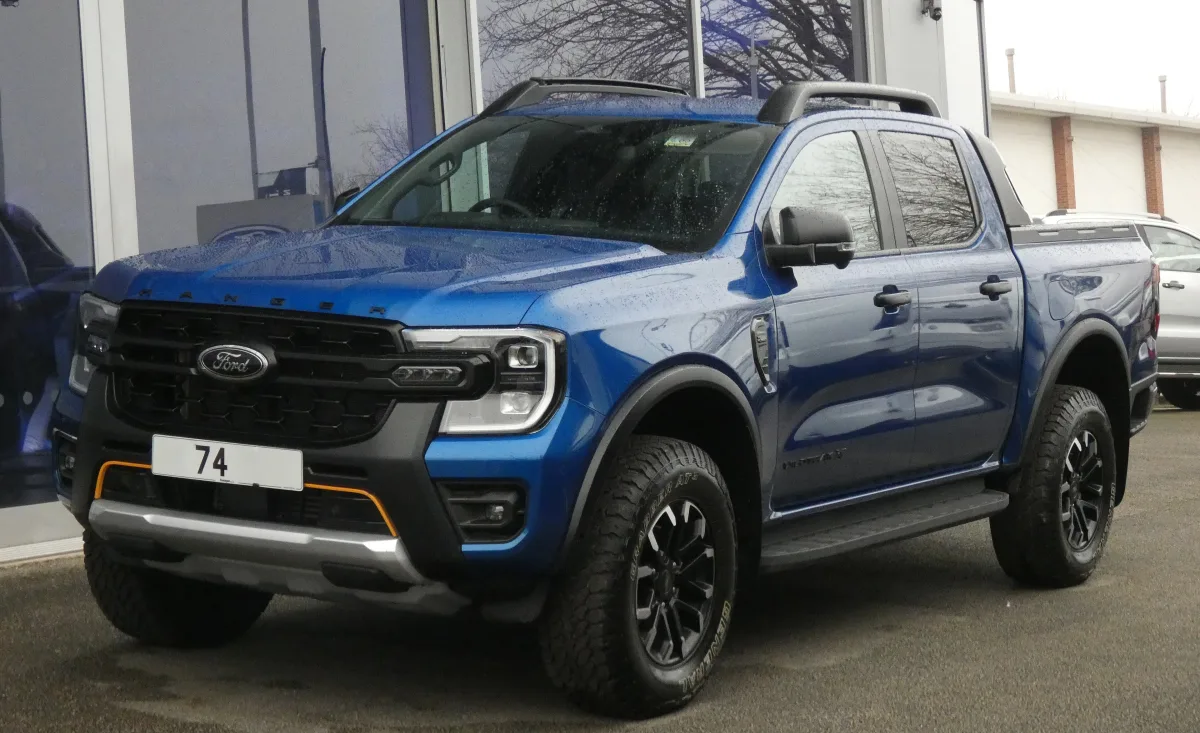
Ford Ranger: T6 and the new generation, engines and trims
The Ford Ranger is one of Europe's most popular pickups, suitable for both work and leisure. In the used market, you'll often find 2011–2022 T6 generation models, with a completely new generation produced from 2022 onwards. We'll look at both generations, engines, trims, and what to check before buying.






Ranger in brief
Previous Ranger generations sold in Europe were co-developed with Mazda, but since 2011, Ford (through its Australian division) has built the Ranger independently. The trucks come with single (Regular Cab), extended (Super Cab), and double (Double Cab) cab configurations.
The Ranger is praised for its robust frame, near-tonne payload capacity, and ability to tow up to 3.5t. Most European-market trucks feature four-wheel drive with low-range gearing. Compared to passenger cars, the ride is firmer, and the rear axle can bounce over rough terrain when unladen.
T6 and the new generation — what's the difference
The T6 generation (2011–2022) is the most common in the used market. Models refreshed in 2015–2016 received a new front end, a more comfortable interior with SYNC infotainment, and improved engines.
During the 2019 update, the 2.2 and 3.2 TDCi engines in Europe were replaced with 2.0 EcoBlue diesels, a 10-speed automatic transmission was introduced, and the off-road-focused Ranger Raptor variant was added.
New generation (from 2022, in Europe — from 2023) retains the ladder-frame construction, but almost everything else is new: a larger cabin with a big vertical touchscreen and digital instrument cluster, more driver-assistance systems, and V6 engines. It forms the basis for the new Volkswagen Amarok.
Engines and transmissions
In the T6 generation up to 2019, the most common engines were the 2.2 TDCi (around 125–160 hp) and the five-cylinder 3.2 TDCi (around 200 hp) diesels. Post-2019, the 2.0 EcoBlue with one turbo (around 130–170 hp) or two turbos (213 hp); the latter is also fitted to the Ranger Raptor.
In the new generation in Europe, the 2.0 EcoBlue (around 170–205 hp) and 3.0 V6 (around 240 hp) diesels are offered, the Raptor gets a 3.0 V6 EcoBoost petrol engine (around 290 hp), and later a plug-in hybrid was introduced.
In the T6 generation, vehicles come with a 6-speed manual or 6-speed automatic, post-2019 also a 10-speed automatic transmission. In the new generation, the 10-speed automatic is most commonly found.
What to check when buying a used Ranger
Pickups are often used for heavy-duty work and towing, so inspect the frame, load bed, tow hook, and suspension for any signs of deformation, welding, or severe corrosion. Check the underbody and guards to ensure the vehicle hasn't been heavily off-roaded.
Try out the four-wheel drive and low-range gear, and in manual cars — the clutch and dual-mass flywheel. For diesel engines, check the EGR, injectors, and if fitted, the diesel particulate filter (DPF), and in newer models, the AdBlue system.
Many Rangers were company cars, so check the mileage and maintenance against the service history records. Note the vehicle's registration category — this can affect insurance and other costs.


Trim levels
Names and equipment vary by market and year; we list the most common trims found in Europe.
XL
T6, the new generationThe basic workhorse version.
- Steel wheels
- Often — Regular or Super Cab body styles
- Robust, no-frills interior
XLT
T6, the new generationThe workhorse version with added comfort.
- Often — alloy wheels
- Often — cruise control
- Often — fog lights and chrome details
Limited
T6, the new generationA more comfortable version for daily use.
- Alloy wheels
- Often — leather or partial leather upholstery and heated seats
- Often — automatic climate control
Wildtrak
T6, the new generationThe most popular, best-equipped version
- Larger alloy wheels and a distinctive look
- Often — the most powerful diesel engine and automatic transmission
- Often — navigation, rear-view camera and load compartment cover
Raptor
T6 (from 2019), the new generationThe sporty, no-frills version
- Enhanced suspension with FOX dampers
- Wider body and no-frills tyres
- T6 — 2.0 EcoBlue diesel, new generation — V6 petrol
Comparison of T6 generation (post-2019) trims
| XL | XLT | Limited | Wildtrak | |
|---|---|---|---|---|
| Who it's for | For work | For work and everyday use | Everyday comfort | For leisure and style |
| Wheels (most common) | 16-inch steel | 16–17-inch | 17-inch | 18-inch |
| Cab | Various | Mostly Double Cab | Mostly Double Cab | Mostly Double Cab |
| Engine (most common) | 2.0 EcoBlue, 130–170 HP | 2.0 EcoBlue, 130–170 HP | 2.0 EcoBlue, 170 HP | 2.0 EcoBlue, 170–213 HP |
| Price in the used market (relatively) | € | €€ | €€ | €€€ |
If the Ranger is used as a workhorse and daily driver, most buyers will find the Limited or Wildtrak to be the best choices. For work purposes, the XL or XLT will suffice—they're simpler and more affordable.
Pros
- Robust frame, high towing and payload capacity
- Four-wheel drive with low-range gearing
- Holds its value well
- Comfortable cabin in Limited and Wildtrak versions
Cons
- Stiff ride when unladen
- Large—more challenging to manoeuvre and park in the city
- Higher fuel consumption than smaller cars
Frequently asked questions
What sets the Ranger Wildtrak and Limited apart?
Both versions are well-equipped, but the Wildtrak stands out with a sportier look, larger wheels, and often a more powerful engine. The Limited has a more subdued appearance and is frequently cheaper in the used market.
Which Ranger engine is the best?
The 3.2 TDCi is often praised for its power, but it consumes more fuel, while the 2.2 TDCi is more economical and sufficient for many. Post-2019, the most powerful and refined choice is the 2.0 EcoBlue with twin turbos and a 10-speed automatic transmission.
Is the Ranger suitable for daily driving?
Yes, especially the Limited and Wildtrak trims — they are well-equipped and comfortable. However, it's a large pickup truck, so it's harder to park in the city, and without a load, the ride is firmer than that of SUVs.
Updated 2026-10-09 · Trim levels and equipment vary by market and model year — check the equipment of the specific car. · Translated automatically


