 English
 Lietuvių
 Latviešu
 Eesti
 Polski
 Русский
 Українська
 Deutsch
 Nederlands
 Čeština
 Slovenčina
 Svenska
 Norsk
 Dansk
 Suomi
 4
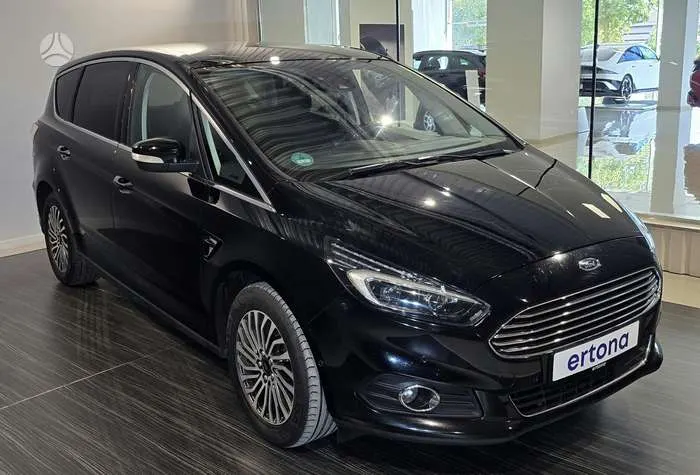
Ford S-Max
2018212 780 kmDieselAutomatic140 kWMPV
Ford S-MAX, 2018-09, vienatūris. Kuras: dyzelinas; pavarų dėžė: automatinė; variklis: 2.0 l, 140 kW; rida: 212 780 km. Automobilį galima apžiūrėti: ERTONA IR KO, UAB, Serbentų g. 1…
€9,500
Ford S-Max II, produced 2015–2023. Listings and information.


 4
Ford S-MAX, 2018-09, vienatūris. Kuras: dyzelinas; pavarų dėžė: automatinė; variklis: 2.0 l, 140 kW; rida: 212 780 km. Automobilį galima apžiūrėti: ERTONA IR KO, UAB, Serbentų g. 1…


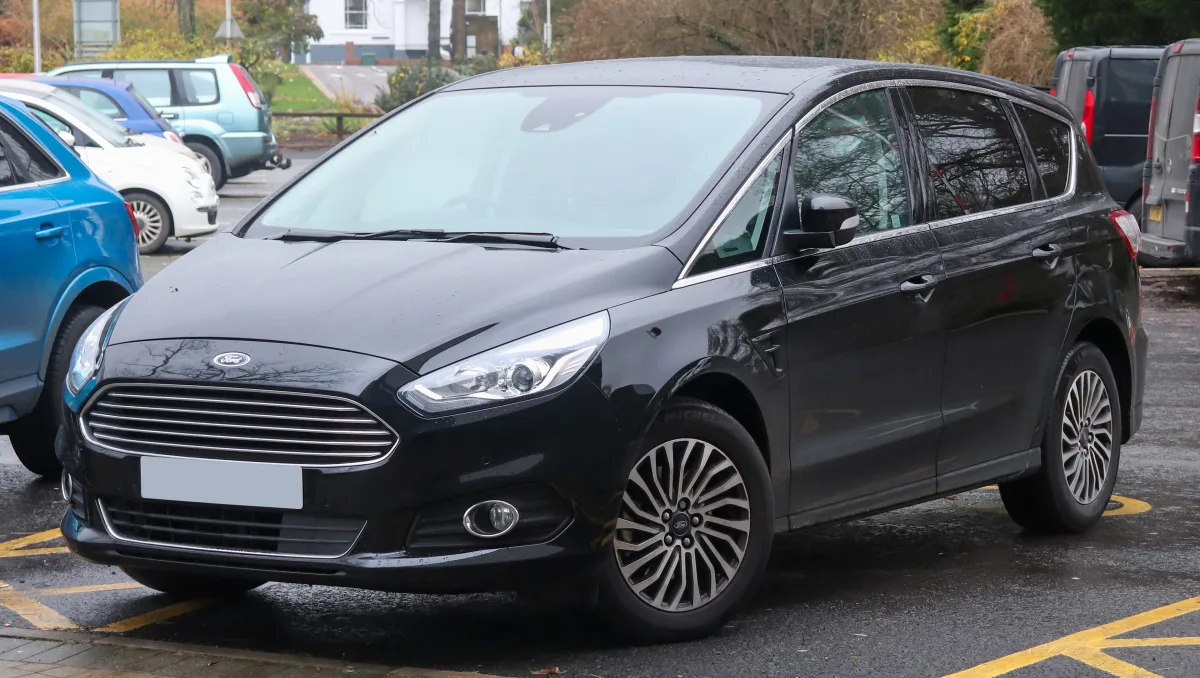
The Ford S-Max is a sportier take on the large MPV, which drives almost like a hatchback but can accommodate up to seven people when needed. We look at the 1st (2006–2015) and 2nd (2015–2023) generations: how they differ, which engines are most popular, how the trims vary and what to check when buying used.






The S-Max was launched in 2006 and named European Car of the Year in 2007. It shares its platform with the Mondeo and Galaxy but is lower, with a more rakish roofline and a firmer suspension – it’s an MPV for those who don’t want to compromise on driving enjoyment.
In the second row, there are three separate, individually folding seats. The third row, depending on the market and trim, was either standard or optional and is better suited for children or short trips. If you need seven seats all the time, consider the more spacious Galaxy.
Production of the S-Max in Europe ended in 2023, so today it’s a used-car market choice only. Most S-Max models sold in Lithuania are diesel.
The 1st generation (2006–2015) is still praised for its precise handling and spacious interior. The 2010 facelift refreshed the looks and interior trim, brought in EcoBoost petrol engines and the PowerShift automatic gearbox. It’s a worthwhile choice, although most cars have clocked up quite a few miles.
Second generation (2015–2023) built on a platform shared with the Mondeo Mk5 and Galaxy III. It's quieter, better equipped, with the SYNC multimedia system and more driver-assistance features; some diesel engines gained all-wheel drive (AWD), and the top-tier version became the Vignale.
The 2019 update brought in 2.0 EcoBlue diesels, an 8-speed automatic gearbox, and the sporty ST-Line trim, while from 2021, a hybrid was also offered. These newer models are the best, albeit priciest, choice.
In the first generation, you'll most commonly find 1.8 TDCi (around 125 hp) and 2.0 TDCi (around 115–163 hp) diesels, with the 2.2 TDCi being rarer. Petrol options include 2.0 and 2.3-litre naturally aspirated engines, and in early models, a 2.5-litre five-cylinder turbo, replaced by 1.6 and 2.0 EcoBoost units post-2010.
The second generation is dominated by 2.0 TDCi (around 120–210 hp) and, from 2018–2019, 2.0 EcoBlue (around 150–240 hp) diesels; the most powerful versions have twin turbos. Petrol 1.5 and 2.0 EcoBoost engines are rare in Lithuania. The hybrid 2.5 FHEV (around 190 hp) works with an unclutchable automatic gearbox and can't be jump-started.
Gearboxes come in 6-speed manual or automatic. The most common automatic until 2019 was the 6-speed dual-clutch PowerShift, while the EcoBlue diesels get an 8-speed conventional automatic.
Check the service history and maintenance records — some S-Max models were used as company cars or taxis. In diesel engines, listen for a two-mass flywheel, check the diesel particulate filter (DPF) and EGR valve, and in EcoBlue diesels, ensure there are no AdBlue system errors.
The PowerShift gearbox should shift smoothly, without hesitation or jolts; ask if the transmission fluid has been changed. In all-wheel-drive models, listen for any grinding when driving and cornering.
The S-Max is heavy, so brakes, tyres, and suspension components are likely to wear out faster — pay attention to squeaks and vibration when braking during a test drive. Test the seat adjustment mechanisms and third row, if present.


Names and equipment vary by market and year; we list the most common trims found in Europe.
Base trim with all essential equipment.
The most popular choice in the used market — more comfort and features.
Sporty styling for the refreshed S-Max.
The most luxurious S-Max with distinctive trim.
| Trend | Titanium | ST-Line | Vignale | |
|---|---|---|---|---|
| Who it's for | The rational family buyer | Everyday comfort | Sporty looks | Luxury and comfort |
| Most common used-car listings | 2016–17 model year | 2017–18 model year | 2018–19 model year | 2018–19 model year |
| Exterior | Base trim | More chrome details | Sporty bumpers, dark accents | Unique grilles, chrome |
| Interior | Cloth upholstery | More features, often partial leather | Sport seats | Leather with unique stitching |
| Pricing in the used market (relatively) | € | €€ | €€€ | €€€ |
Most buyers' top pick is the second-gen Titanium with the 2.0 TDCi or 2.0 EcoBlue diesel. The ST-Line and Vignale are worth considering for their looks and kit, but they're pricier and rarer on the used market.
No. The third row of seats, depending on the market and trim, was either standard or an optional extra, so there are plenty of five-seat S-Max models on the used market. Before buying, check the registration documents to see how many seats are listed.
The mechanics and engines are essentially the same, but the S-Max is lower, sportier and more fun to drive. The Galaxy is taller, with a roomier third row and boot, making it better suited if you need seven seats all the time.
For many buyers, the second generation is the best bet, especially after the 2019 refresh with the 2.0 EcoBlue engine and 8-speed automatic gearbox. The first generation is considerably cheaper and still a solid choice, but you'll need to pick one based on its technical condition and service history.
The first-generation S-Max is front-wheel drive only. In the second generation, some diesel engines were offered with all-wheel drive (AWD), but most used models are front-wheel drive.
Updated 2026-10-09 · Trim levels and equipment vary by market and model year — check the equipment of the specific car. · Translated automatically
No comments about the Ford S-Max yet. Share your experience.
Log in to comment


We use necessary cookies to run the website. With your consent, we will also use analytics and advertising measurement cookies — to understand how the website is used and to measure our advertising results. Learn more