 English
 Lietuvių
 Latviešu
 Eesti
 Polski
 Русский
 Українська
 Deutsch
 Nederlands
 Čeština
 Slovenčina
 Svenska
 Norsk
 Dansk
 Suomi


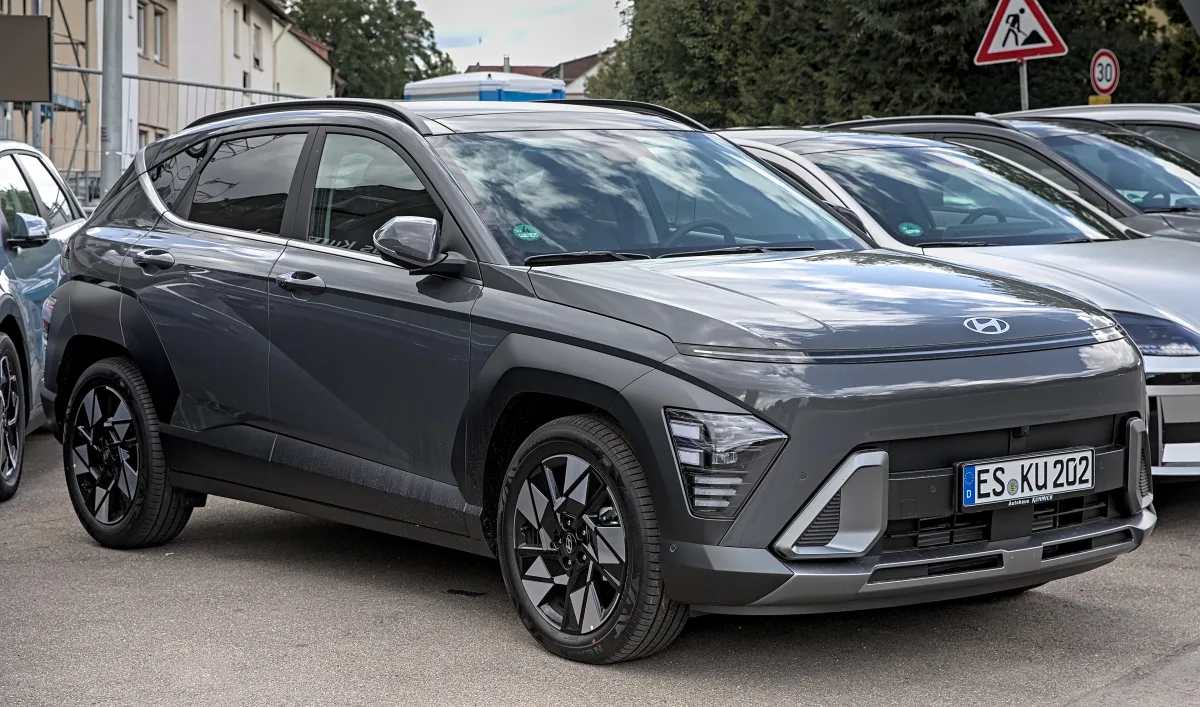
Hyundai Kona: OS and SX2 generations, engines and trims
The Hyundai Kona is a compact city SUV (crossover) that has been on sale in Europe since 2017. It stands out because it's offered with petrol, hybrid and electric powertrains. We look at how the OS and SX2 generations differ, which engines are most popular, what trims are available and what to check when buying used.






Kona in brief
The first Kona generation (OS) launched in 2017 and quickly became one of Hyundai's most popular models in Europe. The Kona Electric was introduced in 2018, the Kona Hybrid in 2019, and after a facelift, the range was bolstered by the sporty N Line and N versions. The second generation (SX2) has been on sale since 2023.
The Kona is praised for its compact dimensions, higher seating position and wide choice of powertrains. The rear seat and boot of the first generation are quite small — in this respect, it's closer to a small-class car, so families often prefer the second, much larger generation.
OS and SX2 generations — how they differ
The OS generation (2017–2023) was refreshed in 2020–2021: the front was restyled, the interior got larger screens, the 1.0 T-GDi engine gained a 48 V mild-hybrid version, and the range was expanded with the N Line and powerful Kona N. This is the generation most commonly found in the used market.
The SX2 generation (from 2023) is significantly longer, with a more spacious interior and boot, wider screens and more driver-assistance systems. It was primarily designed as an electric vehicle, but petrol and hybrid engines are still offered.
When buying a used OS, you'll get a cheaper, time-tested car. The SX2 offers a more modern and practical option for families. For electric versions, the year is less important than the battery capacity and condition.
Engines and transmissions
The OS range predominantly features 1.0 T-GDi (around 120 hp) and 1.6 T-GDi (up to around 177 hp pre-facelift, around 198 hp post-facelift) petrol engines, along with the 1.6 CRDi diesel. The 1.6 T-GDi is often paired with a 7-speed DCT gearbox and all-wheel drive. The Kona N comes with a 2.0 T-GDi engine (around 280 hp).
The Kona Hybrid combines a 1.6 GDi petrol engine with an electric motor (total output around 141 hp) and a 6-speed DCT gearbox. The OS generation Kona Electric came with either an approximate 39 kWh (136 hp) or 64 kWh (204 hp) battery; the larger battery version offers one of the longest ranges in its class, though this noticeably decreases in winter.
The SX2 range offers 1.0 T-GDi and 1.6 T-GDi petrol engines, a 1.6 hybrid (around 141 hp), and the Kona Electric with an approximate 48 kWh or 65 kWh battery.
What to check when buying a used Kona
For the Kona Electric, request a battery health (SOH) check and ensure all manufacturer recall work has been completed — some 2018–2020 models were recalled due to battery fire risk, with some batteries replaced. Test charging with both alternating and direct current.
The DCT gearbox should shift smoothly from a standstill, without hesitation or vibration. In all-wheel-drive versions, listen for any unusual noises during turns.
The Kona is often used in the city, so check the bumpers, plastic wheel arch liners, and wheels for minor damage. Verify the ride quality based on service and inspection records.


Trim levels
Names and equipment vary by country and year; we list the most common trims found in Europe.
Comfort
OS generationBase trim with essential conveniences.
- Often — light-alloy wheels
- Air conditioning and multimedia screen
- Often — rear-view camera
Style
OS generationThe most popular choice — a good balance of price and features.
- Often — automatic climate control
- Often — heated seats and steering wheel
- More driver assistance systems
Premium
OS generationThe most generously equipped version.
- Often — LED headlights and 18-inch wheels
- Often — leather seats
- Often — projection screen and better sound system
N Line
OS (post-facelift) and SX2 generationsSporty-looking version with standard engines.
- Sporty bumpers and alloy wheels
- Sport seats and N Line interior details
- Body-coloured wheel arch trims
N
OS generation (post-facelift)Sporty crossover for driving enthusiasts.
- 2.0 T-GDi engine, around 280 hp
- 8-speed dual-clutch automatic gearbox
- Sport suspension and brakes
Comparison of OS generation trims
| Comfort | Style | Premium | N Line | |
|---|---|---|---|---|
| Who it's for | For daily city driving | Most buyers | Those wanting the most equipment | Sporty looks |
| Wheels (most often) | 16 inch | 16–18 inch | 18 inch | 18 inch |
| Front headlights | Often halogen | Halogen or LED | Often LED | Often LED |
| Interior | Cloth seats | Often — heated seats | Often — leather seats | Sport seats, N Line trim |
| Price in the used market (relatively) | € | €€ | €€€ | €€€ |
For most buyers, the best choice is the Style with the 1.0 T-GDi engine or hybrid transmission. Premium is worth considering for more features, while N Line offers a sportier look.
Pros
- A wide range of powertrains — petrol, hybrid, and electric
- Compact and convenient for city driving
- Economical hybrid version
- Kona Electric with a larger battery — long range in its class
Cons
- The first-generation model has a cramped rear seat and small boot
- The value of the electric version heavily depends on the battery condition
- Second-generation models are still quite pricey in the used market
Frequently asked questions
Which Kona version to choose — petrol, hybrid, or electric?
If you mostly drive in the city and can't charge at home, the Kona Hybrid is the most sensible choice. The electric Kona suits those who can regularly charge at home or work, while the petrol 1.0 T-GDi is the simplest and often cheapest option.
Is it worth buying a used Kona Electric?
Yes, if the battery is in good condition and all recall work has been done. If you often drive in the city, opt for a larger battery — the range of a smaller one, especially in winter, might be too short.
Is the Kona suitable for a family?
The first-generation Kona is better suited for one or two people — the rear seat and boot are quite small. A family would be better off with the SX2 generation or a larger Hyundai Tucson.
Updated 2026-10-09 · Trim levels and equipment vary by market and model year — check the equipment of the specific car. · Translated automatically


