 English
 Lietuvių
 Latviešu
 Eesti
 Polski
 Русский
 Українська
 Deutsch
 Nederlands
 Čeština
 Slovenčina
 Svenska
 Norsk
 Dansk
 Suomi


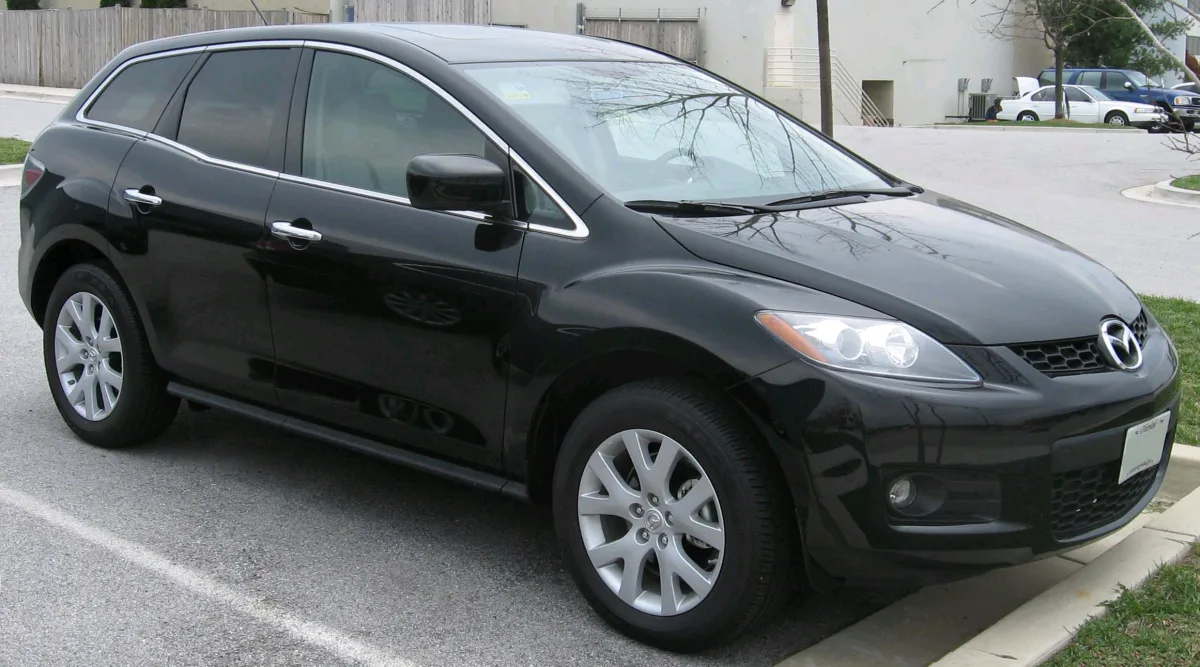
Mazda CX-7: the sporty crossover, engines, and what buyers need to know
Mazda CX-7 (2006–2012) — a sporty-looking mid-size crossover with all-wheel drive. We look at the turbo petrol and diesel engines, how early and updated models differ, and what to check before buying a used CX-7.






The CX-7 in brief
The CX-7 was Mazda's first mid-size crossover designed to offer sporty driving in a higher-riding body. The styling is dynamic, the seating position higher than a typical hatchback, and all-wheel drive is almost standard.
On the used market, the CX-7 is praised for its driving feel and equipment. However, it drinks fuel quite heavily, and maintaining the turbo engine requires careful attention.
Early and updated models
Around 2009, the CX-7 was updated: the front end, headlights, and some interior details were changed, and a diesel engine became available in Europe. Updated models look more modern and are usually better equipped.
Early models come only with the turbocharged petrol engine. The diesel version in the updated model seems more appealing to most European buyers due to running costs.
Engines and gearboxes
The petrol engine is a 2.3-litre turbo (around 260 hp). It delivers strong performance but drinks fuel. After the update, a 2.2-litre turbodiesel (around 173 hp) was offered in Europe.
The gearbox is a six-speed manual (most often with the diesel) or automatic. All-wheel drive automatically distributes power between the axles.
What to check when buying a used CX-7
In the 2.3-litre turbo petrol engine, check the condition of the turbocharger, oil consumption, and listen for any unusual noises. It's crucial that the engine has been well-maintained and that good-quality oil has been used.
In diesel cars, check for cold starting issues, smoke, and the condition of the particulate filter. Test all-wheel drive and the gearbox.
Inspect the suspension, brakes, and electrical equipment. Ask for the service history – its absence in the case of a turbo engine is a serious red flag.


Versions
Names and equipment vary by market and year; we list the most commonly encountered names in Europe.
2.3 Turbo
2006–2012 modelsPetrol version with turbocharger.
- Around 260 hp
- All-wheel drive
- High fuel consumption
2.2 MZR-CD
2009–2012 modelsDiesel version with a 2.2-litre turbodiesel.
- Around 173 hp
- All-wheel drive
- Lower fuel consumption
Engine comparison
| 2.3 Turbo | 2.2 MZR-CD | |
|---|---|---|
| Who's it for? | For dynamic driving | For long distances |
| Power | Around 260 hp | Around 173 hp |
| Fuel economy | Larger | Smaller |
| Transmission | Automatic | Manual or automatic |
| Price in the used market (relatively) | €€ | €€ |
Most buyers will find diesel more economical. Petrol turbo is for those who prioritise dynamism and have a reliable service history.
Pros
- Sporty driving and precise steering response
- Good equipment and safety levels
- All-wheel drive
- Distinctive, dynamic looks
Cons
- High fuel consumption with the turbo petrol engine
- Risk of turbocharger and engine maintenance issues
- Small boot and cramped rear seat space
Frequently asked questions
Is the CX-7 reliable?
It depends on the engine and maintenance. The turbo petrol needs thorough checking for turbocharger and oil consumption issues.
Does the CX-7 have a diesel option?
Yes, after the update, a 2.2-litre turbodiesel was offered in Europe. Earlier models only had the turbo petrol engine.
Is the CX-7 suitable for winter?
Yes. The all-wheel drive helps in snow and slippery conditions, but it's an urban crossover, not an off-road SUV.
Updated 2026-10-19 · Trim levels and equipment vary by market and model year — check the equipment of the specific car. · Translated automatically


