 English
 Lietuvių
 Latviešu
 Eesti
 Polski
 Русский
 Українська
 Deutsch
 Nederlands
 Čeština
 Slovenčina
 Svenska
 Norsk
 Dansk
 Suomi


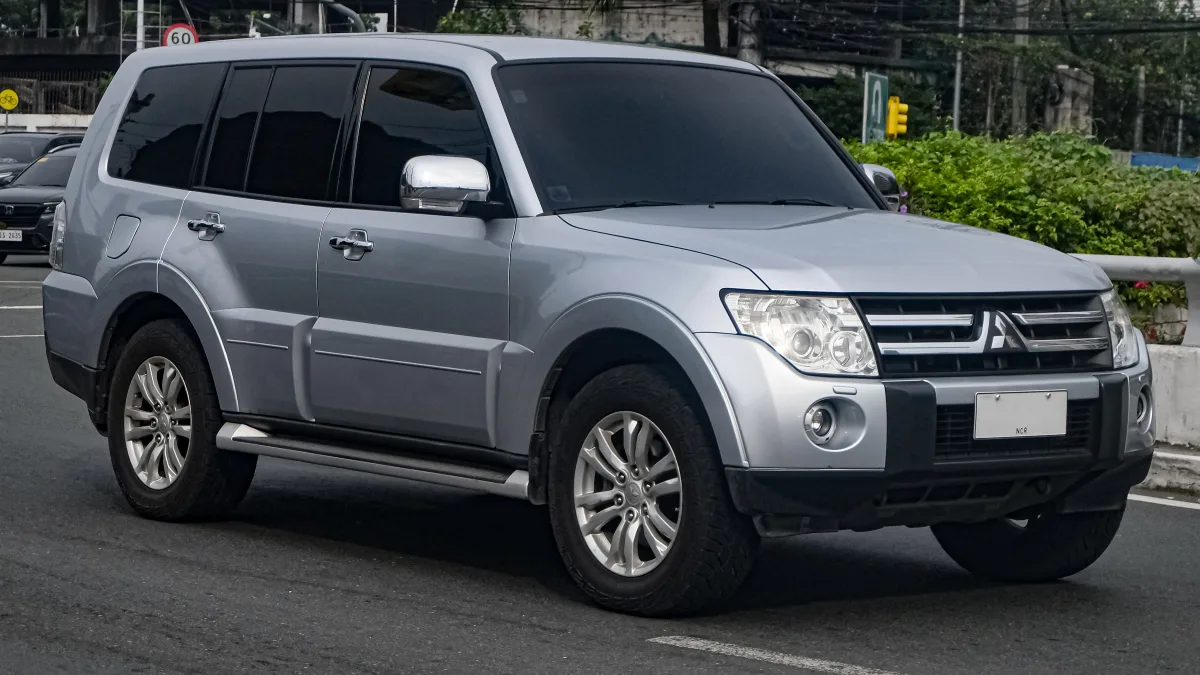
Mitsubishi Pajero: III and IV generations, engines and trims
The Mitsubishi Pajero is a true off-roader with a serious four-wheel-drive system, highly regarded in Lithuania by hunters, anglers, and those who clock up the miles. We look at how the III and IV generations differ, which engines are most popular, how the trims vary, and what to check before buying.






Pajero in brief
The Pajero has been in production since 1982, and in some markets, it's known as the Montero or Shogun. In the used market, you'll most often encounter the last two generations: III (roughly 1999–2006) and IV (from 2006 onwards). Both generations were available with a short three-door body and a long five-door version, with the latter often featuring three rows of seats.
The Pajero is valued for its reliable four-wheel drive, robust construction, and excellent off-road capability. In Europe, the IV generation was sold until around 2018–2019, and production in Japan ended in 2021, so there are no newer models on the market.
III and IV generations — what's the difference
The III generation ditched the separate frame — it has a body-on-frame design with an integrated frame and independent four-wheel suspension. As a result, the car became more comfortable and stable on the road while retaining its off-road prowess. Today, it's the more affordable option, but most examples are now quite old and have high mileage.
The fourth generation (from 2006) is technically similar to the third, but boasts a more modern interior, more features, and improved engines. Over its long production run, it was updated several times, with later 3.2 DI-D engines receiving more power. This is the most popular generation in the used market.
For most buyers, it's worth choosing the fourth generation, ideally from later production years. The third generation is suitable when the budget is tight and the vehicle will be used mainly off-road or for farm work.
Engines and transmissions
In Lithuania, the 3.2 DI-D diesel engine is most commonly encountered—it was offered in both the third and fourth generations, and in later fourth-gen models, it has around 200 HP. The third generation also features the 2.5 TD diesel and 3.5 V6 petrol engine, while the fourth generation has the 3.8 V6 petrol engine (around 250 HP), although these are rare in Lithuania.
Transmissions come in manual or automatic. Automatic is more popular in Lithuania, especially with the 3.2 DI-D engine.
Both generations of the Pajero feature the Super Select four-wheel-drive system: you can drive with just the rear wheels, all wheels with a free or locked centre differential, and there's a low-range gear set (reduction gear). Some models also have rear differential lock.
What to check when buying a used Pajero
Over time, the injector seals on the 3.2 DI-D engine can start to leak fuel—black deposits form around the injectors, and the engine may struggle to start or run rough. Ask if the injectors have been maintained, and inspect the top of the engine.
Test all four-wheel drive modes, gearbox and, if present, rear differential lock: shifts should occur smoothly, and the gear selector indicators should display the selected mode. Check that the automatic gearbox shifts smoothly.
Inspect the underbody, chassis parts and suspension mounting points for corrosion – especially if the car has been driven off-road or in winter. Check the service history for records of technical inspections and services.


Trim levels
Names and equipment vary by market and year; we list the most commonly found trims in Europe.
GLX
Third generationThe base trim of the third generation.
- Often steel or plain alloy wheels
- Air conditioning
- Cloth interior
GLS
Third generationBetter-equipped third-generation version, most commonly found in the used market.
- Alloy wheels
- Often – leather interior and heated seats
- Often – sunroof
Invite
Fourth generationBase trim of the fourth generation.
- Alloy wheels
- Air conditioning
- Super Select all-wheel drive
Intense
Fourth generationA popular choice — more comfort and features.
- Automatic climate control
- Often — leather interior
- Often — rear-view camera
Instyle
Fourth generationTop-tier trim with luxurious features.
- Leather interior, electrically adjustable seats
- Often – sunroof
- Often — Rockford Fosgate sound system
Comparison of fourth-generation trims
| Invite | Intense | Instyle | |
|---|---|---|---|
| Who it's for | For work and daily commuting | For families and road trips | For comfort |
| Wheels (usually) | 17-inch | 17–18 col. | 18 col. |
| Interior | Seating | Often — leather | Leather, more comfort features |
| Engine | 3.2 DI-D | 3.2 DI-D | 3.2 DI-D, rarely 3.8 V6 |
| Price in the used market (relatively) | € | €€ | €€€ |
For most buyers, the best choice is the Intense with the 3.2 DI-D engine and automatic transmission. The Instyle is worth considering for comfort, while the Invite is ideal for those prioritising practicality over features.
Pros
- Genuine four-wheel drive with a reduction gear
- Robust construction and good handling
- Spacious interior, with up to seven seats in the long version
- Great for towing trailers
Cons
- High fuel consumption, especially with the V6 petrol engine
- The fourth-generation interior and equipment are outdated
- Production has ended — there won't be any newer models
Frequently asked questions
Which Pajero generation is best to buy used?
For many buyers, the best choice is the fourth-generation Pajero with the 3.2 DI-D engine, preferably from later production years. It's more modern than the third generation, yet the technology remains just as robust.
What's the difference between the short and long Pajero?
The short (three-door) Pajero is smaller and better suited to off-roading, but has limited space at the rear. The long (five-door) version is more spacious, often with three rows of seats, making it ideal for families and long trips.
Is the Pajero good for off-roading?
Yes — the Pajero has a genuine four-wheel drive system with a reduction gear, and some models also have a rear differential lock. For serious off-roading, suitable tyres and good suspension and drivetrain condition are crucial.
Updated 2026-10-09 · Trim levels and equipment vary by market and model year — check the equipment of the specific car. · Translated automatically


