 English
 Lietuvių
 Latviešu
 Eesti
 Polski
 Русский
 Українська
 Deutsch
 Nederlands
 Čeština
 Slovenčina
 Svenska
 Norsk
 Dansk
 Suomi


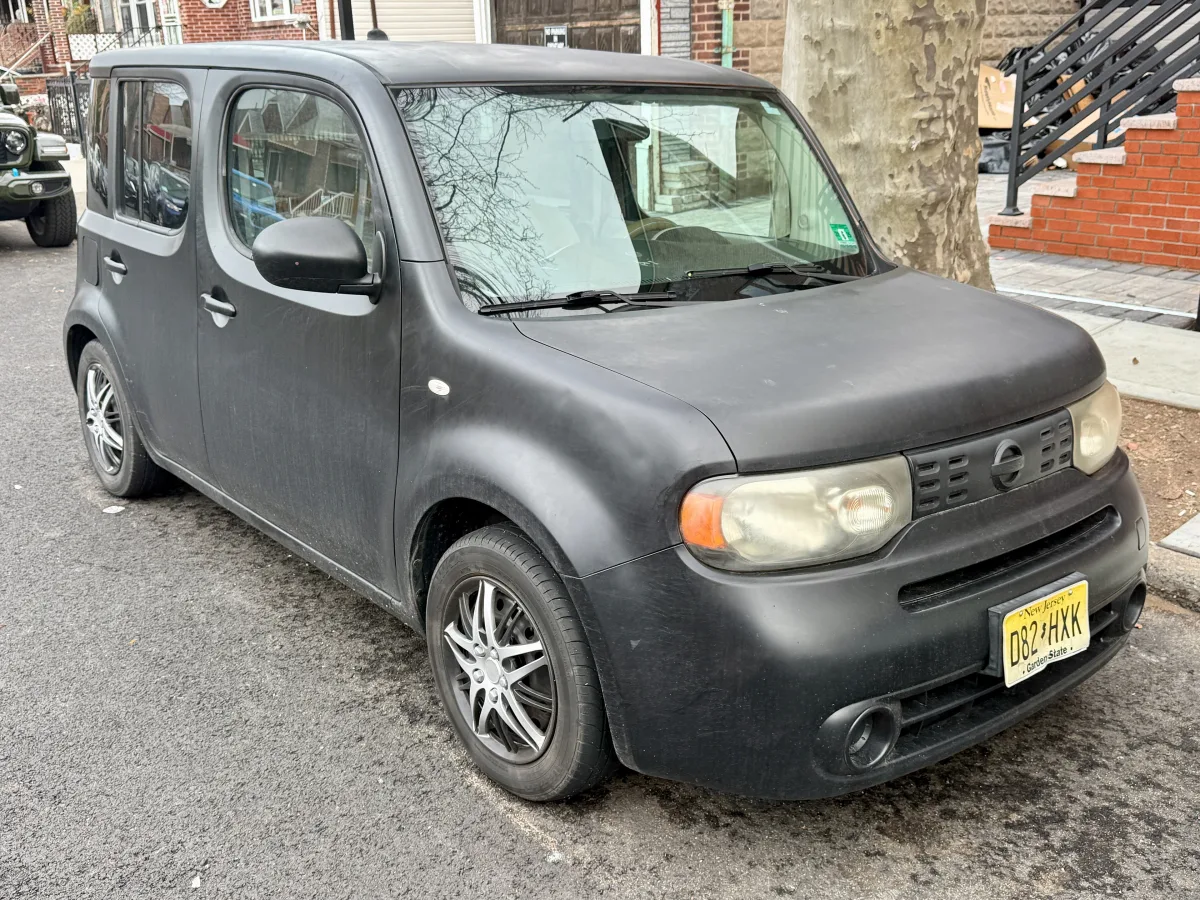
Nissan Cube: an unusual hatchback, generations and trims
Nissan Cube — a compact, boxy Japanese hatchback with an asymmetrical rear window, produced from 1998 to 2019. We look at the generations, engines, trims, and what to check before buying a used Cube.






Cube in brief
Cube – Nissan’s city car, distinguished by its boxy shape, high roof, and asymmetrical rear window. Built on a small-class platform, it offers more interior space than you might expect.
Most Cubes in Lithuania are imported from Japan, so some have right-hand drive and Japanese features.
Which generation to choose
Z10 (1998–2002) and Z11 (2002–2008) – earlier generations, mostly sold in Japan. They are simpler and quite dated.
Z12 (2008–2019) – the latest generation, which reached Europe and the USA. It is more modern, with a distinctive design (interior features wave-like trim), making it more popular in the used market.
Engines and transmissions
Z12 in Europe offers a 1.6 petrol (around 110 HP) and a 1.5 dCi diesel (around 110 HP). In Japan and the USA, mostly 1.5 and 1.8 petrol engines.
Transmissions — manual or automatic (mostly stepless CVT). Most imported cars have an automatic.
What to check when buying a used Cube
Firstly, the transmission: CVT should operate without juddering and unusual noises. Ask if the transmission fluid has been changed.
Check the body and interior condition, especially if the car has been standing for a long time. Also, check the sunroof, boot space, and window controls.
Check imported cars for auction sheets, proper documentation, and ensure the mileage matches the condition.


Trim levels
Names and equipment vary by market and year; we list the most common trims.
Acenta
Z12, EuropeThe base European trim.
- Often — alloy wheels
- Often — air conditioning
- Base multimedia system
Tekna
Z12, EuropeHigher trim level.
- Often — navigation and rear-view camera
- Often — heated seats
- More comfort features
S
Z12, USAThe base USA trim.
- 1.8-litre petrol engine
- Standard equipment
- Often — a CVT without paddles
SL
Z12, USABetter equipped US version.
- Often — alloy wheels
- Often — unique trim
- More comfort
Trim comparison
| Acenta (Europa) | Tekna (Europa) | SL (JAV) | |
|---|---|---|---|
| Who it's for | Daily city use | For those wanting more kit | For import buyers |
| Wheels (most often) | 15–16 inch | 16 inch | 16 inch |
| Engine | 1.6, 1.5 dCi | 1.6, 1.5 dCi | 1.8 |
| Price in the used market (relatively) | € | €€ | €€ |
European-spec cars are often better suited to local conditions, while imports can be cheaper. The key is to check the condition of the box and body.
Pros
- Unusual, standout design
- Spacious interior for its size
- Good visibility
- Modest running costs
Cons
- The looks aren't for everyone
- Imported cars may have the steering wheel on the right
- More agile handling
Frequently asked questions
Is the Cube right for a family?
A small family can use it as a city car, but the boot isn't huge. It's important to test the practicality with kids.
Which Cube generation is the best?
Most commonly, the Z12 (from 2008 onwards) – it's more modern and more frequently encountered. However, the condition of each car is more important than its generation.
Does the Cube come with a diesel engine?
In European versions, the Z12 was offered with a 1.5 dCi diesel engine, but imported cars usually have petrol engines.
Updated 2026-10-14 · Trim levels and equipment vary by market and model year — check the equipment of the specific car. · Translated automatically


