 English
 Lietuvių
 Latviešu
 Eesti
 Polski
 Русский
 Українська
 Deutsch
 Nederlands
 Čeština
 Slovenčina
 Svenska
 Norsk
 Dansk
 Suomi


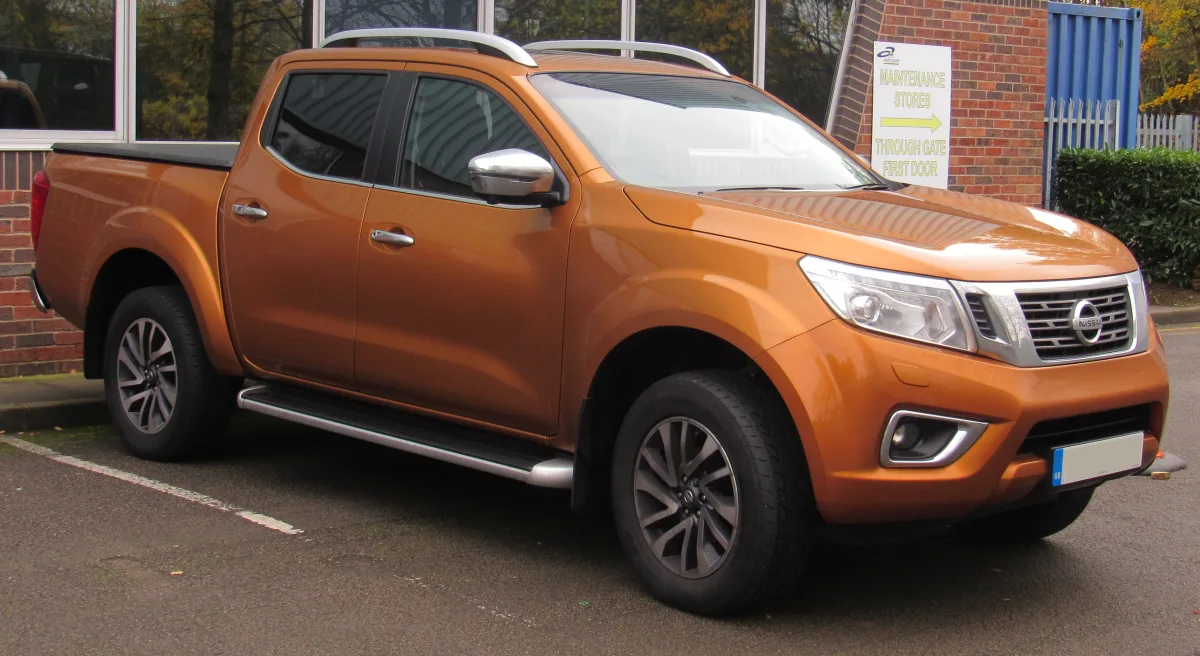
Nissan Navara: D40 and D23 generations, engines and trims
Nissan Navara — a robust pickup with four-wheel drive, available in Lithuania for both work and leisure. We explore the differences between the most commonly found D40 and D23 generations in the used market, which engines are the most popular, how the trims differ, and what to check before buying.






Navara in brief
The Navara is Nissan's family of pickups, tracing its roots back to earlier Nissan pickups. In the used market, you'll most often encounter two generations: D40 (around 2005–2015) and D23, also known as the NP300 Navara in Europe (from 2015–2016). The Navara was sold in Europe roughly until 2021–2022.
The Navara features a ladder frame construction, a cargo bed, and usually a part-time four-wheel-drive system with a reduction gear. In Lithuania, double-cab models are the most popular, but you can also find King Cab versions. The D23 served as the basis for the Mercedes-Benz X-Class and Renault Alaskan.
D40 and D23 generations — what's the difference
The D40 generation is a large, sturdy pickup with leaf springs at the rear, well-suited for work and hauling cargo. Today, it's the more affordable option, but most vehicles have high mileage, so the condition of the frame and drivetrain is crucial.
The D23 generation is more modern, quieter, and more comfortable. Double-cab versions in Europe come with a coil-sprung rear suspension instead of leaf springs, making for a smoother ride and a more SUV-like experience. The interior, equipment, and safety systems are also significantly more up-to-date.
Many buyers, especially those who use a car daily, should consider the D23 generation. The D40 is ideal when the budget is tight, and the car is primarily needed for work.
Engines and transmissions
The D40 generation most commonly features the 2.5 dCi diesel engine, with power ranging from about 170 to 190 hp depending on the year. From around 2010, a 3.0 V6 dCi diesel (around 230 hp) was also offered.
In Europe, the D23 generation offered the 2.3 dCi diesel engine with either a single turbo (around 160 hp) or twin turbos (around 190 hp). This engine is more economical and quieter than the previous generation's 2.5 dCi.
Transmissions come in manual or automatic. The D23 generation most commonly features a 6-speed manual or 7-speed automatic.
What to check when buying a used Navara
The D40 generation chassis in some cars tended to warp or crack, especially at the rear suspension mounting points — this is a well-known issue for this generation. Inspect the chassis from underneath and ask if it has been replaced or repaired.
Test the four-wheel drive engagement, reduction gear, and if present, the rear differential lock. For diesel cars, check the turbo, injectors, and diesel particulate filter (DPF) condition, and ensure the automatic transmission shifts smoothly.
Pickups are often used for work, so inspect the load bed, tow hook, suspension, and underbody for corrosion and damage. Check the service history for any records of repairs.


Trim levels
Names and equipment vary by market and year; we list the most common trims found in Europe.
XE
D40 generationThe base working trim for the D40 generation.
- Often fitted with steel wheels
- Air conditioning
- Basic cloth interior
LE
D40 generationThe best-equipped D40 generation version.
- Light-alloy wheels
- Often — leather interior
- Often — automatic climate control
Visia
D23 generationThe base working trim for the D23 generation.
- Often fitted with steel wheels
- Air conditioning
- Simpler sound system
Acenta
D23 generationA popular choice — good balance of price and equipment.
- Light-alloy wheels
- Often — automatic climate control
- More comfort-oriented equipment
N-Connecta
D23 generationWell-equipped version for daily use.
- Larger alloy wheels
- Multimedia with navigation
- Often — 360-degree camera
Tekna
D23 generationTop-spec trim level.
- Often — LED headlights
- Single-tone interior, heated seats
- Often — more powerful 190hp engine
D23 generation trim comparison
| Visia | Acenta | N-Connecta | Tekna | |
|---|---|---|---|---|
| Who it's for | For work | For work and play | For daily use | For comfort |
| Wheels (most often) | Generations | Light alloy | Larger light alloy | Larger light alloy |
| Interior | Basic cloth | Cloth | More comfortable trim | Leather |
| Engine | 2.3 dCi, often 160 hp | 2.3 dCi, 160–190 hp | 2.3 dCi, 160–190 hp | 2.3 dCi, often 190 hp |
| Price in the used market (relatively) | € | €€ | €€ | €€€ |
For many buyers, the best choice is the Acenta or N-Connecta with a double cab. The Tekna is worth considering for its comfort and more powerful engine, while the Visia is ideal when the vehicle is solely for work.
Pros
- Robust ladder-frame construction and all-wheel drive with a reduction gear
- Large cargo bed and good towing capacity
- The D23 generation's comfortable leaf-spring rear suspension
- Suitable for both work and leisure
Cons
- Issues with the D40 generation's frame
- Large and cumbersome to park in the city
- Production for Europe has ended — there won't be any newer models
Frequently asked questions
Which Navara generation is the best to buy used?
For many buyers, the best choice is the D23 generation: it's more modern, more comfortable, and more economical. The D40 is suitable when the budget is tight, but the frame must be thoroughly checked.
Can the Navara tow a large trailer?
Yes — most all-wheel-drive Navara versions can tow around 3 tonnes and heavier trailers with brakes. Always check the maximum allowed towing weight in the vehicle's registration documents.
What's the difference between King Cab and double cab?
The King Cab has two doors and a small space behind the front seats, but a longer cargo bed. The double cab has four doors and a full-size rear seat, making it suitable for families — it's the most popular in Lithuania.
Which Navara engine is best?
The D23 is often a good choice with the 2.3 dCi twin-turbo (around 190 hp) — it's powerful enough even with a load. The 160 hp version is fine for more relaxed driving and work.
Updated 2026-10-09 · Trim levels and equipment vary by market and model year — check the equipment of the specific car. · Translated automatically


