 English
 Lietuvių
 Latviešu
 Eesti
 Polski
 Русский
 Українська
 Deutsch
 Nederlands
 Čeština
 Slovenčina
 Svenska
 Norsk
 Dansk
 Suomi


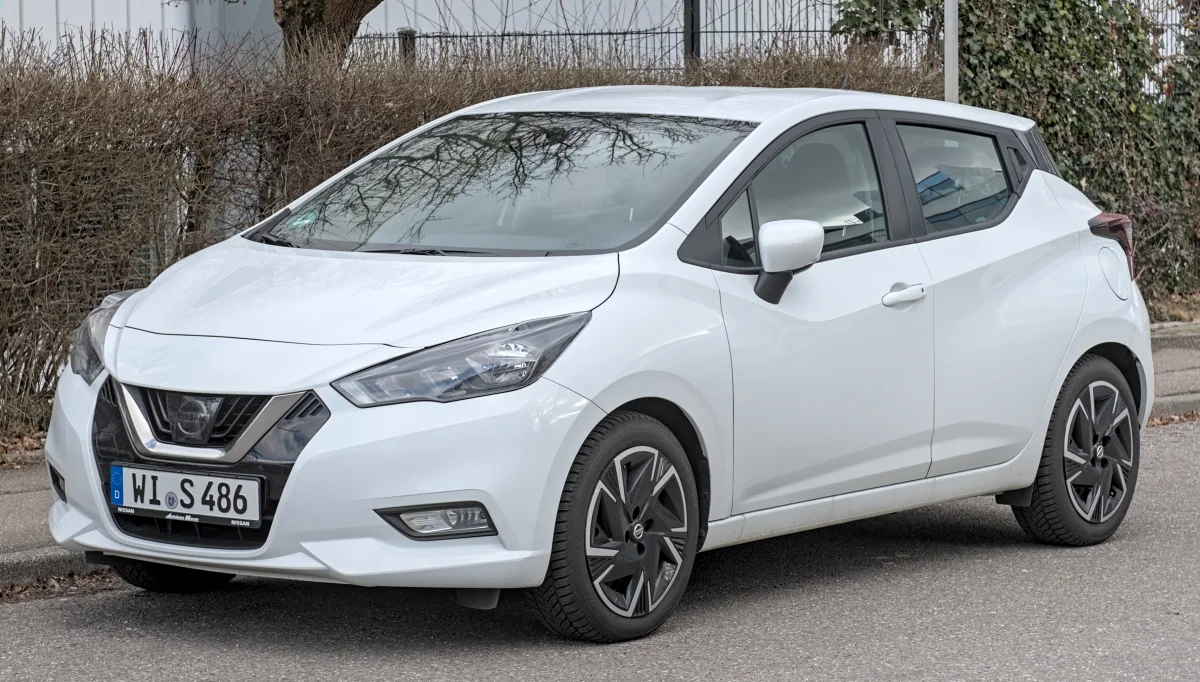
Nissan Micra: K12, K13 and K14 generations, engines and trims
The Nissan Micra is a compact city car, valued in Lithuania for its low running costs and urban practicality. We look at how the most commonly found K12, K13 and K14 generations differ, which engines are the most popular, how the trims vary and what to check before buying.






Micra in brief
The Micra has been in production since 1982. The most common generations in the used market are the K12 (around 2002–2010), K13 (around 2010–2017) and K14 (from 2017). Most cars are five-door hatchbacks, with the K12 generation also offering three-door versions and the Micra C+C convertible.
The Micra appeals to those who need a small, economical and easy-to-park car. From 2025, the Micra will be an electric vehicle, developed jointly with Renault, but in the used market, earlier generations with internal combustion engines still dominate.
Which generation to choose
The K12 generation stands out with its rounded, easily recognisable shape and high, comfortable interior. Today, it's the most affordable option, but most cars are now quite old, so the technical condition is more important than the trim level.
The K13 generation is a straightforward and budget-friendly car with economical three-cylinder engines. The interior materials are basic, but the technology is simple, and maintenance is cheap.
The K14 generation (from 2017) is lower, narrower, and significantly more modern: Nissan aimed it at European buyers, so the car features a higher-quality interior, more safety systems, and modern multimedia. It's the best choice if your budget allows.
Engines and transmissions
In the K12 generation, you'll commonly find 1.2 and 1.4-litre petrol engines and a 1.5 dCi diesel. The K13 generation is primarily powered by a 1.2-litre three-cylinder petrol engine (around 80 hp), with the more powerful 1.2 DIG-S version featuring a turbocharger and around 98 hp.
The K14 generation offers a 0.9 IG-T turbo (around 90 hp), a 1.0-litre naturally aspirated engine (around 70 hp), and a 1.5 dCi diesel (around 90 hp). From 2019, these were replaced by a 1.0 IG-T turbo engine (around 100 hp), with the sportier N-Sport version boasting around 117 hp.
Transmissions are usually manual. The K12 generation offered a conventional automatic, while the K13 and K14 generations feature a continuously variable transmission (CVT).
What to check when buying a used Micra
The timing chain on the K12 generation's 1.2-litre engine can stretch over time — the cold engine shouldn't rattle after starting. Also, check the power steering operation and body corrosion in these models.
In cars with a CVT, test smooth acceleration and responsiveness: hesitation or juddering could indicate an expensive repair. For diesels, check that the engine starts easily and doesn't smoke.
In K14 generation cars, check if the multimedia and safety systems are working. For all cars, inspect the ride based on technical inspection and service records, and the body for painted parts and uneven gaps, as city cars are often repainted.


Trims
Names and equipment vary by market and year; we list the trims most commonly found in Europe.
Visia
K13–K14 generationThe base trim is the simplest and most affordable.
- Often, steel wheels
- Basic sound system
- Often, air conditioning
Acenta
K13–K14 generationThe most popular choice offers a good balance of price and comfort.
- Often, light-alloy wheels
- Air conditioning
- Often, a touchscreen multimedia display (K14)
N-Connecta
K14 generationA well-equipped version with more technologies.
- Light-alloy wheels
- Multimedia with navigation
- Often includes a rear-view camera and automatic climate control
Tekna
K13–K14 generationThe top standard trim
- Larger light-alloy wheels
- Often includes a Bose sound system (K14)
- Often includes a 360-degree camera (K14)
N-Sport
K14 generationSporty appearance version
- Sportier bumpers and wheels
- Sportier interior trim
- Often includes a more powerful 1.0 IG-T engine
Comparison of K14 generation trims
| Visia | Acenta | N-Connecta | Tekna | |
|---|---|---|---|---|
| Who it suits | For the tightest budgets | For daily city driving | For tech enthusiasts | Comfort and equipment |
| Wheels (most common) | Steel | Steel or alloy | Alloy | Larger alloy |
| Infotainment | Basic sound system | Often — touchscreen | Touchscreen, navigation | Navigation, often — Bose sound system |
| Price in the used market (relatively) | Budget | Budget | Mid-range | High-end |
For most buyers, the best choice is the Acenta or N-Connecta with the IG-T turbo engine. The Tekna is worth considering if a premium sound system and parking cameras are important, while the Visia is only for those on a very tight budget.
Pros
- Comfortable and easy to park in the city
- Low fuel consumption and running costs
- K14 generation modern design and equipment
- Plenty of used options on the market
Cons
- High driving position and small boot
- Less powerful engines struggle with acceleration in urban areas
- K13 generation interior materials are basic
Frequently asked questions
Which Micra generation is best to buy used?
For most buyers, the best choice is the K14 generation: it's the most modern, safest, and best-equipped. If budget is tight, the K13 generation is a simple and cheap-to-run alternative.
Which Micra engine is best?
In the K14 generation, the IG-T turbocharged engines are most suitable for many: they're sufficiently dynamic and economical. The naturally aspirated 1.0-litre engine is best for city driving.
Is the Micra suitable for a family?
The Micra is best suited to one or two people and city driving. Families with kids often find a larger car more convenient – such as a Nissan Note or Juke.
Updated 2026-10-09 · Trim levels and equipment vary by market and model year — check the equipment of the specific car. · Translated automatically


