 English
 Lietuvių
 Latviešu
 Eesti
 Polski
 Русский
 Українська
 Deutsch
 Nederlands
 Čeština
 Slovenčina
 Svenska
 Norsk
 Dansk
 Suomi


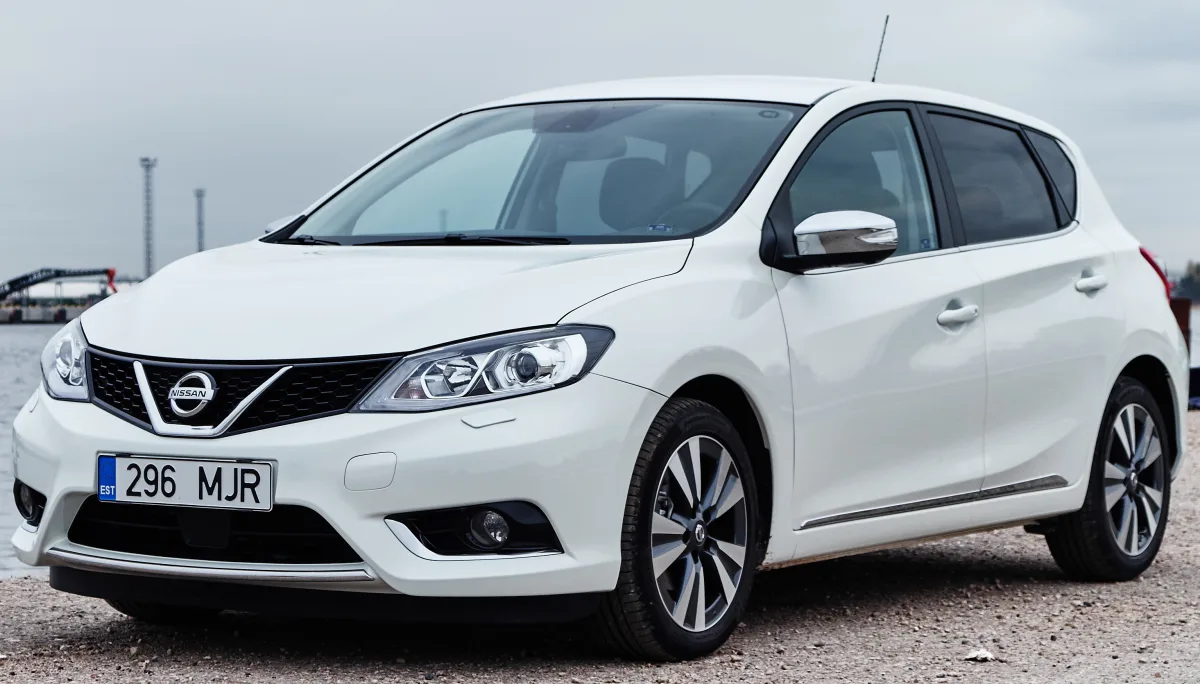
Nissan Pulsar: 2014–2018 compact hatchback, engines and trims
Nissan Pulsar — a five-door compact class hatchback, introduced in 2014 as the successor to the Nissan Almera and Tiida in Europe. In this article, we review the engines, trims, and what to check when buying a used car.






Pulsar in brief
The Nissan Pulsar boasts a spacious interior and a wide rear seat, so in terms of space, it competes with larger class rivals. Produced as a five-door hatchback.
This is a quiet, practical family car with no sporting ambitions. It's not common in the used market, so choices are limited, but this could also mean a price advantage.
Which version to choose
The Pulsar was produced in one generation, so the main differences are in the trim, engine, and gearbox. Newer cars (2016–2018) usually come with more equipment.
When choosing, pay attention to the engine: the smaller turbo petrol engine is suitable for city driving, while the diesel is better for frequent highway use.
Engines and gearboxes
In Europe, a 1.2 DIG-T (around 115 hp) petrol, a 1.5 dCi (around 110 hp) diesel, and a more powerful 1.6 DIG-T (around 190 hp) petrol variant were offered.
Gearboxes include a manual option, and some versions come with the Xtronic continuously variable transmission (CVT).
What to check when buying a used Pulsar
In a diesel car, check the particulate filter and sump, and in a turbo petrol, look for any unusual noises or oil leaks. Ask for the service history.
If the car has an Xtronic CVT, test it by driving: smooth acceleration without hesitation and lag is a good sign.
Inspect the body, suspension and brakes, check electronic functions, and compare the odometer reading with the documents.


Trim levels
Names and equipment vary by market and year; we list the most commonly found trims in Europe.
Visia
All versionsBase trim.
- Often — steel wheels
- Simpler sound system
- Basic safety equipment
Acenta
All versionsPopular mid-range trim.
- Often — alloy wheels
- Often — air conditioning
- More interior comforts
N-Connecta
All versionsLots of kit for the mid-range price.
- Often — navigation and cameras
- Often — automatic air conditioning
- Additional interior trim
Tekna
All versionsTop-of-the-range trim
- Often — leather upholstery
- Often — heated seats and additional safety features
- Larger alloy wheels
Trim comparison
| Visia | Acenta | N-Connecta | Tekna | |
|---|---|---|---|---|
| Who it's for | Best for budget buyers | For daily driving | Best balance of price and features | For maximum comfort |
| Alloy wheels (most common) | 16-inch alloy wheels | 16-inch alloy wheels | 17-inch alloy wheels | 17-inch alloy wheels |
| Interior | Basic | More Comfortable | More Equipment | Top-Spec Trim |
| Price in the used market (relatively) | € | € | €€ | €€ |
Most buyers will find the Acenta or N-Connecta the best choice. The Tekna is worth considering only if you prioritise the top-spec equipment.
Pros
- Spacious interior and rear seats
- Quiet, comfortable ride
- Plenty of kit even in mid-range trims
- Economical engines
Cons
- Rare in Lithuania, limited supply
- Simpler, less dynamic driving experience
- Some versions of the Xtronic CVT require a thorough inspection
Frequently asked questions
Is the Nissan Pulsar the successor to the Nissan Almera?
Yes, the Pulsar was created as the successor to the Almera and Tiida in the European market. It's a compact hatchback.
Which engine should you choose?
Most often, the 1.2 DIG-T or 1.5 dCi will do the trick. The 1.6 DIG-T is for those who prioritise performance.
Is the Pulsar reliable?
Given Nissan's overall reputation, usually yes, if it's been serviced on time. Still, it's worth checking the specific car's history.
Updated 2026-10-17 · Trim levels and equipment vary by market and model year — check the equipment of the specific car. · Translated automatically


