 English
 Lietuvių
 Latviešu
 Eesti
 Polski
 Русский
 Українська
 Deutsch
 Nederlands
 Čeština
 Slovenčina
 Svenska
 Norsk
 Dansk
 Suomi


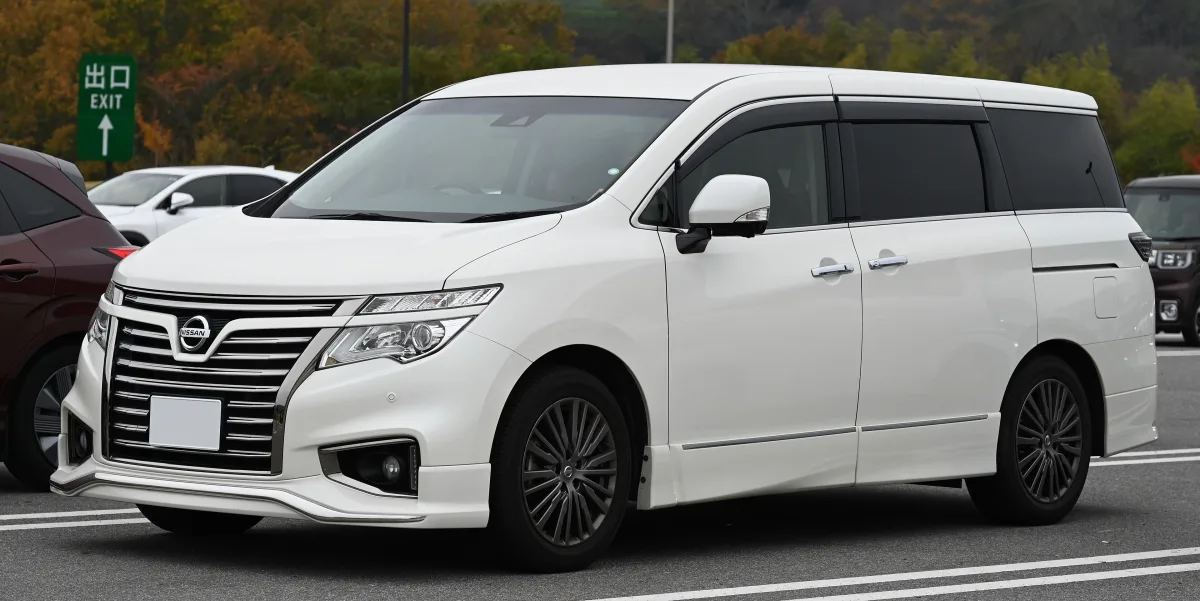
Nissan Elgrand: E50–E52 generations, engines, and what to check
The Nissan Elgrand is a large, luxurious people carrier (MPV) that has been produced since 1997 and is particularly popular in Japan. In Lithuania, it is often found as a Japanese import. We'll look at the generations, engines, trims, and what to check before buying.






The Elgrand in brief
The Elgrand is a spacious MPV with sliding side doors that can comfortably seat up to eight passengers. It is positioned in a higher segment than the Serena and is often used as family or VIP transport.
Most Elgrands in Lithuania are right-hand drive imports from Japan. This means you should ensure the paperwork is in order and the mileage is genuine before buying.
Which generation to choose
E50 (1997–2002) – the first generation, now quite old, with significant rust and high mileage. It's only worth considering as a budget option.
E51 (2002–2010) – the most commonly imported generation, with V6 engines and more modern equipment. A good balance of price and comfort.
E52 (2010–2020) – the latest generation with an improved interior, more precise handling, and modern technology. It's the most expensive but also the most reliable, provided it's well-maintained.
Engines and transmissions
The E50 had 3.3-litre V6 petrol and 3.2-litre diesel engines. The E51 had 2.5 and 3.5-litre V6 petrol engines, while the E52 had 2.5-litre four-cylinder and 3.5-litre V6 engines.
The transmission is automatic (four or five-speed in older generations, E52 has a stepless CVT). Many versions come with an optional all-wheel-drive system.
What to check when buying a used Elgrand
First off – the gearbox and suspension. A large, heavy minivan will quickly wear out suspension components, so test-drive it and listen out for any unusual noises.
Check the sliding door mechanisms: they should open smoothly. Inspect the sills, floor, and rear arches – corrosion is common in older models.
Imported cars need an auction sheet, clean paperwork, and a thorough inspection.


Trim levels
Trim levels vary by market and year; we list the most common Japanese trims.
Highway Star
E51–E52A sportier, better-equipped version.
- Often – unique alloy wheels
- Often – additional upholstery
- Often – auxiliary systems
Highway Star Premium
E52The more luxurious Highway Star version.
- Often – leather upholstery
- Often – navigation
- More comfort features
Rider
E51–E52Autech sport version.
- Distinctive styling
- Often — sport suspension
- Special interior design
Trim comparison
| Highway Star | Highway Star Premium | Rider | |
|---|---|---|---|
| Who it's for | For families, comfort | For maximum comfort | For distinctive styling |
| Interior | Standard | More luxurious trim | Sporty accents |
| Engine | 2.5 or 3.5 litres | 2.5 or 3.5 litres | 2.5 or 3.5 litres |
| Price in the used market (relatively) | Mid-range | High-end | High-end |
The Highway Star suits most families. It's a premium choice if comfort is key, while the Rider stands out for its striking looks.
Pros
- Very spacious and comfortable interior
- Sliding side doors
- Powerful V6 engines
- Luxurious features
Cons
- High fuel consumption
- Most cars are right-hand drive imports
- Large and heavy
Frequently asked questions
Is the Elgrand suitable for a large family?
Yes, it offers plenty of space for passengers and luggage, and the luxurious interior is perfect for long journeys.
Which Elgrand generation is the best?
The E51 or E52 are most often recommended, as they are more modern. But the specific condition of the car is more important than the generation.
How much fuel does the Elgrand consume?
Due to its size and V6 engines, fuel consumption is high, especially in the city; get an accurate figure by test-driving a specific car.
Updated 2026-10-14 · Trim levels and equipment vary by market and model year — check the equipment of the specific car. · Translated automatically


