 English
 Lietuvių
 Latviešu
 Eesti
 Polski
 Русский
 Українська
 Deutsch
 Nederlands
 Čeština
 Slovenčina
 Svenska
 Norsk
 Dansk
 Suomi


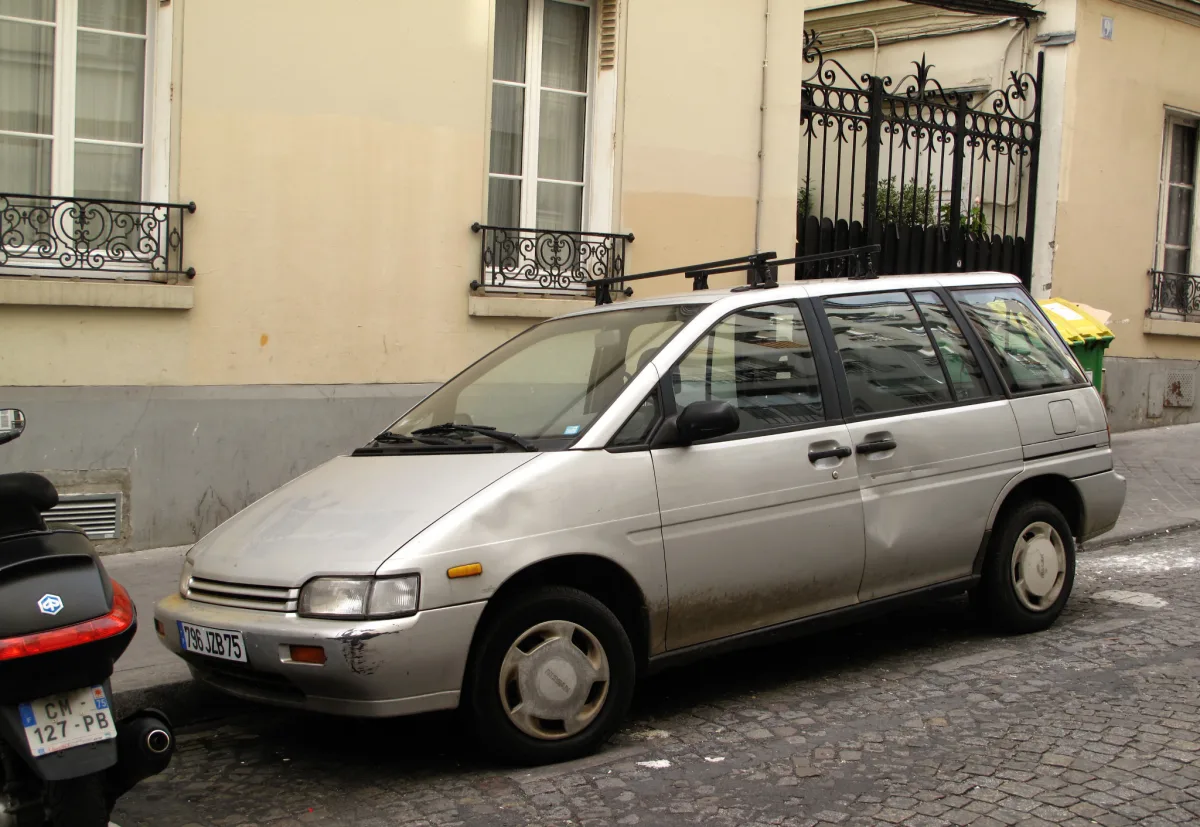
Nissan Prairie: compact MPV, generations and what to know when buying
Nissan Prairie (1981–1998) — a compact multi-purpose vehicle, one of the first 'one-box' type Nissan models. In this article, we review its two generations, engines, and what to check when buying a used car.






Prairie at a glance
The Prairie was a five-door compact car with a higher body, easy access, and a versatile interior. Because of this, it is often considered one of the first compact MPVs.
The model was sold in several markets under different names, and in Europe — as the Nissan Prairie.
Two generations — what's the difference
The first generation (approx. 1981–1988) has a boxy body shape and a fairly basic interior.
The second generation (approx. 1988–1998) has smoother lines, a more modern interior, and more features. It is more suited to daily use, as it is newer and more comfortable.
Engines and transmissions
First-generation engines are petrol units ranging from about 1.5 to 2.0 litres, while the second generation offers up to a 2.4-litre petrol engine.
The transmission can be manual or automatic. Some cars came with four-wheel drive, others with front-wheel drive.
What to check when buying a used Prairie
Check for signs of corrosion on the body: dents, wheel arches, boot lid, and underside. Corrosion can be a serious issue with older Japanese cars.
Test the engine and transmission, suspension, brakes, and if the car has four-wheel drive — its operation.
The choice of parts is limited, but common parts with other Nissan models can make the search easier.


Trim levels
Names and equipment vary by market and year; we list the described variants.
Paprastesnė
First generationBase trim.
- Smaller engine
- Basic interior
- Often — manual transmission
Geriau įrengta
First generationMore comfort.
- Often — more upscale interior
- Often — larger engine
- More comfortable seats
2,4 SLX
Second generationBetter-equipped version with a larger engine.
- 2.4-litre petrol engine
- Often — more comfort features
- Often — lightweight alloy wheels
Comparing versions
| Paprastesnė | Geriau įrengta | 2,4 SLX | |
|---|---|---|---|
| Who it's for | For everyday use | For comfort | For daily driving |
| Engine | From 1.5 l | Up to 2.0 l | 2.4 l |
| Price in the used market (relatively) | € | € | €€ |
For daily driving, opt for a second-generation car. First-generation — for classic enthusiasts.
Pros
- Spacious and elegantly transformable interior
- Easy access
- Simple mechanics
- A rare and intriguing classic choice
Cons
- Risk of rust
- Limited parts availability
- Outdated features and safety
Frequently asked questions
Is the Prairie a hatchback?
Yes. It was one of the first compact hatchbacks when such a class was not yet common.
Does the Prairie have four-wheel drive?
Some models came with four-wheel drive, but this depended on the version and market.
Which generation is better?
The second generation is more modern and comfortable, but the first is valued as a rarer classic.
Updated 2026-10-21 · Trim levels and equipment vary by market and model year — check the equipment of the specific car. · Translated automatically


