 English
 Lietuvių
 Latviešu
 Eesti
 Polski
 Русский
 Українська
 Deutsch
 Nederlands
 Čeština
 Slovenčina
 Svenska
 Norsk
 Dansk
 Suomi


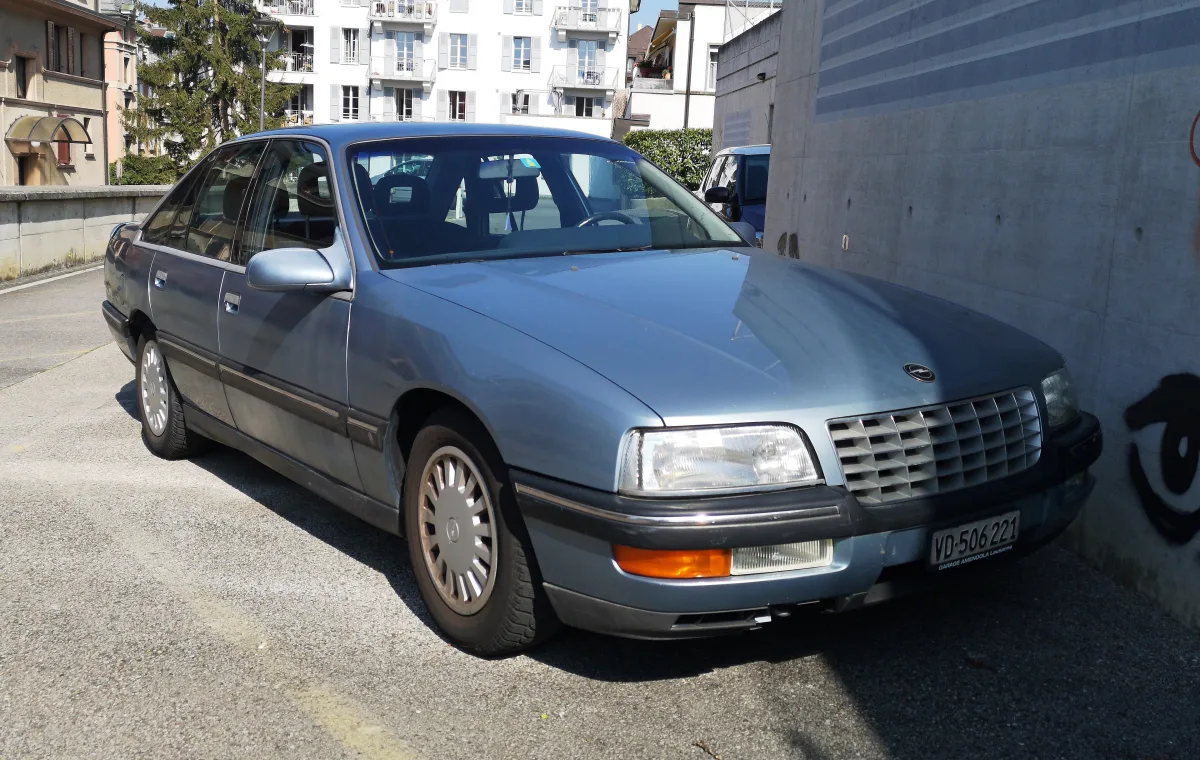
Opel Senator: A and B generations, engines, and what to know before buying
The Opel Senator is a flagship-class sedan produced from 1978 to 1993 with rear-wheel drive and six-cylinder engines. In this article, we'll look at the two generations, engines, and what you need to know when buying a used Senator.






Senator in brief
The Senator was Opel's response to more luxurious German sedans. It's a spacious, comfortable car with a six-cylinder engine, rear-wheel drive, and a wide range of features, with the top trim marked by the letters CD.
Today, the Senator is rare, and well-preserved examples are few and far between. As a result, it's valued as an Opel classic, with prices depending on condition and generation.
Which generation to choose
The Senator A (1978–1987) has a classic, angular design and six-cylinder engines. This model features simpler electronics, making it easier to maintain, although many cars have suffered from rust due to age.
The Senator B (1987–1993) was a refreshed and more modern generation, built on the Omega platform. It offers a more modern design, more powerful engines, and greater comfort. This generation is more often found in better condition, and its 24-valve engine delivers particularly good performance.
Engines and transmissions
The Senator A came with six-cylinder petrol engines, roughly 2.5–3.0 litres in capacity, with power outputs up to around 180 hp (3.0E). The Senator B offered 2.5 and 3.0-litre six-cylinder engines, with the most powerful being the 3.0-litre 24V with around 200 hp.
Gearbox — manual (four or five speeds) or automatic. Engine construction is robust, but regular maintenance is crucial, especially for 24V variants.
What to check when buying a used Senator
Rust — the biggest issue. Inspect the sills, wheel arches, front wings, floor, and boot floor. Check for any non-professional repairs and touch-up spots.
Check the engine condition and service history, especially if it's a 24V engine. Inspect the gearbox, air conditioning, electric windows, and other comfort features — their repairs can be expensive. Finding parts can sometimes take time.


Trim levels
Names and equipment vary by market and year; we list the most commonly found trim levels in Europe.
Senator A
1978–1987The first-generation flagship with six-cylinder engines.
- 2.5–3.0-litre six-cylinder engines
- Rear-wheel drive
- Often — generous comfort equipment
Senator A CD
A seriesThe top-of-the-range version of the first-generation.
- Better interior trim
- Additional comfort equipment
- Often — electric windows and air conditioning
Senator B
1987–1993The second-generation sedan with a more modern touch.
- 2.5 and 3.0-litre six-cylinder engines
- A more modern design
- Better aerodynamics and comfort
Senator B CD
Second generationThe top-spec second-generation model.
- Generous comfort features
- Often — leather and climate control
- Better sound insulation
Senator 3.0 24V
Second generationThe most powerful second-generation model.
- 3.0-litre 24-valve engine
- Around 200 hp
- Better dynamics
Comparing Senator generations
| Senator A | Senator A 3.0E | Senator B | Senator B 24V | |
|---|---|---|---|---|
| Who it's for | For classic car enthusiasts | For sportier driving | For everyday comfort | For dynamic driving |
| Engine | Around 2.5–2.8 litres | 3.0 litres, supercharged | 2.5–3.0 litres | 3.0 litres, 24V |
| Power (approx.) | Around 140 HP | 180 HP | 140–160 HP | 200 AG |
| Difficulty of restoration | Tricky | Tricky | Moderate | Tricky |
| Price in the used market (relatively) | € | €€ | € | €€ |
For most buyers, the best choice is a well-maintained Senator B. If classic looks are important, go for the Senator A, while enthusiasts will enjoy the 24V version.
Pros
- Spacious and comfortable interior
- Smoothness of six-cylinder engines
- Rear-wheel drive
- A rare and unique car
Cons
- Rust and expensive body restoration
- Finding parts can take time
- High fuel consumption
Frequently asked questions
What's the difference between Senator A and B?
The Senator A (1978–1987) is a classic design, while the Senator B (1987–1993) is a more modern take on the Omega platform, featuring more powerful engines and greater comfort.
Is the Senator suitable for daily driving?
A well-maintained example can work, but it's a large car that drinks fuel quite heavily. It's often bought as a classic or a second car.
What does the CD designation in Senator mean?
The CD badge signified the top trim level with a more luxurious interior and additional comfort features compared to the base model.
Updated 2026-10-19 · Trim levels and equipment vary by market and model year — check the equipment of the specific car. · Translated automatically


