 English
 Lietuvių
 Latviešu
 Eesti
 Polski
 Русский
 Українська
 Deutsch
 Nederlands
 Čeština
 Slovenčina
 Svenska
 Norsk
 Dansk
 Suomi


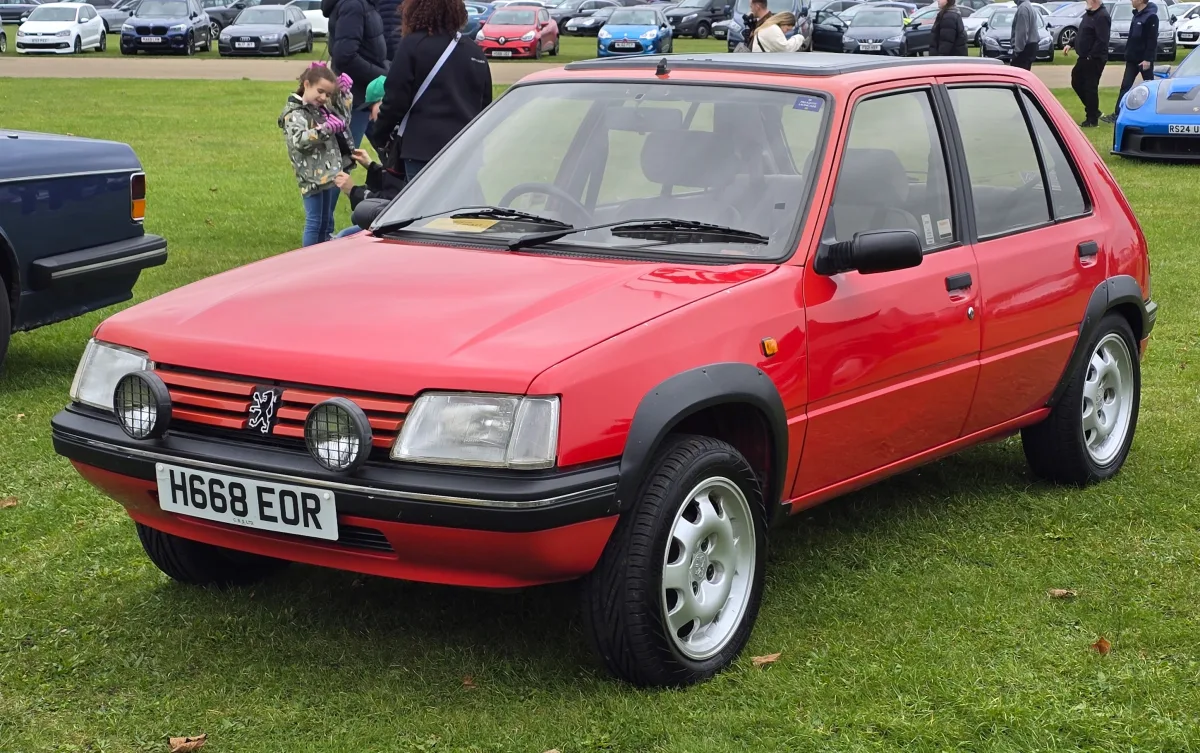
Peugeot 205: the legendary hatchback, engines and trims
Peugeot 205 — the legendary small hatchback, produced from 1983 to 1998 and helped Peugeot bounce back in the 1980s. In this article, we look at the engines, trims (from basic to GTI) and what to check before buying a used 205.






205 in brief
The 205 is one of the most iconic hatchbacks of the 1980s. It's light, compact, well-handled and straightforwardly built, which made it a popular choice across Europe. Offered with three and five doors, as well as a convertible.
Today, the 205, especially the GTI version, is valued as a collectible car. Basic versions are usually affordable, while sporty variants command higher prices and are often modified.
Which version to choose
Throughout its production run, the 205 was updated several times: engine options changed, interiors were refreshed, and later models received more safety features and improved trim. Later examples generally hold up better.
For daily use, opt for a more basic version with a smaller petrol or diesel engine. The GTI is for enthusiasts who prioritise spirited driving.
Engines and gearboxes
Petrol engines range from 1.0 to 1.9 litres, with the sporty GTI versions getting 1.6 and 1.9 litres (roughly from 105 to 130 hp). Diesels come in 1.4, 1.7, 1.8 and 1.9 litres.
Gearboxes are mostly 5-speed manuals. Automatic versions are less common.
What to check when buying a used 205
The most important thing is rust: check the sills, wheel arches, underbody, and rear axle. It's crucial that the body is in good condition, as repairs can often cost more than the car itself.
GTI and other sporty versions may have been driven hard or modified, so they require particularly thorough inspection. Check the engine, gearbox, suspension, and electrical equipment.


Trim levels
Names and equipment vary by market and year; we list the most commonly found trim levels in Europe.
GR
1983–1998Base trim with basic equipment.
- Often comes with simple hubcaps
- Basic interior
- More modest sound system
XR
1983–1998Better-equipped version with more comfort features.
- Often features more comfortable upholstery
- Often includes additional comfort equipment
- Often comes with a more powerful engine
XT
1983–1998Higher-class trim level.
- Often features electric windows
- Often — light alloy wheels
- More comfortable seats
GTI
1984–1994The sportiest version, now a classic.
- Powerful 1.6 or 1.9-litre engine
- Sporty drive
- Sporty looks and seats
Comparing versions
| GR | XT | GTI | |
|---|---|---|---|
| Who it suits | A straightforward, budget-friendly car | For everyday use | For enthusiasts |
| Engine | Small petrol or diesel | Petrol or diesel | 1.6 or 1.9 petrol |
| Interior | Basic | More Comfortable | Sportier |
| Price in the used market (relatively) | Budget-friendly | Budget-friendly | High-end |
The basic version with a small engine is plenty for daily use. The GTI is only worth considering for enthusiasts and only if it's well-maintained and unmodified.
Pros
- Light, lively and usually well-built
- Iconic design and collector's value (especially GTI)
- Simple technology and easy maintenance
- Low running costs
Cons
- Cars are very old, often rusty
- Bodywork repairs can be expensive
- GTIs are often modified or driven hard
Frequently asked questions
Why is the 205 considered a legend?
Thanks to its light construction, great handling and popularity, the 205 GTI became one of the most iconic hot hatches, with the model itself a symbol of Peugeot's success.
Is the 205 worth buying for daily use?
It can be, if you find a healthy example. Due to its age, it will need more attention to the bodywork and maintenance.
How does the 205 GTI differ from other versions?
The GTI has a more powerful 1.6 or 1.9-litre engine, a sportier suspension and different interior trim. As a result, it's more exciting to drive, but it's also pricier.
Updated 2026-10-17 · Trim levels and equipment vary by market and model year — check the equipment of the specific car. · Translated automatically


