 English
 Lietuvių
 Latviešu
 Eesti
 Polski
 Русский
 Українська
 Deutsch
 Nederlands
 Čeština
 Slovenčina
 Svenska
 Norsk
 Dansk
 Suomi


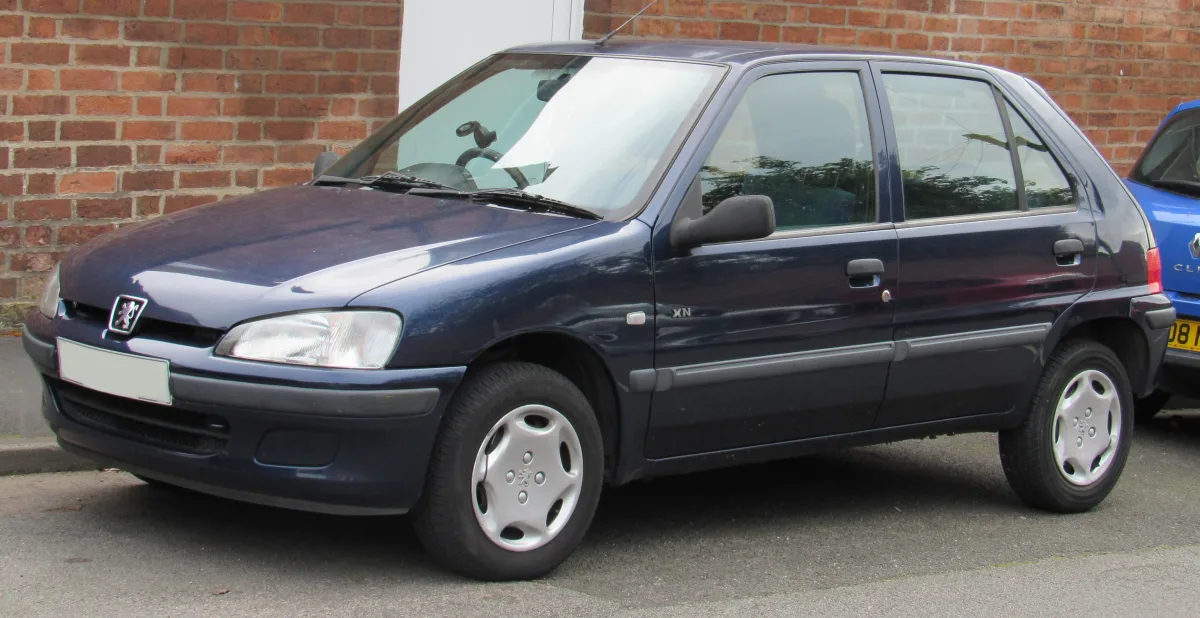
Peugeot 106: two generations, engines and trims
The Peugeot 106 is a compact city hatchback produced from 1991 to 2003 and known for its light body and lively handling. We look at how early and late models differ, which engines you'll find, and what to check before buying.






Peugeot 106 in brief
The 106 is a small, light city car available in 3- and 5-door bodystyles. It's renowned for its lively driving and simple mechanics, making it popular as both a first car and an affordable city runabout.
The sportier Rallye and GTi versions are still prized by enthusiasts, but they're becoming harder to find, and most 106s are now quite old.
Which version to choose
The first series (1991–1996) has a more basic interior and older equipment. The second (from 1996) was updated with a revised front end, improved safety features, and a better interior.
Due to their age, both series are quite old, so the key is the condition of the body and engine. If you can choose, opt for the later, better-preserved model.
Engines and gearboxes
Petrol engines range from 1.0 to 1.6 litres (roughly 50 to 120 hp). The sportier Rallye and GTi versions had 1.3 and 1.6-litre engines. The diesel option was a 1.5-litre.
Gearboxes are mostly manual. Automatic versions are rare.
What to check when buying a used Peugeot 106
The key thing to check is corrosion: inspect the sills, wheel arches, underbody, and rear axle. Also, check for painted-over parts and uneven gaps, especially on sporty versions.
Assess the engine's performance (a cold engine shouldn't rattle or smoke), gearbox, brakes, and suspension. Sporty models like the Rallye and GTi might have been driven hard, so thorough checks are essential.


Trim levels
Names and equipment vary by market and year; we list the most common trims found in Europe.
XN
1991–2003Base trim with basic equipment.
- Often comes with simple hubcaps
- Essential safety features
- Basic interior
XR
1991–2003A slightly better-equipped version.
- Often features a more comfortable interior trim
- Often includes additional comfort features
- Often comes with a more powerful engine
XT
1991–2003Higher-spec trim.
- Often features electric windows
- Often — central locking
- More comfortable seats
Rallye
1993–2003A sporty, lightweight version with a more powerful engine.
- Sportier engine
- Sporty looks
- A simpler, lighter interior
GTi
1996–2003The sportiest 106 model.
- More powerful 1.6-litre engine
- Sporty handling
- Sporty styling and wheels
Comparison of trims
| XN | XT | Rallye | GTi | |
|---|---|---|---|---|
| Who it's for | A basic, affordable city car | For everyday use | For sporty driving | For enthusiasts |
| Engine | Small petrol | Petrol or diesel | 1.3 or 1.6 petrol | 1.6 petrol |
| Interior | Basic | More comfortable | Basic, light | Sportier |
| Price in the used market (relatively) | € | € | €€ | €€€ |
The XN or XT with a smaller engine is fine for daily use. The Rallye and GTi are only worth considering for enthusiasts, as their condition and history are particularly important.
Pros
- Light and lively handling
- Simple technology
- Low running costs
- A convenient city car
Cons
- Most cars are very old and may be rusty
- Limited safety features
- Sporty variants were often driven hard
Frequently asked questions
Is the Peugeot 106 still worth buying?
Yes, if you need a simple and affordable city car. Since they are very old, the condition of the body and engine is crucial.
What's the difference between the 106 Rallye and GTi?
The Rallye is a lighter, simpler sporty version with a smaller engine, while the GTi is more powerful, with a 1.6-litre engine and better suspension.
Which engine to choose?
For daily use, a small petrol engine (1.0–1.4) is suitable. Diesel is more economical, but slower and less common.
Updated 2026-10-17 · Trim levels and equipment vary by market and model year — check the equipment of the specific car. · Translated automatically


