 English
 Lietuvių
 Latviešu
 Eesti
 Polski
 Русский
 Українська
 Deutsch
 Nederlands
 Čeština
 Slovenčina
 Svenska
 Norsk
 Dansk
 Suomi


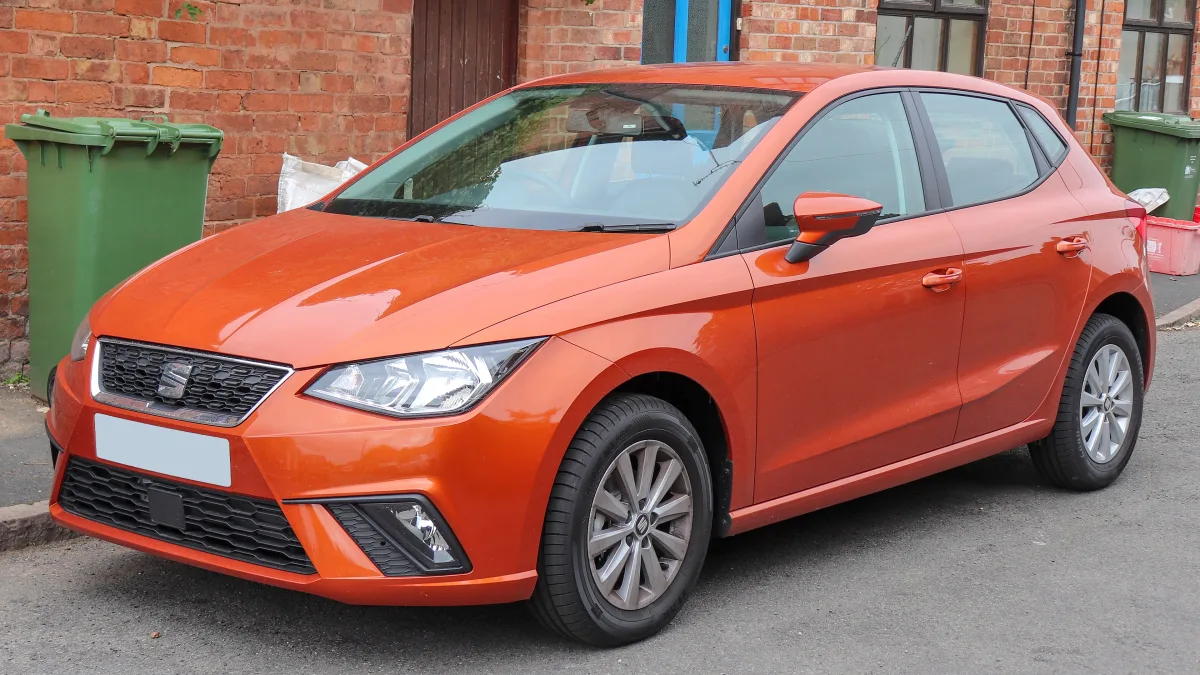
SEAT Ibiza: 6J and 6F generations, engines and trims
The SEAT Ibiza is one of Europe's most popular small hatchbacks, closely related to the Volkswagen Polo and Škoda Fabia in terms of technology. We'll explore how the two latest Ibiza generations differ, which engines are the most popular, how the trims vary, and what to check before buying a used one.






Ibiza in brief
The Ibiza has been in production since 1984 and is SEAT's flagship model. Since the second generation, it has been built using Volkswagen Group technology, so it shares engines, gearboxes, and many parts with the Volkswagen Polo and Škoda Fabia.
The Ibiza is praised for its sporty looks, sturdy chassis, and good engine choices. It's a bit firmer and sportier than the Polo, and often cheaper in the used market than a similarly aged Volkswagen.
6J and 6F — what's the difference
The fourth generation (6J, 2008–2017) was produced in 5-door, 3-door SC, and estate ST body styles. It was refreshed in 2012, and in 2015, it received newer engines and more modern infotainment. This is the most affordable way to get a relatively modern Ibiza, but most cars already have a fair amount of miles on the clock.
The fifth generation (6F, from 2017) is built on the MQB A0 platform: it's roomier, safer, and comes with more modern features. This generation is only available as a 5-door hatchback.
The 2021 refreshed fifth generation got a new dashboard with a higher-mounted touchscreen, better-quality cabin materials, and more driver-assistance systems.
Engines and gearboxes
In the fourth generation, you'll most commonly find 1.2 and 1.4 naturally aspirated, 1.2 TSI (around 105 hp) turbocharged petrol engines, along with 1.2, 1.6, and 1.9 TDI diesels. From 2015 onwards, there's also the 1.0 MPI and 1.0 TSI. The sporty Ibiza Cupra packed around 180–192 hp.
The fifth generation primarily features the 1.0 MPI (around 65–80 hp) and 1.0 TSI (around 95–115 hp) petrol engines, with the more powerful FR versions getting the 1.5 TSI (around 150 hp). Until roughly 2020, a 1.6 TDI diesel was also offered, and in some markets, a 1.0 TGI running on natural gas.
Transmissions come as either manual or DSG. With TSI engines, you'll often find the 7-speed dry-clutch DSG (DQ200) box.
What to check when buying a used Ibiza
The DSG gearbox should shift smoothly: juddering on take-off, clunks when shifting, or vibration often indicate a need for clutch or mechatronics repair.
The fourth-gen 1.2 TSI and early 1.2 three-cylinder naturally aspirated engines were notorious for timing chain issues — a cold engine shouldn't rattle after starting. Check 1.6 TDI cars to see if the manufacturer's software update has been done, and for high-mileage urban drivers, inspect the diesel particulate filter (DPF).
For all cars, check the service history. Give FR and Cupra versions a closer look — they're often driven more enthusiastically, so it's worth checking the brakes, tyres, and suspension.


Trim levels
Names and equipment vary by market and year; we list the trims most commonly found in Europe.
Reference
6J and 6F seriesBase trim — simple and the most affordable.
- Often fitted with steel wheels
- Manual air conditioning
- Simpler infotainment system
Style
6J and 6F seriesMost popular choice — a good balance of price and comfort.
- Light alloy wheels
- Often — automatic climate control
- Often — multimedia with touchscreen and phone connectivity
FR
6J and 6F seriesSporty version with more powerful engines.
- Sporty bumpers and larger wheels
- Sport suspension and seats
- Often — Full LED headlights (6F series)
Xcellence
6F seriesMost comfortable version of the fifth generation.
- More luxurious interior trim
- Often — easy access and start-up
- Chrome exterior details
Cupra
6J generationFourth-generation sporty version.
- Turbocharged petrol engine, around 180–192 hp
- Sporty suspension and larger brakes
- Distinctive exterior and interior styling
6F generation trim comparison
| Reference | Style | FR | Xcellence | |
|---|---|---|---|---|
| Who it suits | For the tightest budgets | For daily driving | For sporty driving | For comfort |
| Second-hand (usually) | 15-inch | 15–16 model year | 17–18 model year | 16–17 model year |
| Front headlights | Halogen | Halogen | Often Full LED | Often Full LED |
| Engine | 1.0 MPI | 1.0 MPI, 1.0 TSI | 1.0 TSI, 1.5 TSI | 1.0 TSI |
| Price in the used market (relatively) | € | €€ | €€€ | €€ |
For most buyers, the best choice is the Style or Xcellence with the 1.0 TSI engine. The FR is worth considering if you want a sportier look and the more powerful 1.5 TSI.
Pros
- Sporty styling and a firm ride
- Shares many components with the Volkswagen Polo and Škoda Fabia
- Economical 1.0 TSI engines
- Often cheaper than a similarly aged Polo
Cons
- Firmer suspension, especially in FR versions
- Dry clutches in DSG gearboxes can be expensive to replace
- Fourth-generation 1.2 engines with chain issues
Frequently asked questions
Which Ibiza generation is best to buy used?
For many buyers, the best choice is the fifth generation (from 2017): it's roomier, safer, and more modern. If your budget is tighter, consider the fourth generation post-2015 refresh with the 1.0 or 1.4 engine.
How does the SEAT Ibiza differ from the Volkswagen Polo?
Ibiza and Polo from the same generation share the same platform, engines, and gearboxes. The Ibiza often has sportier styling and a firmer suspension, and is usually a bit cheaper in the used market.
Is it worth buying an Ibiza with a DSG gearbox?
Yes, if the DSG works smoothly and has a service history. Before buying, test the car's movement from a standstill and slow driving in traffic — juddering is a sign that it might need repair.
Which Ibiza engine is the most economical?
Most economical are the 1.0 TSI petrol and 1.6 TDI diesel. If you mostly drive in the city, it's usually more sensible to choose the 1.0 TSI, as the diesel particulate filter needs longer journeys.
Updated 2026-10-09 · Trim levels and equipment vary by market and model year — check the equipment of the specific car. · Translated automatically


