 English
 Lietuvių
 Latviešu
 Eesti
 Polski
 Русский
 Українська
 Deutsch
 Nederlands
 Čeština
 Slovenčina
 Svenska
 Norsk
 Dansk
 Suomi


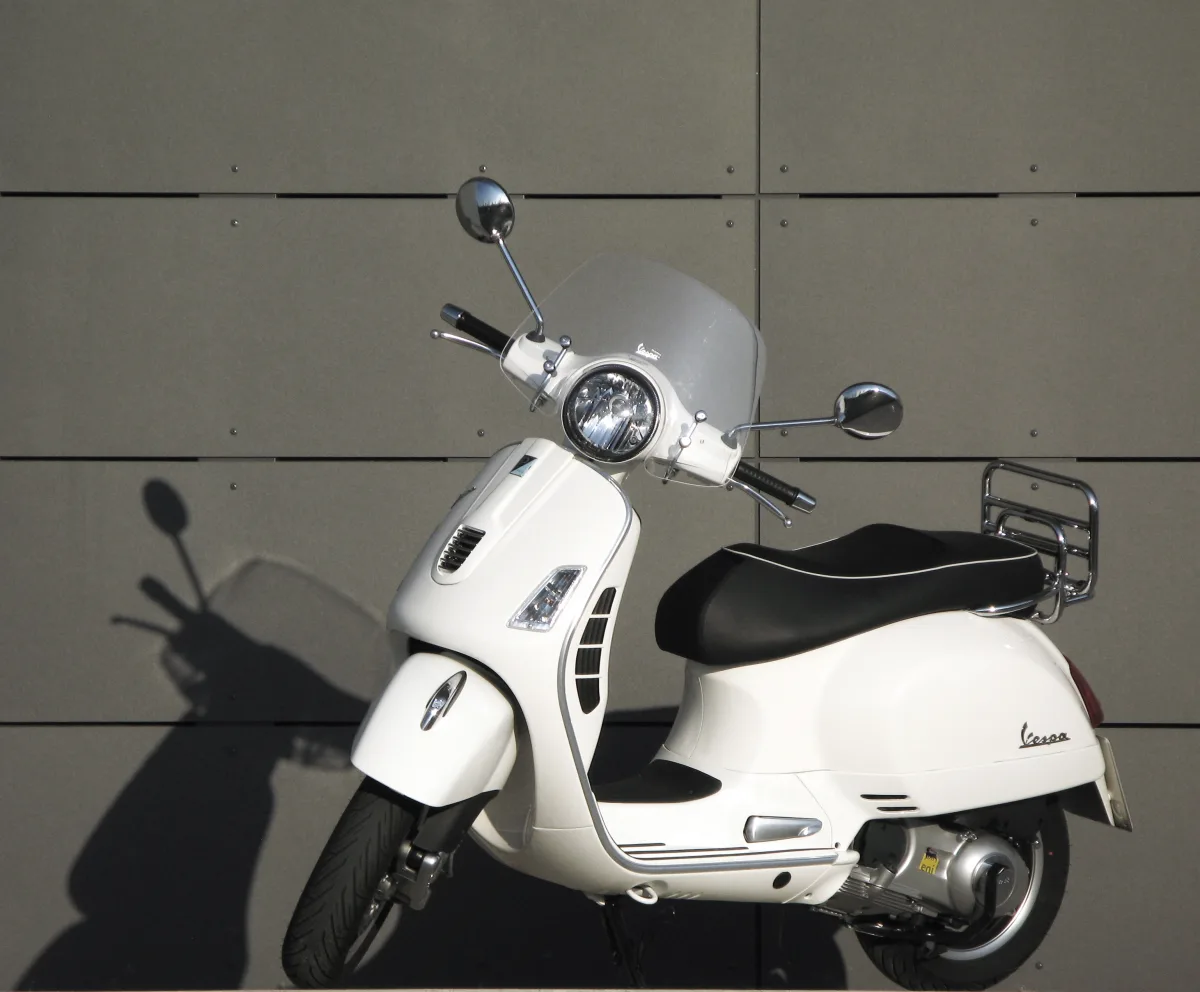
Vespa GTS: a luxurious scooter, generations and what to check
Vespa GTS (from 2003) — the Vespa 'Gran Turismo Sport' line that combines a classic steel body with modern technology. We look at how engine sizes differ, what the GTS offers, and what to check when buying used.






GTS in brief
The GTS is larger and more powerful than smaller Vespa models: a steel monocoque body, comfortable seat, and enough power to handle more than just city driving. It's a classic Vespa look that's perfect for daily commutes and longer journeys.
Particularly loved for its style and quality. The Vespa GTS holds its value better than many competitors in the used market, though it does come at a premium.
Versions — how they differ
The GTS was first produced in 2003 with a 250 cm³ engine. Later, smaller (125 cm³) and larger (300 cm³) variants were introduced. From 2019, the GTS received the updated HPE (High Performance Engine) 300 cm³ engine with lower fuel consumption and more modern electronics.
Also available are the Super, Super Sport, and Touring versions, which differ in trim, wheels, fairing, and equipment. Newer versions often come with ABS, traction control (ASR), and a digital dash.
Engines and transmission
The most common engines are the 125, 250, and 300 cm³ single-cylinder, liquid-cooled units. Scooters with the 300 cm³ engine achieve good speeds and are suitable for highway driving.
The transmission is an automatic CVT, so there's no need to shift gears. The scooter is stable, easy to handle, and great for riding with a passenger.
What to check when buying a used GTS
Request the service history: regular oil changes, clutch and timing belt replacements as per schedule are crucial. Start the cold engine and ensure it runs smoothly.
Inspect the steel body for rust and paint damage, especially the underside and the footwell area. Check the brakes, ABS, tyres, front axle and rear shock absorbers, electrical system and seat locks. Verify if any manufacturer recalls have been carried out according to the VIN.


Trim levels and versions
Names and equipment vary by market and year; we list the versions most commonly found in Europe.
GTS 250
from 2003The early GTS version with a 250 cm³ engine.
- 250 cm³ liquid-cooled engine
- Steel body
- Automatic transmission
GTS 300
laterMore powerful version with a 300 cm³ engine.
- 300 cm³ engine
- Often comes with ABS and ASR
- Suitable for the motorway
GTS 300 HPE
from 2019Updated version with the new HPE engine.
- Updated 300 cm³ engine
- More modern electronics
- Often — a digital dash
GTS 125
from 2003Smaller-capacity version for city driving.
- 125 cm³ engine
- Lower running costs
- Suitable for A1 category
GTS version comparison
| GTS 125 | GTS 250/300 | GTS 300 HPE | |
|---|---|---|---|
| Who it's for | Ideal for city driving and A1 category | Perfect for city and long-distance driving | For enthusiasts of modern equipment |
| Engine | 125 cm³ | 250–300 cm³ | 300 cm³ HPE |
| Common equipment | More basic | ABS, ASR | ABS, ASR, digital dash |
| Price in the used market (relatively) | €€ | €€ | €€€ |
Most buyers will be best served by the GTS 300 with ABS and a clear service history. The HPE version is worth choosing for its newer tech, while the 125 cm³ is ideal for A1 licence holders.
Pros
- Classic Vespa styling and steel body
- Holds its value well
- Comfortable and stable ride
- Plenty of power for the motorway (300 cm³)
Cons
- Outpaces rivals
- The steel body can rust
- Heavier than smaller scooters
Frequently asked questions
Is the GTS 125 suitable for an A1 licence?
Yes, a 125 cm³ scooter usually meets A1 licence requirements, but always check the specific vehicle's documents.
Is the GTS 300 suitable for motorway use?
Yes, the 300 cm³ versions are powerful enough for high-speed driving with passengers, but you should consider local traffic regulations.
How does the HPE version differ from previous ones?
The HPE version features an updated 300 cm³ engine with lower fuel consumption and more modern electronics and fairing.
Updated 2026-10-21 · Trim levels and equipment vary by market and model year — check the equipment of the specific car. · Translated automatically


