 English
 Lietuvių
 Latviešu
 Eesti
 Polski
 Русский
 Українська
 Deutsch
 Nederlands
 Čeština
 Slovenčina
 Svenska
 Norsk
 Dansk
 Suomi


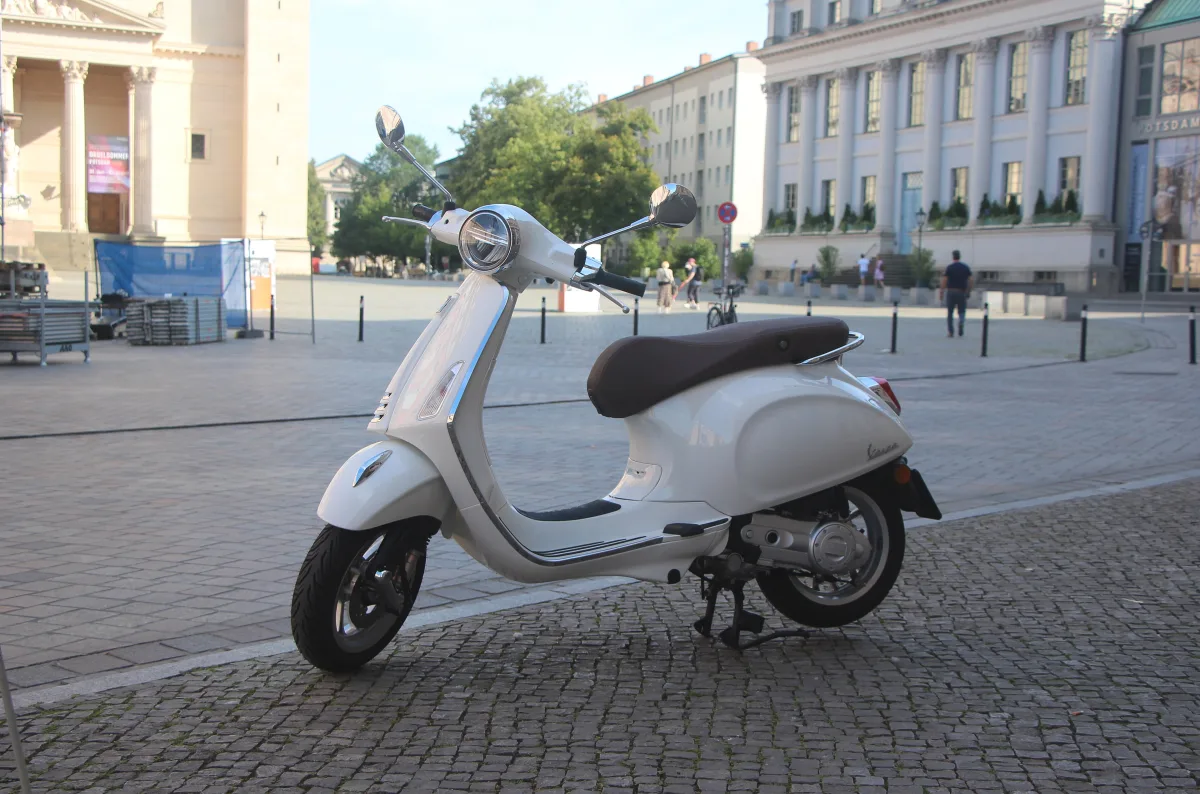
Vespa Primavera: 50, 125 and 150 cm³ versions and what to check on a used one
Vespa Primavera (from 2013) — a classic-styled steel-bodied scooter that became one of the most popular Vespa models. We look at the versions, engines, and what to check when buying a used one.






Primavera in brief
The Primavera debuted in 2013 as a modern take on the classic Vespa. It retains the steel body, round headlights, and elegant lines but features modern tech and better comfort.
It's an urban scooter suited to daily use and is praised for its style, ease of handling, and strong resale value.
Versions — what's the difference
The Primavera comes with several engines: 50 cm³, 125, and 150 cm³. The 50 cm³ version is suitable for the AM category, 125 for A1, and 150 requires a broader category. The differences between variants are mainly about power and eligible riders.
Alongside the base version, special series were offered: Touring, the sportier S version, and anniversary editions. The similar Sprint model features a square headlight and a sportier style.
Engine and transmission
The most common 125 and 150 cm³ engines are air-cooled single-cylinder four-strokes with three-valve heads (3V) and fuel injection. Power is delivered via an automatic CVT, so there's no need to shift gears.
Later versions introduced newer, more economical engines that meet stricter emissions standards. Often, versions come with ABS and traction control (ASR).
What to check when buying a used Primavera
Check the metal body for rust, especially on the underside and under the seat. Inspect the paintwork, scratches and any signs of a crash.
Test the variator: movement should be smooth, without juddering or vibration. Ask when the belt and pulleys were last changed. Check the brakes, tyres and suspension.
If the scooter is 50 cm³, make sure it hasn’t been tampered with to go faster than its category allows. Check the documents and service history.


Versions
Names and equipment vary by market and year; we list the versions most commonly found in Europe.
Primavera 50
from 2013The base version.
- Suitable for the AM category
- Four-stroke engine
- Low running costs
Primavera 125
from 2013The most popular version.
- Suitable for the A1 category
- Around a 125 cm³ 3V engine
- Often comes with ABS
Primavera 150
from 2013A more powerful version.
- Approximately 150 cm³ 3V engine
- Better acceleration
- Requires a higher category
Primavera S / Touring
Various yearsSpecial editions.
- Sportier or touring equipment
- Additional features
- Check the specification
Compare versions
| 50 | 125 | 150 | |
|---|---|---|---|
| Who it's for | Ideal for young city drivers | Perfect for city and road | For active driving |
| Category | AM | A1 | Bigger than the A1 |
| Engine | ~50 cm³, four-stroke | ~125 cm³, 3V | ~150 cm³, 3V |
| Price in the used market (relatively) | Mid-range | Mid-range | High-end |
For most, the 125 cm³ version strikes a balance between power, cost, and category. The 50 cm³ is ideal for younger riders, while the 150 cm³ is better for more spirited riding.
Pros
- Classic, recognizable style
- Steel body and good build quality
- Holds its value well
- Easy and comfortable city handling
Cons
- Outshines many competitors
- Rusts if left outside
- Limited storage space
Frequently asked questions
Is the Primavera suitable for beginners?
Yes, it's light and low, making it ideal for newcomers.
How does the Primavera differ from the Sprint?
The Sprint has a square headlight and a sportier style, while the Primavera features a round headlight and a classic look.
Is the Primavera good for touring?
Fine for short trips, but for the open road, consider a more powerful scooter.
Updated 2026-10-21 · Trim levels and equipment vary by market and model year — check the equipment of the specific car. · Translated automatically


