 English
 Lietuvių
 Latviešu
 Eesti
 Polski
 Русский
 Українська
 Deutsch
 Nederlands
 Čeština
 Slovenčina
 Svenska
 Norsk
 Dansk
 Suomi


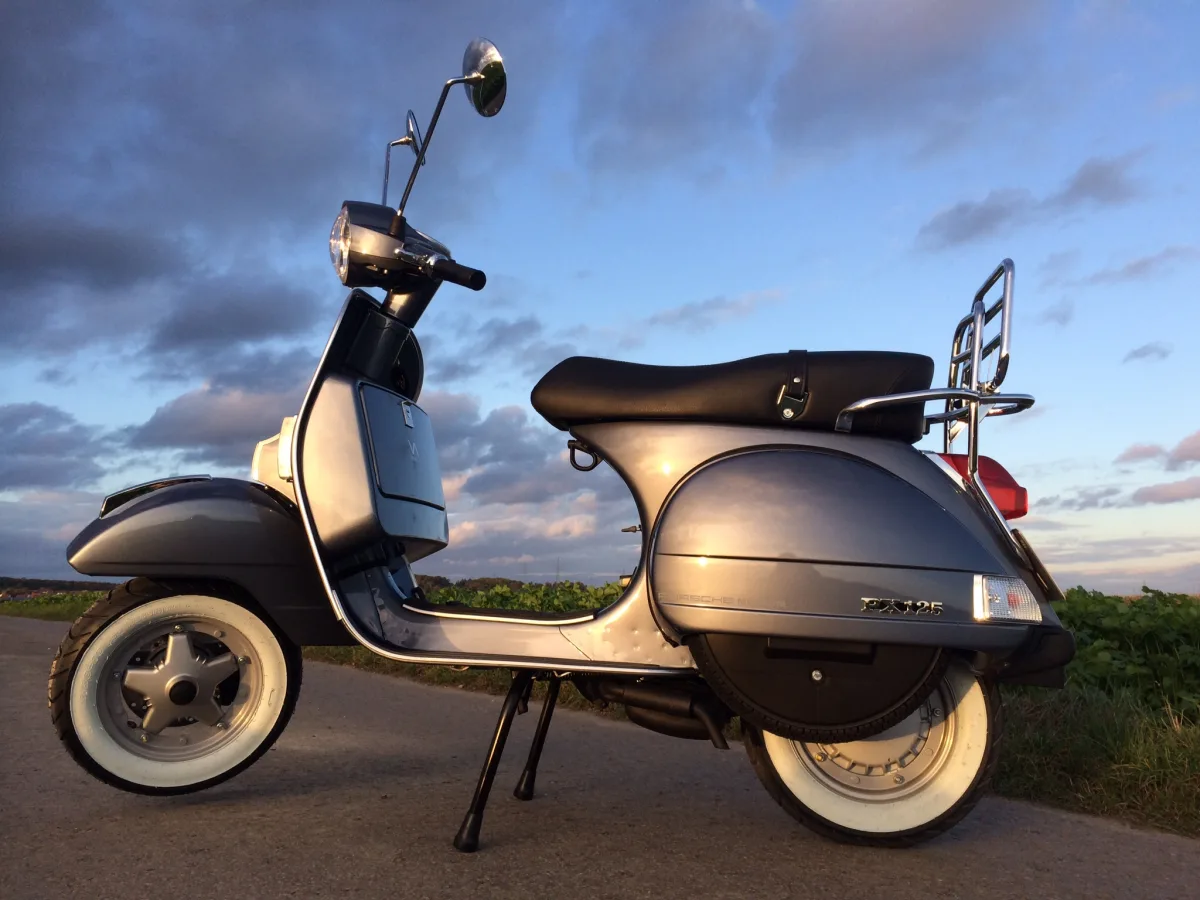
Vespa PX: the classic scooter, versions and what to check
Vespa PX (from 1977) — the classic steel-bodied scooter with manual gear shifting, one of the longest-running scooters in the world. We look at how the versions differ (PX 80, 125, 150, 200), who it suits and what to check when buying used.






PX in brief
PX is the Vespa classic: a steel monocoque body, gear shifting with a twist grip and a simple, reliable construction. It became a cult urban symbol thanks to its looks.
Unlike modern automatic scooters, the PX requires some learning to master: the clutch, gears and a light 'driving feel'. Many people choose it precisely for this experience.
Versions — how they differ
The classic PX versions are designated by engine size: PX 80, PX 125, PX 150 and PX 200. Most commonly, you'll find two-stroke engines, although four-stroke versions did appear later.
Production was halted and then restarted in 2011. Newer PX versions meet stricter emissions standards and often come with additional features. Examples vary: earlier models have a 'kick-start', while some have an electric start (marked E).
Engines and gearboxes
The engine is a single-cylinder, 80–200 cm³, with manual gear shifting. Two-stroke versions are simple but require oil and the right mix; some have a separate oil tank.
The gearbox is four-speed, operated by the left handlebar. More powerful versions (PX 200) are suitable for both city and out-of-town riding, while smaller ones are best for city use.
What to check when buying a used PX
The most important thing is the body and frame: check the floor, footwell, side panels for rust, welding and deformation. A steel body rusts where moisture collects.
Check the engine: it should start easily when cold, with no smoke and no oil leaks. Test the clutch, gear shifting, brakes and electrical system. Since the PX is very popular and often restored, check if the parts are original and ask for documentation.


Trims and Versions
Names and equipment vary by market and year; we list the versions most commonly found in Europe.
PX 80
from 1977The smallest displacement version.
- Approximately 80 cm³ two-stroke engine
- Manual gear shifting
- Classic steel body
PX 125 / 150
from 1977Most popular versions.
- 125–150 cm³ engine
- Manual gear shifting
- Often comes with electric start (E)
PX 200
from 1977More powerful version.
- Approximately 200 cm³ engine
- More torque
- Suitable for beyond the city limits
Comparing PX versions
| PX 80 | PX 125/150 | PX 200 | |
|---|---|---|---|
| Who it's for | For small city driving | For daily commuting | For longer distances |
| Engine | Around 80 cm³ | 125–150 cm³ | Around 200 cm³ |
| What to check first | Bodywork and engine | Bodywork, engine, and electrics | Bodywork and suspension |
| Price in the used market (relatively) | € | €€ | €€ |
The PX is ideal for those who prioritise a classic look and a straightforward feel from the technology. Opt for examples with a well-maintained body and a clear history.
Pros
- Classic, iconic styling
- Simple, uncomplicated construction
- Wide range of parts available
- Holds its value well
Cons
- Steel body rusts
- Manual gear shifting requires practice
- Two-stroke versions are less friendly to the environment
Frequently asked questions
Is the PX suitable for a beginner?
Yes, but you need to learn to handle the clutch and shift gears. It's light and compact, but lacks the simplicity of an automatic scooter.
How does the PX differ from automatic scooters?
The PX has a manual gear shift and clutch, while modern automatic scooters use a variator. The PX offers more direct and 'mechanical' control.
Can the PX be restored?
Yes, there's a wide range of parts available, and many examples have been restored. It's crucial to know what's been changed and to have the documentation.
Updated 2026-10-21 · Trim levels and equipment vary by market and model year — check the equipment of the specific car. · Translated automatically


