 English
 Lietuvių
 Latviešu
 Eesti
 Polski
 Русский
 Українська
 Deutsch
 Nederlands
 Čeština
 Slovenčina
 Svenska
 Norsk
 Dansk
 Suomi


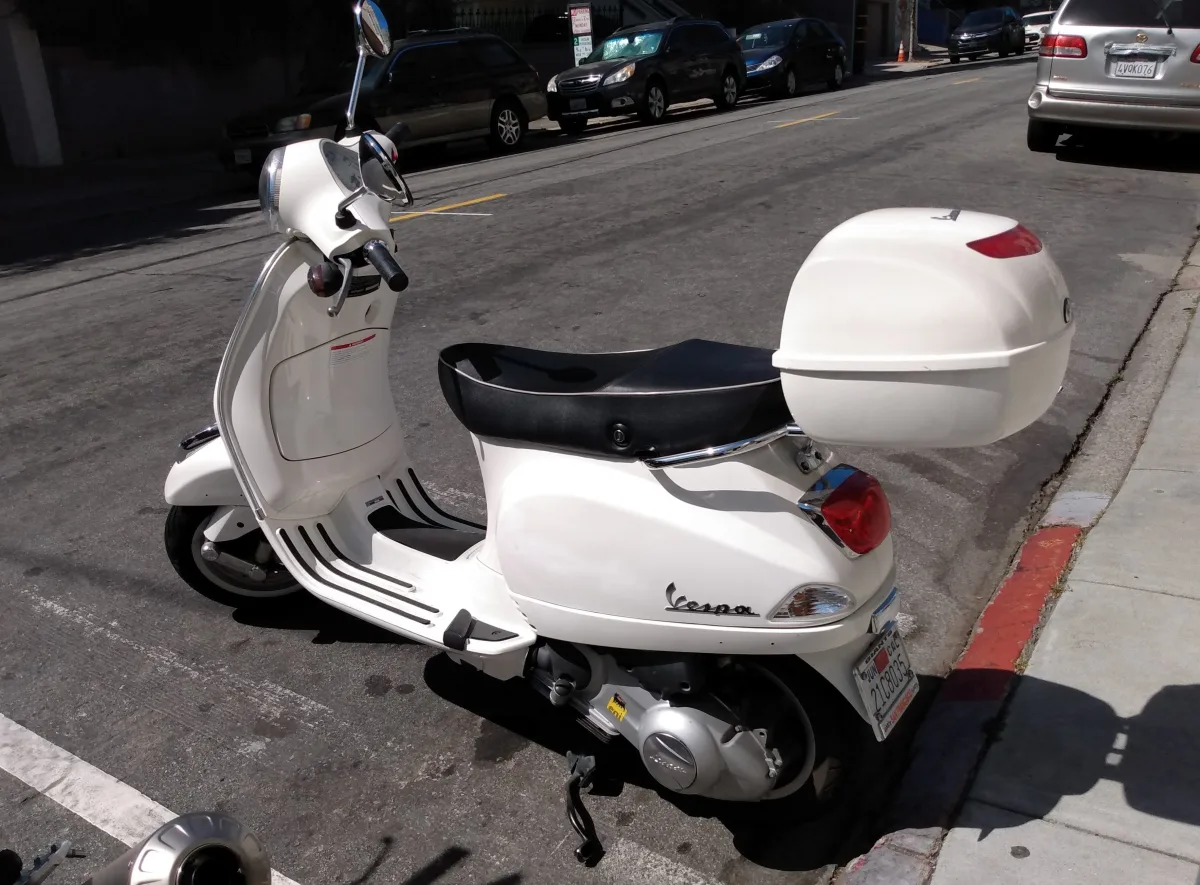
Vespa LX: urban scooter, engine options and what to check
Vespa LX (2005–2013) — a classic Italian-style urban scooter with a steel body and 50, 125, and 150 cm³ engines. We look at the versions, what the engines offer, and what to check when buying used.






Vespa LX in brief
The Vespa LX was created as a more accessible machine while retaining the classic Vespa style. It features a steel monocoque body, an automatic transmission, and easy handling, making it ideal for city use.
The scooter is appealing with its timeless design and practicality: there's storage under the seat, and it's easy to ride. The LX was replaced by the Vespa Primavera in 2013.
Versions — what's the difference
The LX was offered with 50, 125, and 150 cm³ engines. The 50 cm³ version came with two-stroke and four-stroke engines, while the 125 and 150 cm³ versions featured four-stroke engines.
Later 125 and 150 cm³ versions introduced a three-valve engine with electronic fuel injection (3V i.e.), which is more economical and cleaner than the previous carburettor version. Be sure to verify the specific version via documents or VIN.
Engine, transmission, and chassis
All engines are single-cylinder. The 50 cm³ version is perfect for the city, while the 125 and 150 cm³ versions are lively enough for both urban and suburban use, though not designed for high speeds.
The transmission is automatic (CVT), so there's no need to shift gears. Power is sent to the rear wheel via the CVT and a toothed belt drive. The wheels are small, making the ride agile, but they can be sensitive to potholes on rough roads.
What to check when buying a used Vespa LX
First, inspect the steel bodywork for any rust, dents, repainted areas, especially on the lower sections and under the footboard. Check if the engine starts easily, if the idle is smooth and if the variator operates smoothly, without juddering.
Inspect the brakes, tyres, suspension, electrical equipment, and battery. Check if there is a service history, as variator and transmission maintenance is crucial for longevity. Ask about the category required for this version (50 cm³ — AM, 125 cm³ — A1, 150 cm³ — A2), as regulations may vary.


Trims and versions
Names and equipment vary by market and year; we list the versions most commonly found in Europe.
Vespa LX 50
2005–2013The smallest capacity version, ideal for city use.
- 50 cm³ engine
- Often a two-stroke variant
- Steel bodywork
Vespa LX 125
2005–2013The most popular version, suitable for both city and suburban use.
- 125 cm³ four-stroke engine
- Automatic transmission
- Storage compartment under the seat
Vespa LX 150
2005–2013A slightly more powerful version.
- 150 cm³ four-stroke engine
- Better city driving
- Automatic transmission
Vespa LX 3V
up to 2013Later version with a 3-valve engine and fuel injection.
- 3-valve engine
- Electronic fuel injection
- More economical operation
Comparing versions
| LX 50 | LX 125 | LX 150 | LX 3V | |
|---|---|---|---|---|
| Who it's for | Ideal for the city and younger drivers | City and suburban driving | City driving and quicker acceleration | More economical driving |
| Engine | 50 cm³ | 125 cm³ | 150 cm³ | 125 or 150 cm³, 3 valves |
| Price in the used market (relatively) | € | €€ | €€ | €€ |
For most buyers, the best choice is the LX 125 or LX 150, and if economy is key, the 3V version. The most important thing is a well-maintained body without rust.
Pros
- Classic, timeless styling
- Light, agile handling
- Automatic transmission
- Storage compartment under the seat
Cons
- Small wheels mean it's sensitive to potholes
- Limited potential for high speeds
- The metal body can rust
Frequently asked questions
What category do you need to ride a Vespa LX?
The 50 cm³ version usually requires an AM category, 125 cm³ requires A1, and 150 cm³ requires A2. Rules may vary by country, so check before buying.
Is the Vespa LX suitable for the city?
Yes, that's one of its main purposes: it's agile, easy to drive and has an appealing look.
How does the 3V version differ from the standard one?
The 3V comes with a three-valve engine featuring electronic fuel injection, which is more economical and cleaner than the previous carburettor.
Updated 2026-10-21 · Trim levels and equipment vary by market and model year — check the equipment of the specific car. · Translated automatically


