 English
 Lietuvių
 Latviešu
 Eesti
 Polski
 Русский
 Українська
 Deutsch
 Nederlands
 Čeština
 Slovenčina
 Svenska
 Norsk
 Dansk
 Suomi


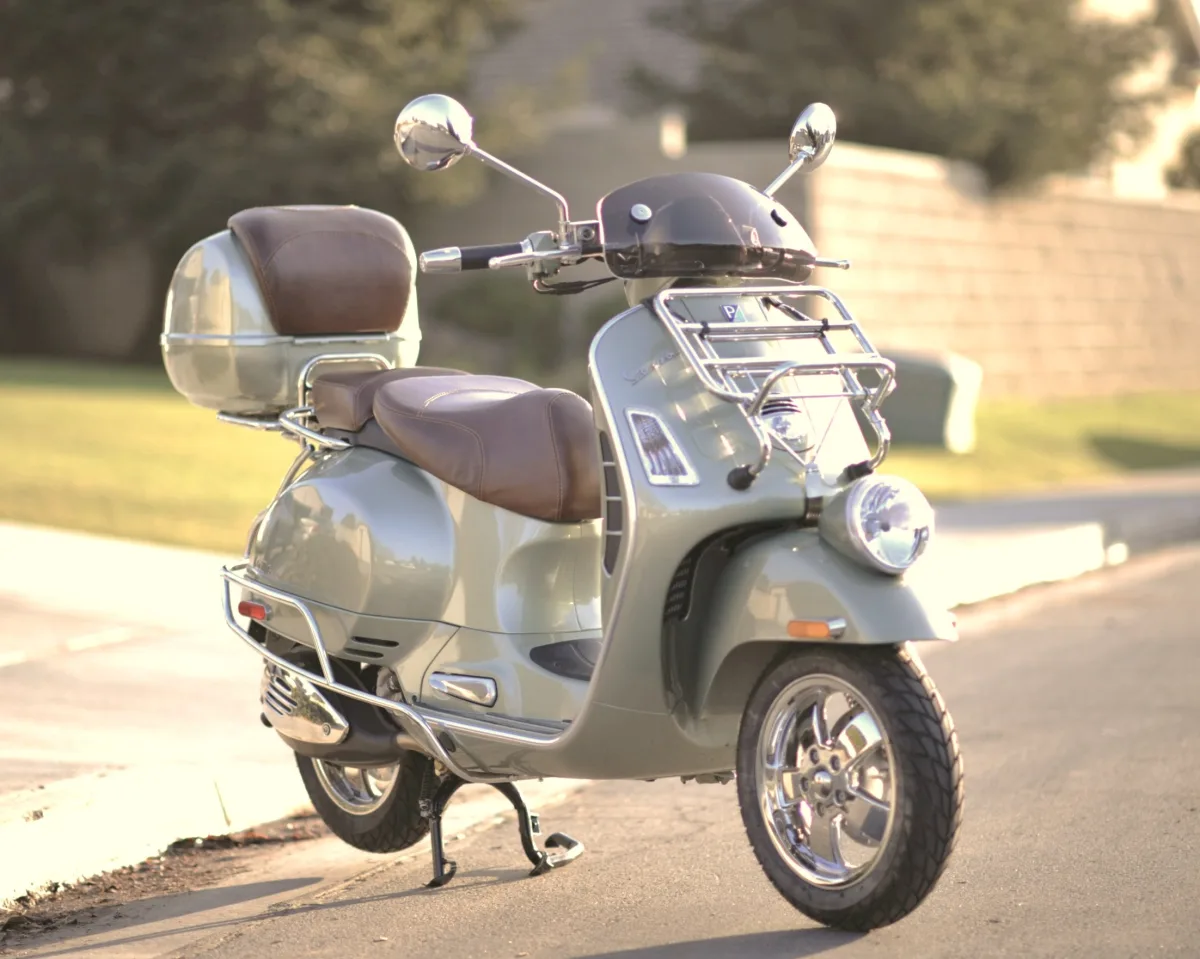
Vespa GTV: retro styling GTS version, engines and what to know when buying
Vespa GTV — the classic-styled Vespa GTS version with a headlight on the front fender and retro details. We look at how it differs from other GTS models, what engines it has, and what to check when buying used.






GTV in brief
The GTV first appeared in 2006 as a retro-styled GTS version. The main difference is the front headlight on the fender, chromed details, classic handlebar cover, and brown or other 'classic' seat.
Technically, it's very close to the GTS: the same steel body, larger wheels, and the same chassis, so it can be considered a frequently chosen option for those who value appearance.
Generations and engine sizes
The first GTVs had around a 250 cm³ engine, later 300 cm³ versions appeared, and the newest ones have around a 300 cm³ new-generation engine (GTV 310). The GTS changed in the same way.
The newer the generation, the more modern equipment: often LED headlights, a more modern instrument cluster, ABS, and traction control (ASR) in some versions.
Engine and transmission
The first GTVs had around a 250 cm³ four-stroke liquid-cooled engine with around 22 hp. Later models have larger displacement and more power, but most versions can fit into the A2 category — this is worth checking in the documents.
Power is transmitted via an automatic variator. Newer versions use a more efficient engine with lower fuel consumption.
What to check when buying a used Vespa GTV
Check the bodywork for rust, especially underneath and around the sills. Also, inspect for repainted or repaired parts, as both chrome and paint restoration can be costly.
Test the gearbox for any grinding or vibration, and check the brakes. Verify when the oil, gearbox mount, and bushes were last changed.
Inspect the condition of the seats, lights, and colored trim — buyers choose the GTV for its looks, so any wear and tear will be particularly noticeable.


Versions and trims
Trims vary by market and year; here we describe the most commonly encountered versions.
GTV 250
First generationThe first retro-style GTS, with an approximately 250 cm³ engine.
- Indicator on the front wing
- Chrome details, classic seat
- Steel body, larger wheels
GTV 300
Middle generationA larger-displacement version with more modern electronics.
- Approximately 300 cm³ engine
- Often comes with ABS and ASR
- More comfortable seat and glove box
GTV 310
Latest generationLatest version with a modern engine and screen.
- Approximately 300 cm³ engine from the latest generation
- Often — LED headlights, a more modern instrument cluster
- Often — more safety and comfort systems
Comparison of GTV generations
| GTV 250 | GTV 300 | GTV 310 | |
|---|---|---|---|
| Who it's for | For retro style enthusiasts | For daily driving | For those wanting the latest equipment |
| Engine | Approximately 250 cm³ | Approximately 300 cm³ | Approximately 300 cm³ (new generation) |
| Electronics | Simplest | ABS, ASR often | Wide |
| Price in the used market (relatively) | Mid-range | High-end | High-end |
If you're after a retro look and everyday practicality, the 300 cm³ version is a solid choice; if you want the latest kit, go for the GTV 310.
Pros
- Retro styling with modern tech
- Steel body and larger wheels
- Suitable for both city and longer journeys
- Robust build
Cons
- Quite pricey in the used market
- More luxurious trim and details
- Heavier than smaller scooters
Frequently asked questions
How does the GTV differ from the GTS?
They're very similar technically. The GTV stands out with retro details: a headlight on the wing, chrome, and a classic seat, while the GTS boasts a more modern, sporty design.
Is the GTV suitable for an A2 license?
Most versions can be suitable for an A2 license, but it's important to check the specific scooter's documents and power output.
Is it suitable for longer journeys?
Yes, larger wheels, stable handling, and adequate power make it capable of venturing beyond city limits, though comfort depends on the seat and wind protection.
Updated 2026-10-21 · Trim levels and equipment vary by market and model year — check the equipment of the specific car. · Translated automatically


