 English
 Lietuvių
 Latviešu
 Eesti
 Polski
 Русский
 Українська
 Deutsch
 Nederlands
 Čeština
 Slovenčina
 Svenska
 Norsk
 Dansk
 Suomi


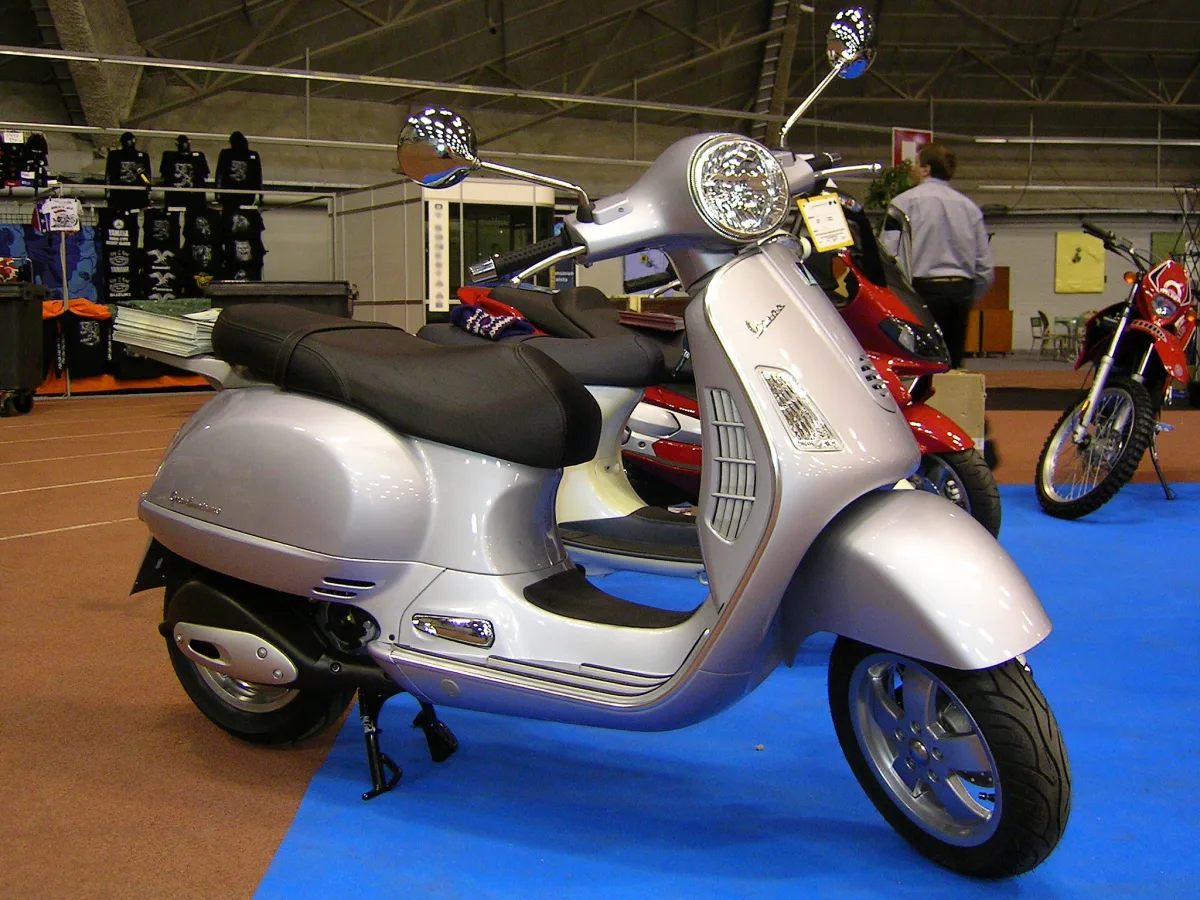
Vespa GT: 125 and 200 cm³ scooter, what to know when buying used
Vespa GT — the larger-wheeled, steel-bodied Vespa scooter that debuted in the early 2000s and was offered with 125 and 200 cm³ engines. We look at the versions, engines, and what to check when buying used.






Vespa GT in brief
The GT was the first Vespa family designed for longer, faster rides: it's larger and more stable than classic Vespas, and like all models in this range, it features a steel, self-supporting (monocoque) body.
Today, it's more affordable but still an attractive classic scooter for city streets and motorway stretches.
Versions
The most common are the GT 125 and GT 200 versions (Granturismo). They mainly differ in their engines; the body and chassis are essentially the same. There were also special editions with different colors or finishes.
The 125 cm³ version usually falls under the A1 category, while the 200 cm³ is A2. Always check the specific details in the scooter's documents.
Engine and transmission
All versions feature a four-stroke, liquid-cooled engine, with power delivered via an automatic variator transmission — no need to change gears.
Disc brakes are fitted front and rear, and the wheels are larger in diameter than those on smaller scooters, making for more stable riding. The fuel system depends on the year of manufacture, so it's worth checking before purchase.
What to check when buying a used Vespa GT
First, inspect the metal body for rust — especially the underside, the footwell area, and spots around the suspension mounts. Since the body is load-bearing, serious rust can be very expensive to fix.
Take it for a spin and assess the transmission: juddering when moving off, vibration, or noise indicates worn parts (clutch, sprockets). Ask when the oil and coolant were last changed.
Check the electrical system, lights, battery, and brakes. For older scooters, the service history and document compliance are also important.


Versions and trims
Trims vary by market and year; here we describe the most common versions.
GT 125
Early to mid-2000sA smaller-capacity version for city and suburban use.
- 125 cm³ four-stroke engine
- Automatic transmission
- Often — suitable for A1 category
GT 200
Early to mid-2000sA more powerful version, suitable for faster roads.
- 200 cm³ four-stroke engine
- Automatic transmission
- Often — an A2 category scooter
GT 125 and GT 200 comparison
| GT 125 | GT 200 | |
|---|---|---|
| Who it's for | For city and short trips | For city and faster roads |
| Engine | 125 cm³ | 200 cm³ |
| Most common category | A1 | A2 |
| Price in the used market (relatively) | € | €€ |
If you mostly drive in the city, the GT 125 will suffice; if you often need to take faster roads or carry a passenger, it's better to choose the GT 200.
Pros
- A sturdy metal body
- Larger wheels mean more stable riding
- Classic Vespa styling
- Automatic transmission — easy to drive
Cons
- The bodywork may be affected by rust
- Parts and maintenance for an older scooter can be costly
- Heavier than smaller scooters
Frequently asked questions
Is the GT suitable for motorway driving?
This Vespa is designed for both city and beyond, but power is limited, so especially with a passenger, opt for the 200 cm³ version and consider traffic rules and engine capabilities.
How does the GT differ from the classic Vespa?
The GT is larger, longer, has bigger wheels and a four-stroke liquid-cooled engine, so it rides more stably and quietly than older Vespas with two-stroke engines.
What should you look out for first?
Check the bodywork condition and signs of rust, the condition of the variator, and the service history. If documents are missing or there are signs of bodged repairs, it's worth reconsidering the purchase.
Updated 2026-10-21 · Trim levels and equipment vary by market and model year — check the equipment of the specific car. · Translated automatically


