 English
 Lietuvių
 Latviešu
 Eesti
 Polski
 Русский
 Українська
 Deutsch
 Nederlands
 Čeština
 Slovenčina
 Svenska
 Norsk
 Dansk
 Suomi


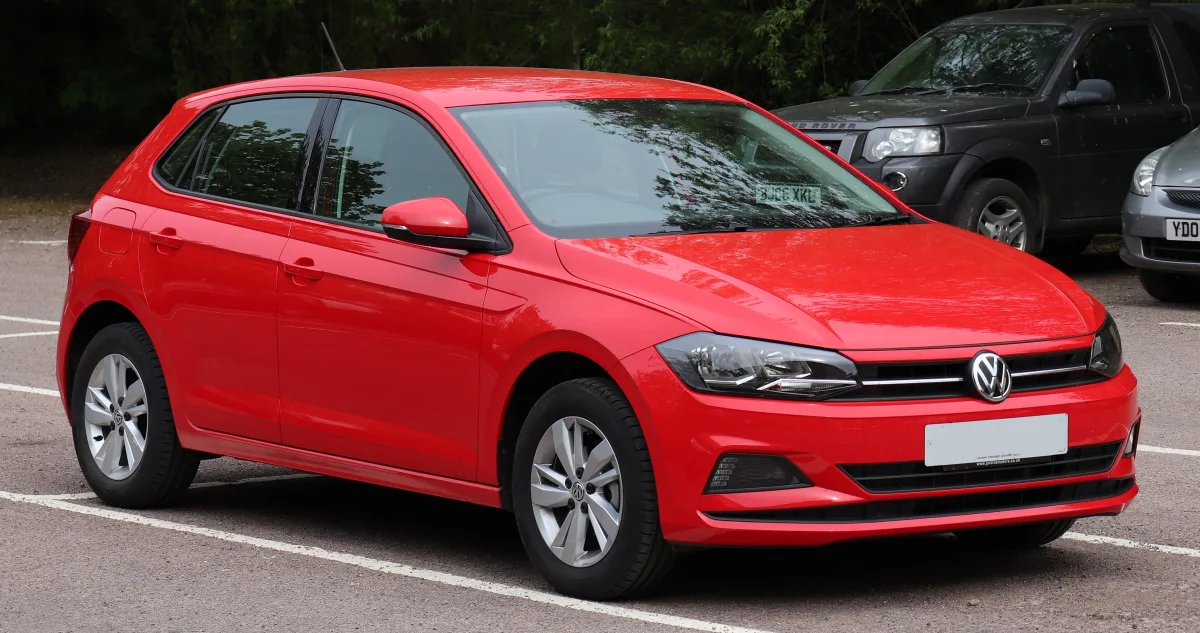
Volkswagen Polo: Generations V and VI, engines and trims
Volkswagen Polo — a subcompact hatchback produced since 1975, frequently chosen in Lithuania as a first or second family car. We review the 5th (2009–2017) and 6th (2017–present) generations most commonly found on the used market, their engines, trim levels, and what to check when buying.






Polo at a glance
The Polo is the Golf's smaller and cheaper sibling, sharing its mechanical underpinnings with the Škoda Fabia and SEAT Ibiza. The 5th generation was offered in Europe as a 3- and 5-door hatchback, while the 6th generation comes exclusively as a 5-door. The sporty version is badged GTI, and the sportier-looking trim is called R-Line.
The Polo is prized for its solid, high-quality interior, composed ride, and low running costs. Its compact dimensions make it convenient for the city, while the 6th generation offers the kind of interior space once reserved for compact-class cars.
Gen V vs Gen VI — the differences
Generation V (2009–2017) features a simpler design, but is solidly built. It received a facelift in 2014: most engines were updated (introducing the 1.0 MPI, new-generation 1.2 and 1.0 TSI, and the three-cylinder 1.4 TDI), alongside a refreshed interior and infotainment system. When buying a Gen V, it is worth looking specifically for post-facelift cars from 2014–2017.
Generation VI (from 2017) is built on the MQB A0 platform: it is longer, wider, and significantly roomier, with a larger boot. The cabin features larger screens and more driver assistance systems, with a digital instrument cluster (Active Info Display) offered as an option.
In 2021, the 6th generation received a facelift: LED headlights and a digital instrument cluster became standard, new trim names were introduced (Life, Style, R-Line), and diesel versions were dropped from the European lineup.
Engines and transmissions
In pre-facelift Gen V models up to 2014, the most common units are the 1.2 (60–70 hp) and 1.4 (85 hp) three-cylinder naturally aspirated petrols, the 1.2 TSI, and the 1.2 and 1.6 TDI diesels. Post-facelift, the lineup centered around the 1.0 MPI, 1.0 and 1.2 TSI, and 1.4 TDI. The GTI featured a 1.4 TSI (180 hp), replaced after the facelift by a 1.8 TSI (192 hp).
The 6th generation offers the 1.0 MPI (65–80 hp), 1.0 TSI (95–115 hp), a pre-facelift 1.6 TDI diesel, and a short-lived 1.5 TSI (150 hp). The GTI packs a 2.0 TSI engine (around 200–207 hp).
Transmissions include manual (5- or 6-speed) or DSG. Smaller TSI engines are typically paired with the 7-speed dry-clutch DSG (DQ200), while the entry-level 1.0 MPI models almost exclusively feature a manual gearbox.
What to check when buying a used Polo
Pre-2014 fifth-generation three-cylinder 1.2 and 1.2 TSI engines were notorious for timing chain stretch — a cold engine should not rattle upon startup and must idle smoothly.
The DSG transmission should shift smoothly: jerking when pulling away or clunking during shifts often signals upcoming clutch or mechatronic unit repairs. For diesels driven predominantly in the city, check the diesel particulate filter (DPF) and EGR valve.
The Polo is frequently used in cities and as a first car, so thoroughly inspect the bumpers, alloy wheels, and clutch. Verify the mileage using inspection and service records, and check the bodywork for resprayed panels and uneven gaps.


Trim levels
Names and equipment vary by market and model year; the trims listed below are the most common in Europe.
Trendline
Gen V, Gen VI (up to 2021)Base trim — simple and the most affordable.
- Usually steel wheels
- Basic infotainment system
- Often features manual air conditioning
Comfortline
Gen V, Gen VI (up to 2021)The most popular choice — a great balance of price and convenience.
- Usually alloy wheels
- Air conditioning, often with parking sensors
- Larger infotainment screen
Highline
Gen V, Gen VI (up to 2021)Top-tier standard trim up to 2021
- Larger wheels and more chrome accents
- Often features automatic climate control
- Often equipped with LED headlights and a digital instrument cluster
Life
Gen VI (from 2021)The core trim of the updated Polo featuring modern equipment.
- LED headlights and digital instrument cluster
- Touchscreen infotainment system
- Often features parking sensors
Style
Gen VI (from 2021)A more elegant version for comfort seekers.
- Often equipped with IQ.LIGHT matrix headlights
- Often features automatic climate control
- Upmarket interior trim
R-Line
Gen VIA sporty-looking version without the high-performance engine.
- Sporty bumpers and larger wheels
- Often features sports seats
- Sportier interior styling
Facelifted Gen VI trim comparison
| Life | Style | R-Line | GTI | |
|---|---|---|---|---|
| Who is it for? | For daily driving | For comfort and style | For a sporty look | For driving pleasure |
| Wheels (typically) | 15–16 in. | 16 in. | 17 in. | 17–18 in. |
| Headlights | LED | LED, often matrix | LED, often matrix | LED, often matrix |
| Engine | 1.0 MPI, 1.0 TSI | 1.0 TSI | 1.0 TSI | 2.0 TSI, approx. 207 hp |
| Used market price (relative) | € | €€ | €€ | €€€ |
For most buyers, the Life or Style trim with the 1.0 TSI engine is the sweet spot—it has enough punch even for highway driving. The 1.0 MPI is best suited for city use, while the GTI is only worth considering if you're after a truly sporty hatchback.
Pros
- High-quality, solid interior
- Spacious for its class (especially the gen VI)
- Low running costs and readily available spare parts
- Holds its value well
Cons
- Often commands a higher price on the used market than the Fabia or Ibiza
- Underpowered 1.0 MPI engine out on the open road
- Timing chain issues on older generation V 1.2 engines
Frequently asked questions
How does the Polo differ from the Škoda Fabia and SEAT Ibiza?
All three share the same Volkswagen Group engineering and engines. The Polo generally features a slightly higher-quality interior finish and holds its resale value better, the Fabia is often more practical and affordable, and the Ibiza leans towards a sportier character.
Which Polo engine should you choose?
The most versatile choice is the 1.0 TSI (95–115 hp): it's reasonably punchy on the highway while remaining very fuel-efficient. The 1.0 MPI is cheaper and simpler, but mostly suited for city driving. A diesel Polo is only worth looking at if you cover high mileage on long trips.
Is the Polo suitable for a family?
The generation VI Polo is spacious enough for a small family: two adults will fit comfortably in the back, and the boot is one of the largest in its class. If you frequently travel with lots of luggage, you might want to consider a Golf or an estate.
Updated 2026-10-09 · Trim levels and equipment vary by market and model year — check the equipment of the specific car. · Translated automatically


