 English
 Lietuvių
 Latviešu
 Eesti
 Polski
 Русский
 Українська
 Deutsch
 Nederlands
 Čeština
 Slovenčina
 Svenska
 Norsk
 Dansk
 Suomi


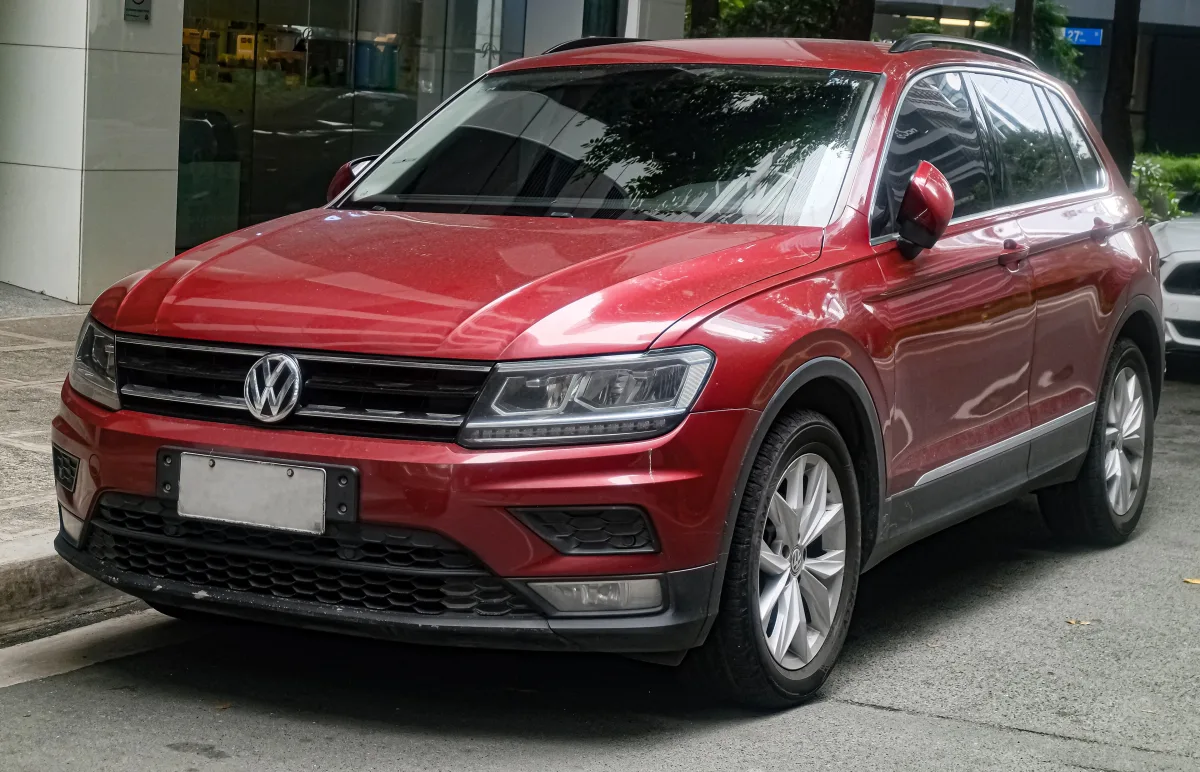
Volkswagen Tiguan: I, II and III generations, engines and trims
The Volkswagen Tiguan is a compact SUV, one of the most popular in its class in Europe and a frequent choice in Lithuania's used-car market. We look at how the generations differ, which engines are most common, how the trims vary, and what to check before buying.






Tiguan in brief
The Tiguan has been in production since 2007 and now spans three generations. Built using Golf technology, it drives much like a hatchback but offers a higher driving position, more spacious interior, and, if desired, 4MOTION four-wheel drive.
Based on the second generation is the longer Tiguan Allspace – with a larger boot and optional third row of seats. The Tiguan is praised for its high-quality interior, practicality, and good value retention, so it's rarely a bargain in the used market.
Which generation to choose
The first generation (2007–2016) is more compact and basic. The 2011 facelift gained a new front end in the style of the Golf VI and updated engines. Today, it's the cheapest way to get a Tiguan, but many examples have high mileage, so the key factors are the technical condition and service history.
Second generation (2016–2024) built on the MQB platform: it's larger, roomier, with a more spacious boot and significantly more modern equipment — often with a digital instrument cluster, LED headlights and more driver-assistance systems. This is the most popular generation in the used market. 2020 model year updates brought a new front end, touch-sensitive climate controls, the plug-in hybrid eHybrid and the sporty Tiguan R.
Third generation (from 2024) is just starting to appear in the used market. It stands out with a large central screen, mild hybrids (eTSI) and a larger plug-in hybrid with extended electric range.
Engines and transmissions
In the first generation, you'll most commonly find 2.0 TDI diesel engines (around 110–170 hp), as well as 1.4 TSI and 2.0 TSI petrol engines. In Lithuania, cars often come with a diesel engine, frequently paired with 4MOTION all-wheel drive.
In the second generation, the lineup is anchored by 1.4 TSI (later 1.5 TSI) and 2.0 TSI petrol engines, along with 2.0 TDI diesel engines — ranging from roughly 115 to 240 hp (the most powerful being the twin-turbo 2.0 TDI). Post-2020 refresh, a plug-in hybrid eHybrid (245 hp) and the Tiguan R (320 hp) were introduced.
Transmissions come in manual or DSG. In 4MOTION versions, the rear wheels are engaged via a Haldex-type coupling, whose fluid needs changing according to the maintenance schedule.
What to check when buying a used Tiguan
The DSG gearbox should shift smoothly — without juddering when moving off and without jolts when shifting. Ask if the DSG oil has been changed, and in a 4MOTION car, if the Haldex coupling oil has been changed too: if not changed in time, it can damage the coupling pump.
First-generation 1.4 TSI engines were known for timing chain issues, while early 2.0 TSI models had increased oil consumption. For diesel cars that have done a lot of city driving, check the diesel particulate filter (DPF) and EGR valve, and for newer 2.0 TDI models, check the AdBlue system.
Inspect the underbody, suspension, and if a tow bar is fitted, ask if the car often towed a trailer. Check the ride based on service and MOT records, and the body for painted parts and uneven gaps.


Trims
Names and equipment vary by market and year; we list the trims most commonly found in Europe.
Trendline
First and second generation (up to 2020)The base trim — simple and the most affordable.
- Often smaller alloy wheels
- A more basic infotainment system
- Less comfort and driver assistance features
Comfortline
First and second generation (up to 2020)The most popular choice — a good balance of price and convenience.
- Light-alloy wheels
- Often — automatic climate control and parking sensors
- More comfortable seats and additional interior trim
Highline
First and second generation (up to 2020)The top standard trim with greater comfort.
- Larger alloy wheels, more chrome details
- Often — LED or xenon headlights
- Often — partial leather interior and digital instrument cluster
R-Line
Second generationSporty styling package without a sporty engine.
- Sporty bumpers and larger alloy wheels
- R-Line interior trim
- Often — sport seats
Life
Second generation post-2020, third generationThe base trim of the refreshed Tiguan, which already comes with plenty of modern features.
- LED headlights
- Digital instrument cluster
- Often — adaptive cruise control
Elegance
Second generation post-2020, third generationA more luxurious version for comfort lovers.
- Higher-class interior trim
- Often — matrix-style IQ.LIGHT headlights
- Often — ambient interior lighting
Second-generation (up to 2020) trim comparison
| Trendline | Comfortline | Highline | R-Line | |
|---|---|---|---|---|
| Who it's for | For the savvy buyer | For most families | For comfort lovers | Sporty looks |
| Wheels (most often) | 16–17 inch | 17 inch | 18 inch | 19–20 inch |
| Front headlights | Halogen | Halogen headlights, sometimes LED | Often LED | Often LED |
| Interior | Basic | More comfortable seats | Luxurious trim | Sporty R-Line trim |
| Price in the used market (relatively) | Budget-friendly | Mid-range | Premium | Premium |
For most buyers, the best choice is the Comfortline or Highline with a 2.0 TDI or 1.5 TSI engine. The R-Line is worth considering for its looks, and 4MOTION if you often drive on rough terrain or tow a trailer.
Pros
- Spacious and practical interior
- High-quality trim and quiet ride
- Wide range of engines and 4MOTION transmission
- Holds its value well
Cons
- More expensive than many competitors on the used market
- DSG and 4MOTION maintenance can be costly
- The updated second-generation touch controls aren’t for everyone
Frequently asked questions
Which Tiguan generation is best to buy used?
For many buyers, the best choice is the second-generation Tiguan: it’s roomier, more modern and safer than the first, and there’s a large selection on the used market. The first generation is suitable for a tight budget, but then the technical condition is especially important.
Is it worth choosing a Tiguan with 4MOTION?
4MOTION excels in winter, on rough terrain and when towing a trailer. If you mostly drive in the city and on asphalt, front-wheel drive will suffice — such a car is usually a bit more economical and cheaper to maintain.
What’s the difference between the Tiguan and Tiguan Allspace?
The Tiguan Allspace is a longer second-generation version with a larger boot and an optional third row of seats. It’s suitable for larger families, while the engines and equipment are essentially the same as the standard Tiguan.
Updated 2026-10-09 · Trim levels and equipment vary by market and model year — check the equipment of the specific car. · Translated automatically


