 English
 Lietuvių
 Latviešu
 Eesti
 Polski
 Русский
 Українська
 Deutsch
 Nederlands
 Čeština
 Slovenčina
 Svenska
 Norsk
 Dansk
 Suomi


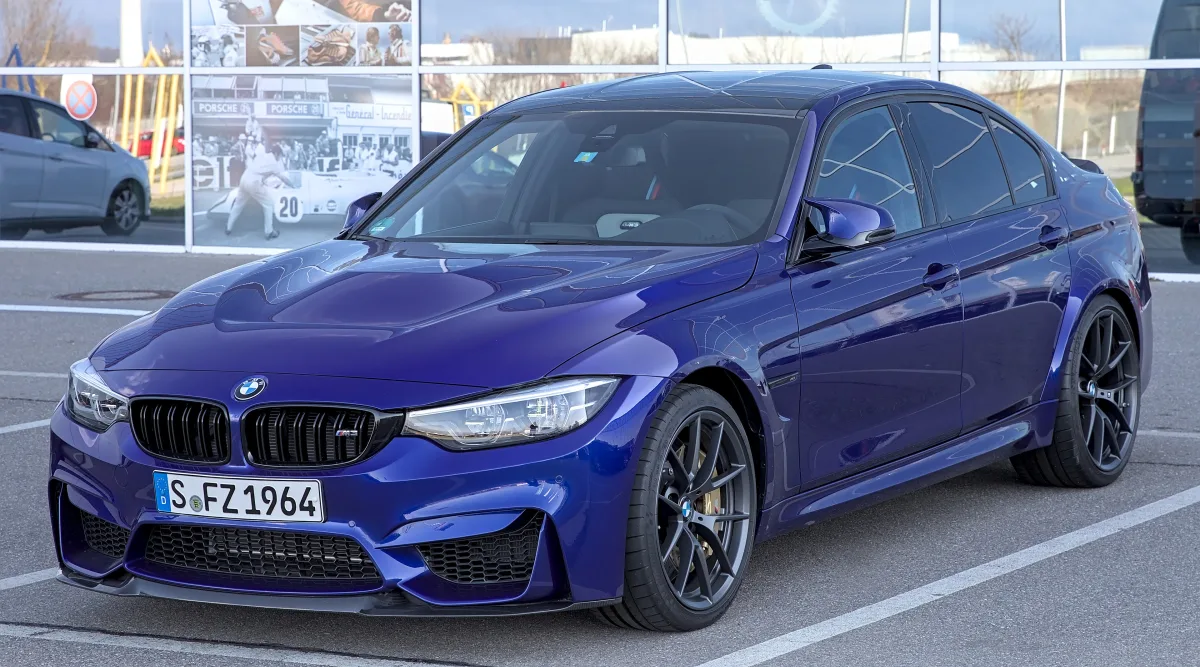
BMW M3: generations from E30 to G80, engines and what to check when buying
BMW M3 — the sporty 3 Series variant, produced since 1986 and becoming one of the world's most famous sport sedans. We look at generations from E30 to G80, engines, trims and what's crucial to check before buying a used M3.






M3 in brief
The M3 was created as a sporty 3 Series variant with a more powerful engine, stiffer suspension and unique character. Over nearly four decades, it has become the benchmark against which other sport sedans are measured.
The model was offered in various body styles: coupe, sedan, convertible, and in the latest generation — the Touring estate. All generations feature rear-wheel drive, except for the latest generation's xDrive versions.
Which generation to choose
E30 (1986–1991) and E36 (1992–1999) are now considered classics, with prices depending on condition and rarity. The E46 (2000–2006) is regarded as one of the best-driving M3s with its naturally aspirated six-cylinder engine, but requires thorough inspection.
The E9x (2007–2013) is the only M3 generation with a V8 engine, the F80 (2014–2018) has a six-cylinder turbo engine, and the G80 (from 2021) features an even more powerful turbo engine and modern technology.
If you're after a daily driver, the F80 or G80 are far more practical. If you're after a classic experience, the E46 or E9x are still appealing, but it's essential to thoroughly check the mechanical condition.
Engines and gearboxes
The E30 had a four-cylinder engine, the E36 and E46 featured naturally aspirated six-cylinder units, the E9x came with a 4.0-litre V8, the F80 boasted a 3.0-litre six-cylinder twin-turbo pushing out around 430–460 hp, while the G80 aimed for roughly 480–510 hp.
Transmissions: earlier models had a manual five- or six-speed gearbox, the E46 featured the SMG robotised system, the E9x and F80 came with a dual-clutch M DCT, and the G80 offers an eight-speed M Steptronic or six-speed manual.
Exact power output and transmission type depend on the version and year, so check the seller's documents for these details.
What to check when buying a used M3
Since the M3 is often driven enthusiastically, it's crucial to assess how well it has been maintained. Ask for the service history, check if the engine oil was changed on time, and inspect the brakes and tyres.
For the E46 and E9x generations, it's worth checking the condition of the engine's camshaft journals, and for the E46, inspect the rear suspension mounts. For the F80, pay attention to engine maintenance and whether the engine management has been tampered with.
Inspect the body for signs of accidents, check the suspension and gearbox. If the car has been modified, ensure that the changes are registered.


Trim levels
Names and equipment vary by market and year; we list the most common trims found in Europe.
M3 (E46)
2000–2006The classic M3 with a naturally aspirated six-cylinder engine.
- Naturally aspirated six-cylinder engine
- Sporty M chassis
- Often comes with leather seats
M3 (E9x)
2007–2013The sole M3 with a V8 engine.
- 4.0-litre V8 engine
- Manual or dual-clutch transmission
- Often — additional M elements
M3 / Competition (F80)
2014–2018Turbocharged M3 with high power.
- Six-cylinder twin-turbo engine
- Dual-clutch M DCT gearbox
- Special M wheels and brakes
M3 / Competition (G80)
From 2021Latest M3 with a modern interior.
- Six-cylinder twin-turbo engine, 480–510 hp
- Large screen display
- xDrive and Touring body styles available
Trim comparison
| M3 (E46) | M3 (E9x) | M3 (F80) | M3 (G80) | |
|---|---|---|---|---|
| Who it suits | Classic car enthusiasts | Admirers of the atmospheric V8 | Everyday use | Modern sportiness |
| Wheels (most often) | 18–19 inch | 18–19 inch | 18–19 inch | 19–20 inch |
| Power | Around 340 HP | Around 420 HP | Around 430–460 HP | Around 480–510 HP |
| Price in the used market (relatively) | €€ | €€ | €€€ | €€€ |
Classic enthusiasts should seek out the E46 or E9x if you can thoroughly check their condition. The F80 is more practical for daily use, while the G80 offers the latest technology.
Pros
- Dynamic and precise handling
- Powerful and expressive engines
- A practical sedan or coupe body style
- Value remains strong, especially for classic generations
Cons
- High maintenance and repair costs
- High fuel consumption
- Many modified or track-used cars in the used market
Frequently asked questions
Which M3 generation is the best?
It depends on your needs: the E46 is praised for its driving feel, the E9x for its V8 sound, the F80 for daily practicality, and the G80 for the most modern technology.
Is the M3 suitable for daily use?
Yes, especially the F80 and G80, which are more comfortable than earlier generations. However, don't forget about the higher fuel consumption and maintenance costs.
Does the M3 have a manual transmission?
Many M3s were sold with a manual gearbox, and the G80 is still offered with a 6-speed manual. Check the configuration with the seller's details.
Updated 2026-10-17 · Trim levels and equipment vary by market and model year — check the equipment of the specific car. · Translated automatically


