 English
 Lietuvių
 Latviešu
 Eesti
 Polski
 Русский
 Українська
 Deutsch
 Nederlands
 Čeština
 Slovenčina
 Svenska
 Norsk
 Dansk
 Suomi


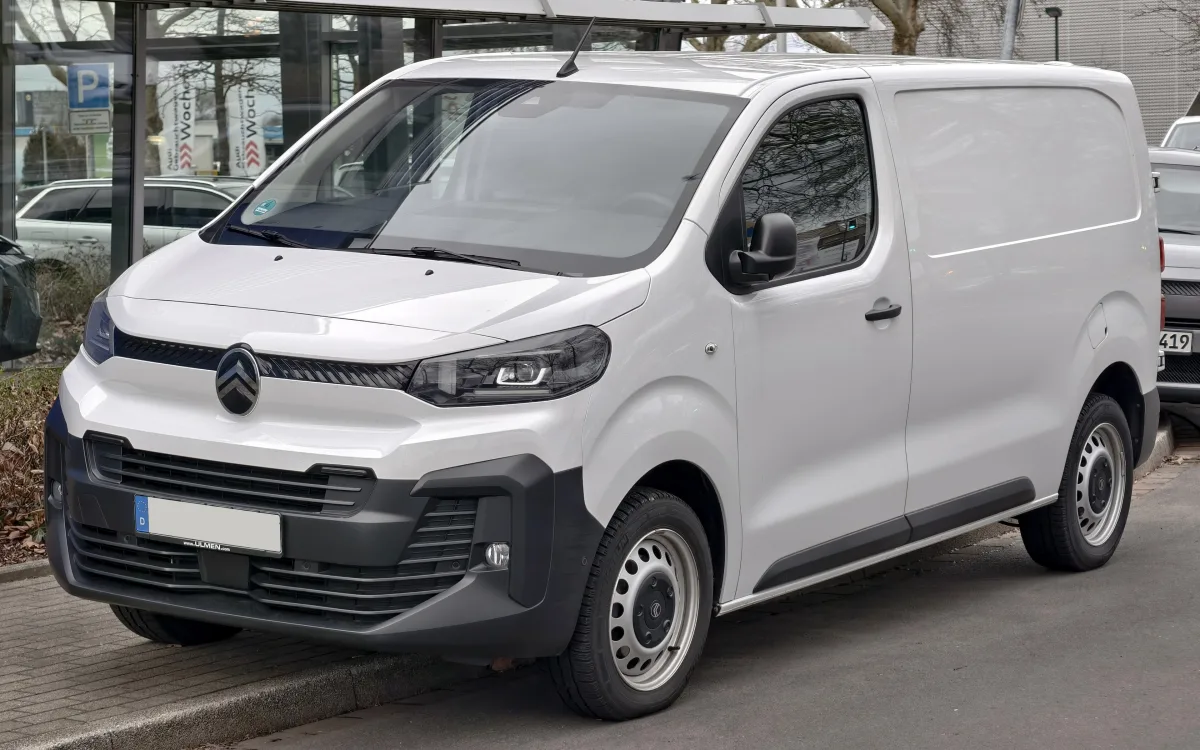
Citroën Jumpy: II and III generations, engines and body styles
Citroën Jumpy — a mid-sized van that's found in the Lithuanian used commercial vehicle market both as a workhorse and a people carrier. We look at the differences between the II and III generations, the most common engines, body styles, and what to check before buying a used Jumpy.






Jumpy in brief
The Jumpy has been in production since 1995 and has always been built alongside the Peugeot Expert — essentially the same van with a different front end and badge. Moreover, the II generation underpinned the Fiat Scudo and Toyota ProAce, while the III generation underpins the Toyota ProAce, Opel Vivaro, and later the Fiat Scudo. Therefore, parts are plentiful, and garages are well-versed in this technology.
The Jumpy comes as a cargo van, a double-cab van, and a people carrier Combi. In the II generation, the people carrier version was also known as the Multispace, while the III generation people carrier with a more upmarket interior is sold as the SpaceTourer. The less common cab-over platform is designed for specialist conversions. The payload typically hovers around a tonne or slightly more.
II and III generation — what's the difference
II generation (2007–2016) — a straightforward work van offered in two lengths (L1, L2) and two roof heights (H1, H2). Today, it's the cheapest Jumpy, but many have covered high mileages, so the key consideration is the vehicle's mechanical condition.
The third generation (from 2016) is built on the EMP2 platform, which is also used by some Citroën and Peugeot models. It's quieter, more comfortable, and comes with more safety systems. Citroën denotes lengths as XS, M, and XL: the shortest XS is city-friendly, while the XL can handle longer loads. All third-gen Jumpy models have a low roof.
Since 2020, the electric ë-Jumpy has been produced, and the 2024 model has been refreshed with a new front end featuring the updated Citroën badge and a revamped interior. The used market is dominated by early third-gen models.
Engines and transmissions
The second generation most commonly features the 1.6 HDi (around 90 hp) and 2.0 HDi (around 120–165 hp) diesels. Gearboxes are usually manual.
The third generation initially offered the 1.6 BlueHDi (around 95–115 hp) and 2.0 BlueHDi (around 120–180 hp) engines, with the smaller unit later replaced by the 1.5 BlueHDi. The more powerful 2.0 BlueHDi can be found with an automatic gearbox, while others typically have a manual.
The Jumpy is front-wheel drive. The electric ë-Jumpy comes with a 50 or 75 kWh battery; its real-world range heavily depends on the load and outside temperature.
What to check when buying a used Jumpy
Check the mileage against service records and MOTs — commercial vans often rack up more miles than the odometer suggests. Test the clutch and two-mass flywheel: vibrations under load or a judder at idle often indicate an expensive repair.
Check diesel engines for the turbocharger, injectors, EGR valve, and particulate filter. The turbocharger on the 1.6 HDi engine is sensitive to oil condition, so ask if the oil has been changed on time. In Euro 6 BlueHDi engines, check the AdBlue system — faults are quite common.
Inspect the sliding door runners and seals, tailgate hinges, and cargo area floor. In older vehicles, check for rust on the sills, wheel arches, and underbody.


Body styles
Trim names vary greatly by market and year, so we list the most commonly encountered body styles.
Furgonas
Second and third generationsThe most common cargo version with two or three seats in the cab.
- In the second generation — L1 or L2 length, H1 or H2 height; in the third generation — XS, M or XL
- Often — one or two sliding side doors
- Often — a partition with a hatch for long cargo
Furgonas su dviguba kabina
Third generationThe second row of seats allows you to carry a crew and tools together.
- Second row of seats behind the cab
- Shorter cargo area behind the partition
- Mostly — M or XL length
Combi / Multispace
Second and third generationsBasic passenger version for transporting people and large families.
- Often seats 8–9
- Easy to clean, simple interior
- Often — removable rear seats
SpaceTourer
Third generationThe passenger version with a better interior is sold under a different name.
- Seats up to 8–9
- Often — electrically operated sliding doors
- Often — automatic transmission
ë-Jumpy
Third generation, from 2020Electric van for city work and deliveries.
- 50 or 75 kWh battery
- The cargo area is the same as the diesel van's
- Often — fast charging capability
Comparison of third-generation versions
| Furgonas XS | Furgonas M / XL | Combi | SpaceTourer | |
|---|---|---|---|---|
| Who it's for | For city work and deliveries | For cargo and equipment | For passenger transport | For comfort and family |
| Most common wheels | Steel | Steel | Steel | Light alloy |
| Interior | Cab only | Cab only | Up to 9 seats, basic trim | Top trim |
| Price in the used market (relatively) | € | € | €€ | €€€ |
For work, the M-length van is the most versatile, while the XS is worth choosing if you mostly drive in the city. The Combi is the most rational for transporting passengers, while the SpaceTourer is the best bet when comfort is key.
Pros
- Lots of spare parts available (same tech as Peugeot Expert, Opel Vivaro and Toyota ProAce)
- The short XS version is city-friendly
- Comfortable, quiet third-gen cabin
- Economical diesel engines
Cons
- Plenty of high-mileage commercial vehicles
- AdBlue system issues in Euro 6 engines
- No high-roof version in the third-gen
Frequently asked questions
Are Citroën Jumpy parts compatible with Peugeot Expert?
In many cases, yes — the same-gen Jumpy and Expert share the same engines, gearboxes and chassis. The main differences are front-end details and badges, so parts should still be checked against the vehicle identification number.
What do Jumpy XS, M and XL mean?
These are the third-gen body lengths: XS is the shortest, M is the mid-size and most common, XL is the longest. Roof height is similar across all, so choose based on the length of cargo you'll be carrying.
How does the Jumpy differ from the SpaceTourer?
The SpaceTourer is the third-gen Jumpy's passenger-friendly version with better trim and more comfort features. The simpler passenger variant is called the Jumpy Combi.
Updated 2026-10-10 · Trim levels and equipment vary by market and model year — check the equipment of the specific car. · Translated automatically


