 English
 Lietuvių
 Latviešu
 Eesti
 Polski
 Русский
 Українська
 Deutsch
 Nederlands
 Čeština
 Slovenčina
 Svenska
 Norsk
 Dansk
 Suomi


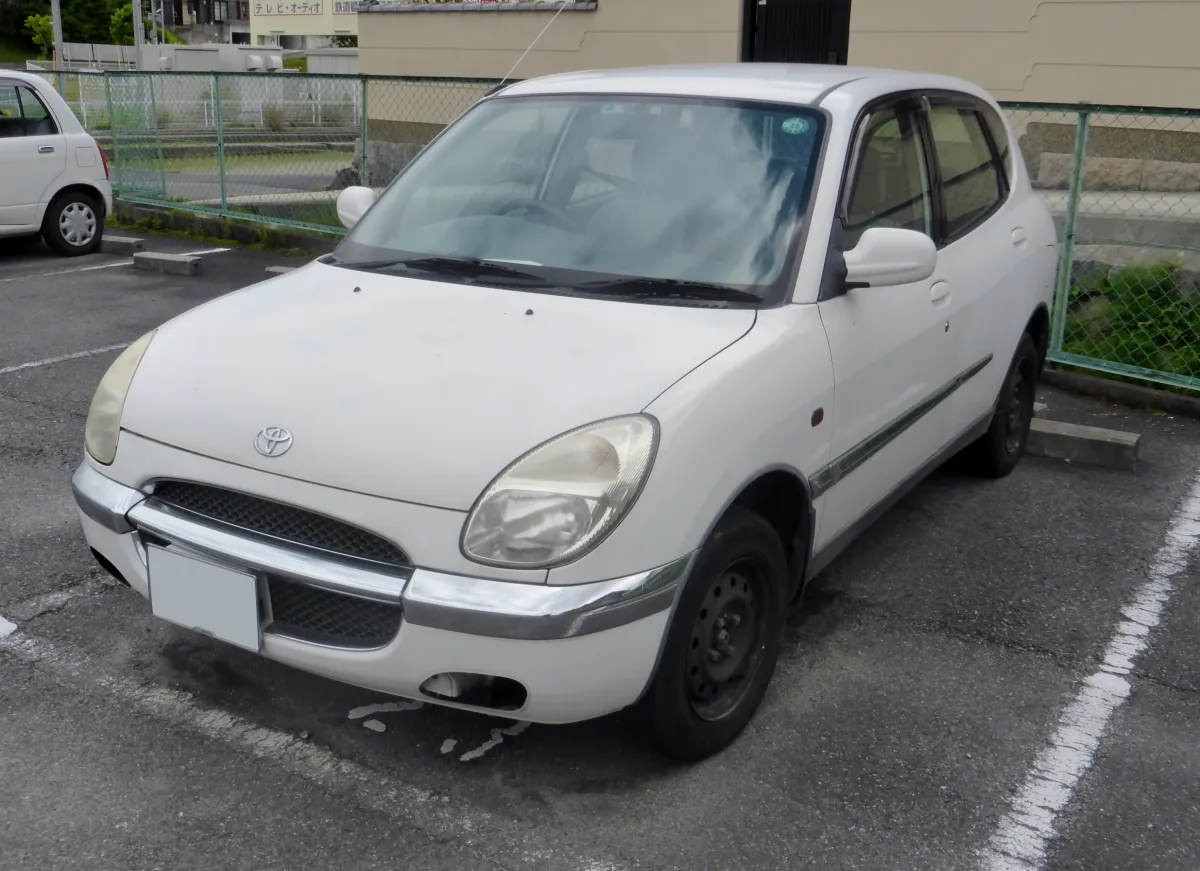
Toyota Duet: The Daihatsu Storia and Sirion cousin, what to know before buying
Toyota Duet — a compact hatchback that Daihatsu produced from 1998 to 2005 and sold in Japan under the Toyota badge. The same car was known as the Daihatsu Storia or first-generation Sirion in other markets. We look at what makes it special and what to check before buying.






Duet in brief
The Duet is a compact five-door hatchback with front-wheel drive or all-wheel drive. The base model was the Daihatsu Storia, which replaced the Charade. In Japan, it wore the Toyota badge and replaced the Corolla II.
In most other countries, except for a few, the same car was sold as the first-generation Daihatsu Sirion. Therefore, finding parts and information about it is easier than it seems.
Versions — what sets them apart
The Duet existed in one generation (1998–2005). Versions differed in trim and equipment, for example, 1.0V and 1.0X.
The main difference between the Duet and the Storia or Sirion is the badge and the market. In Europe, the Sirion is most commonly encountered.
Engines and transmissions
The main engine is a 1.0-litre three-cylinder petrol unit. Export Sirion versions also offered a larger 1.3-litre four-cylinder engine.
Transmissions come in manual or automatic. Some models featured all-wheel drive.
These are simple, economical engines, but with modest power, making the car best suited to urban driving.
What to check when buying a Duet
Inspect the body for rust, especially the sills, wheel arches, and rear wheel arches. Ask for the service history.
Check that the engine has no oil leaks and that the distribution mechanism has been serviced on time, and that the automatic gearbox shifts smoothly.
If the car has been imported from Japan, check the documents and condition against the auction sheet, and ensure it meets European requirements.


Trim levels
Trim names vary by market, so we describe the versions by gearbox and body style.
1.0V
1998–2005 model yearsThe base version with a 1.0-litre engine.
- 1.0-litre three-cylinder petrol engine
- Manual or automatic gearbox
- Often — simpler equipment
1.0X
1998–2005 model yearsMore generous trim level.
- The same 1.0-litre engine
- Often — more comfort equipment
- Four-wheel drive in some versions
Daihatsu Storia
1998–2005 model yearsThe same car with a Daihatsu badge.
- The same technology
- Daihatsu badge and trim
- Sold in Japan
Daihatsu Sirion (I)
1998–2005 model yearsExport version in many markets
- Often — 1.0 or 1.3-litre engine
- Sold in Europe
- Easier to find parts
Comparison of versions
| Duet 1.0V | Duet 1.0X | Sirion (I) | |
|---|---|---|---|
| Who it's for | Budget city car | More comfortable equipment | For the European buyer |
| Engine | 1.0-litre | 1.0-litre | 1.0 or 1.3-litre |
| Gearbox | Manual or automatic | Manual or automatic | Manual or automatic |
| Price in the used market (relatively) | € | € | € |
If you're after an affordable city car, consider a well-maintained Duet or Sirion. The key factors are the body condition and service history.
Pros
- Compact and agile
- Economical engines
- Simple technology
- Parts are shared with the Daihatsu Sirion
Cons
- Modest power
- An older car, potential rust
- Limited availability in Lithuania
Frequently asked questions
How does the Toyota Duet differ from the Daihatsu Storia?
It's the same car. The Duet was sold in Japan under the Toyota badge, while the Storia was sold under the Daihatsu badge.
Which car is the Duet related to in Europe?
The first-generation Daihatsu Sirion, as it shares the same platform and technology.
Which engine does the Duet have?
Most commonly, it's the 1.0 l three-cylinder petrol engine.
Updated 2026-10-21 · Trim levels and equipment vary by market and model year — check the equipment of the specific car. · Translated automatically


