 English
 Lietuvių
 Latviešu
 Eesti
 Polski
 Русский
 Українська
 Deutsch
 Nederlands
 Čeština
 Slovenčina
 Svenska
 Norsk
 Dansk
 Suomi


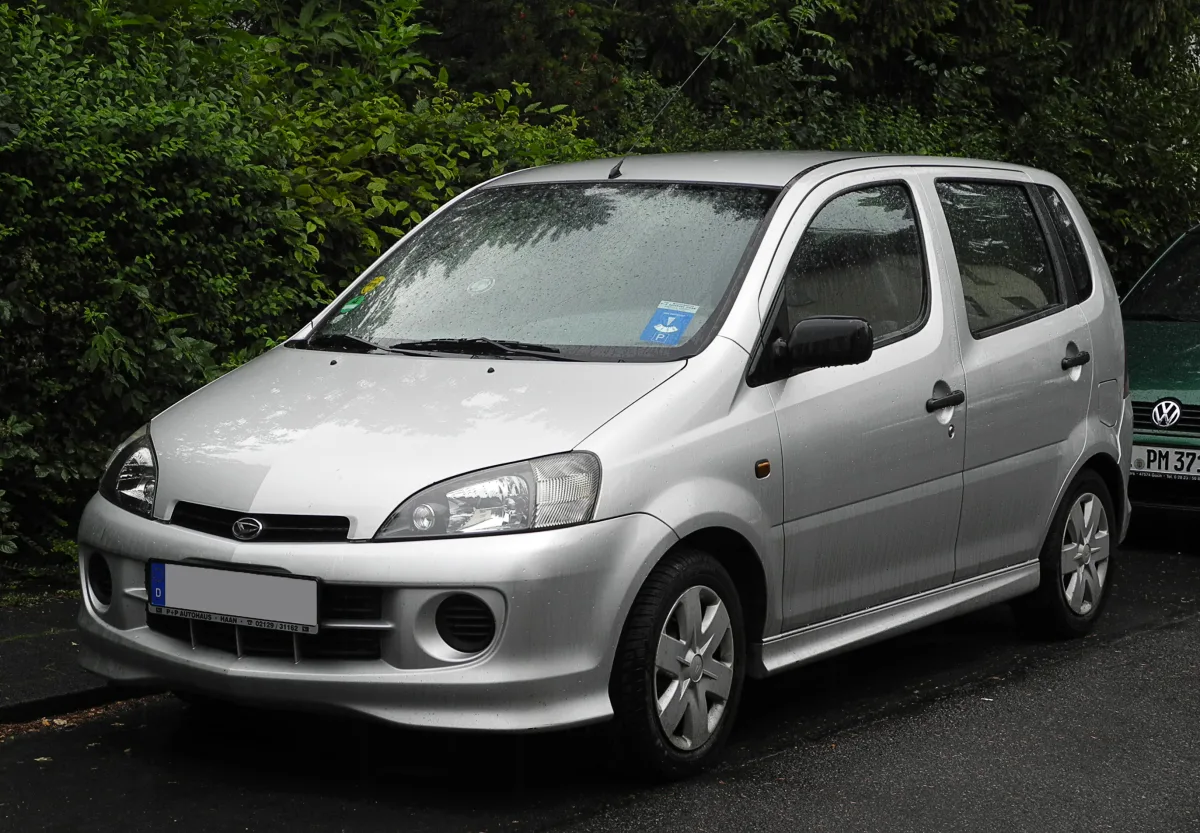
Daihatsu YRV: compact high-riding hatchback, engine and what to know when buying
Daihatsu YRV — a compact high-riding mini MPV-style hatchback, produced around 2000–2005. In this article, we review its engines, practicality, and what to check when buying a used car.






YRV in brief
YRV — a five-door city car with a higher body than typical hatchbacks in this class. This means more headroom inside, easier access, and a more practical boot.
The car was designed as a compact family or city choice, so its strengths are its size and convenience, not sportiness.
Versions and variants
In many markets, the YRV was sold as a standard petrol hatchback, while the sportier YRV Turbo version had a more powerful turbo engine.
Since these cars are quite old, it's more important to assess the condition and service history of a specific example than the spec.
Engines and gearboxes
YRV engines were 1.3-litre petrol units with four cylinders. The base version had around 85hp, while the YRV Turbo had around 140hp.
The gearbox was manual or automatic, depending on the version and market. Drive is to the front wheels.
What to check when buying a used YRV
Choose a car with a full service history. For Turbo versions, check the oil change frequency and the condition of the turbocharger.
Inspect the body and sills for corrosion, check the suspension for unusual noises, and the electrical equipment: window operation, central locking.
The choice of parts is limited, but some engine and suspension components are similar to those of other Daihatsu models.


Trim levels
Names and equipment vary by market and year; we list the versions most commonly found in Europe.
1.3 (bazinė)
All yearsThe base version with a 1.3-litre petrol engine.
- Around 85 hp engine
- Manual or automatic transmission
- More basic interior
1.3 Turbo
All yearsThe sportier version with a turbo engine.
- Around 140 hp turbo engine
- Sportier suspension and interior details — depending on the market
- Often — larger alloy wheels
Comparison of versions
| 1.3 | 1.3 Turbo | |
|---|---|---|
| Who it's for | Ideal for daily city use | For more dynamic driving |
| Engine | 1.3-litre, around 85hp | 1.3-litre turbo, around 140hp |
| Price in the used market (relatively) | Budget-friendly | Mid-range |
Most buyers will be fine with the base version. Turbo is for those who want a livelier car and are willing to keep up with turbo engine maintenance.
Pros
- High roof and plenty of headroom
- Compact dimensions
- Easy to get in and out of
- Low running costs
Cons
- Limited choice of parts
- The base version isn't particularly dynamic
- Outdated equipment
Frequently asked questions
How many horsepower does the Daihatsu YRV have?
The base model has around 85 hp, the YRV Turbo — around 140 hp.
Is the YRV reliable?
It's a straightforward car with a small engine, but it heavily depends on previous maintenance and condition. The key is the service history and inspection.
Is the YRV suitable for a family?
As a small city car — yes. The interior is quite spacious, but it's still a compact class, so larger traveling families might find it cramped.
Updated 2026-10-21 · Trim levels and equipment vary by market and model year — check the equipment of the specific car. · Translated automatically


